Adobe Revolutionizes iPhone Photography with Its Innovative AI App
Le brief IA que les pros lisent chaque soir
Les 7 actus IA du jour, décryptées en 5 min. Gratuit.
Inclus dès l'inscription : notre sélection des meilleurs guides & comparatifs IA.
Choisis ton rythme
Gratuit · Pas de spam · Désabonnement en 1 clic
Adobe Revolutionizes iPhone Photography with Its Innovative AI App
Launched to bring iPhone photos closer to the quality of a DSLR, Adobe's experimental app now features generative AI tools capable of reinventing an image rather than just enhancing it. But beware of selfies…
In June 2025, Adobe introduced Project Indigo as a way to bridge the gap between iPhone photos and those taken with a DSLR. The idea was to focus on image fusion rather than digital filters. A year later, version 1.1 of the app radically changes the game. It introduces generative artificial intelligence tools that allow users to modify a photo beyond what the sensor actually captured.
From Image Fusion Technique to Content Generation
At the launch of the app, Adobe presented a system based on computational photography. Indigo captures up to 32 images in burst mode, aligns them, and then merges them to reduce noise and expand dynamic range, without resorting to excessive digital smoothing. The app also offered complete manual controls (shutter speed, ISO, focus, white balance) and export in RAW to Lightroom, all for a rendering that Adobe itself described as natural.
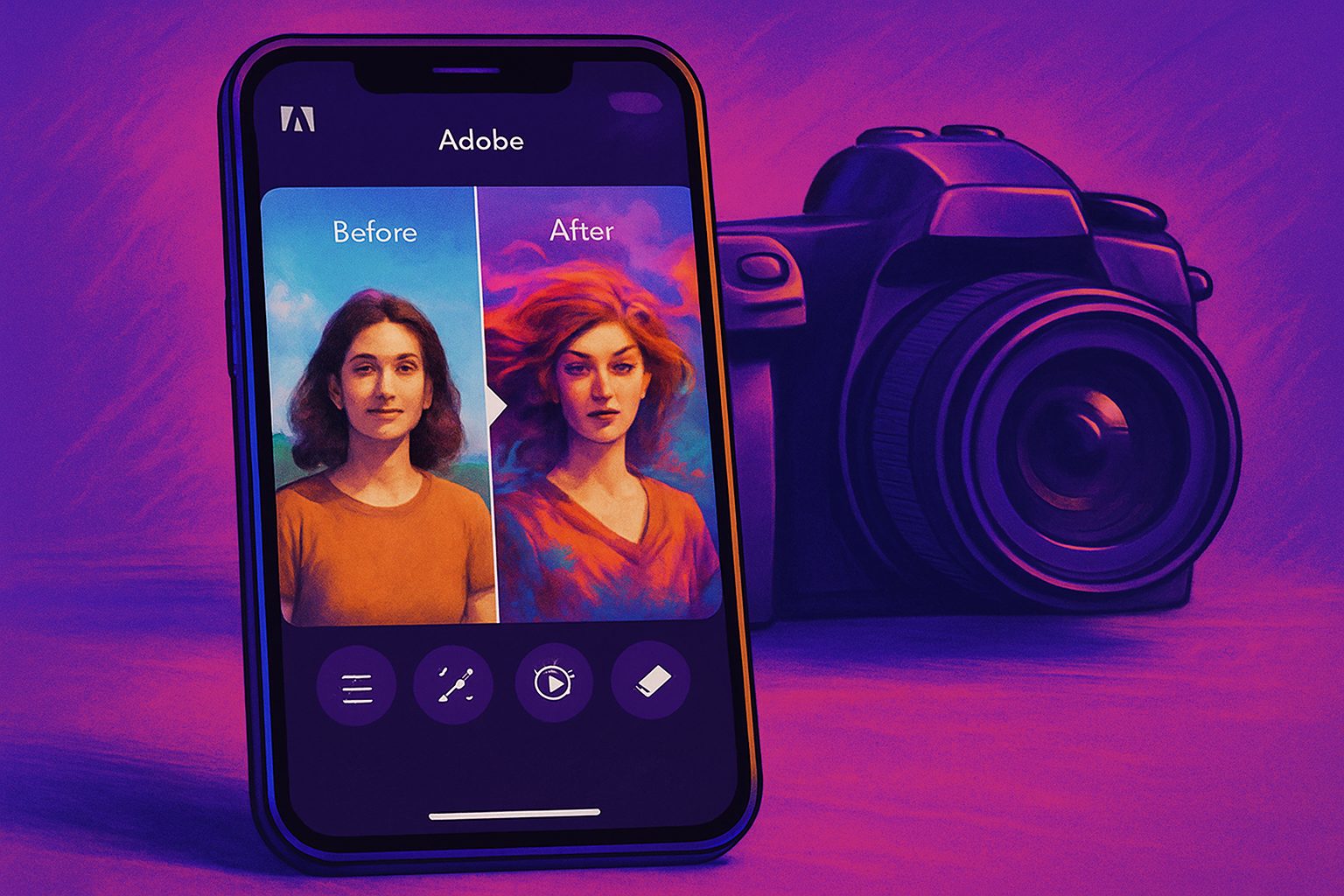
With version 1.1, this approach to processing reality gives way to generative AI. The AI Playground adds a section called "Object Editing." This feature allows users to erase an object or person from the background of a photo, then generate the missing area instead of reconstructing it from captured data. The "Styles" section goes even further by completely reinterpreting the shot as an ink drawing or watercolor. Yes, you read that right, in a camera app… A "Custom Edit" field also allows users to request any modification through simple text. The engine behind these functions is no longer an Adobe technology, but Nano Banana, Google's image model.
In short, Adobe, particularly favored by professional photographers for its Lightroom software, has finally concocted yet another photo app that generates visuals rather than mere snapshots. And, watch out for surprises… The company admits that generative editing can slightly alter facial features, a phenomenon it calls "identity shift." To limit potential issues, images processed through the AI Playground will be marked with metadata from the Content Authenticity Initiative, and Nano Banana adds an invisible watermark. These two mechanisms could have been avoided if the app had merely focused on enhancing actual photos.
Adobe Indigo also includes an automated critique tool, which is arguably the best feature. The AI comments on the framing, lighting, colors, and emotional impact of the shot, then suggests ways to retake or edit the photo. Unlike Google’s "camera coach" on the Pixel, whose advice tends to be quite general, Adobe's tool provides more specific feedback. Adobe itself is still measuring the impact of this radical change. Access to AI Playground remains free and without registration, but is currently limited to a handful of users for a few weeks, before a potential paid version.
Brief IA — L'actualité IA en français
L'essentiel de l'actualité de l'intelligence artificielle, décrypté et expliqué chaque jour.