Google Cloud Next: Agentic AI Redefines the Future of Business
Le brief IA que les pros lisent chaque soir
Les 7 actus IA du jour, décryptées en 5 min. Gratuit.
Inclus dès l'inscription : notre sélection des meilleurs guides & comparatifs IA.
Choisis ton rythme
Gratuit · Pas de spam · Désabonnement en 1 clic
The Rise of Agentic AI at Google Cloud Next
At the Google Cloud Next event in Las Vegas, agentic AI was highlighted as a key technology for the future of businesses. Google showcased several innovations, including the Gemini Enterprise Agent Platform and the eighth-generation TPUs, aimed at addressing the challenges of scalability, governance, and security posed by these new technologies. The stated goal is clear: agentic AI must not only optimize costs but also open new avenues for growth and tackle unresolved global issues. Investments in this area are described as historic, underscoring the strategic importance of these developments for Google.
A Mixed Deployment in France
In France, the adoption of agentic AI is occurring at varying paces. Large companies in the CAC 40 have begun to integrate these technologies, but their use remains confined to specific sectors such as supply chain, demand forecasting, and logistics optimization. Anthony Cirot, VP EMEA South at Google Cloud, emphasizes that the number of agents in production is still limited. Executives wish to accelerate deployment, but operational constraints hinder this ambition. Currently, companies have an average of 2 to 5 use cases in production, although 150 to 200 have been identified.
The release of Mythos by Anthropic raised concerns among clients, necessitating an intervention from Google Cloud to clarify the implications of this new technology. During the conference, over a hundred major European groups paid particular attention to announcements regarding security. The new features for detection and agentic remediation, as well as the integration of Wiz, were well received, boosting companies' confidence in these solutions.
Towards an Augmented Enterprise
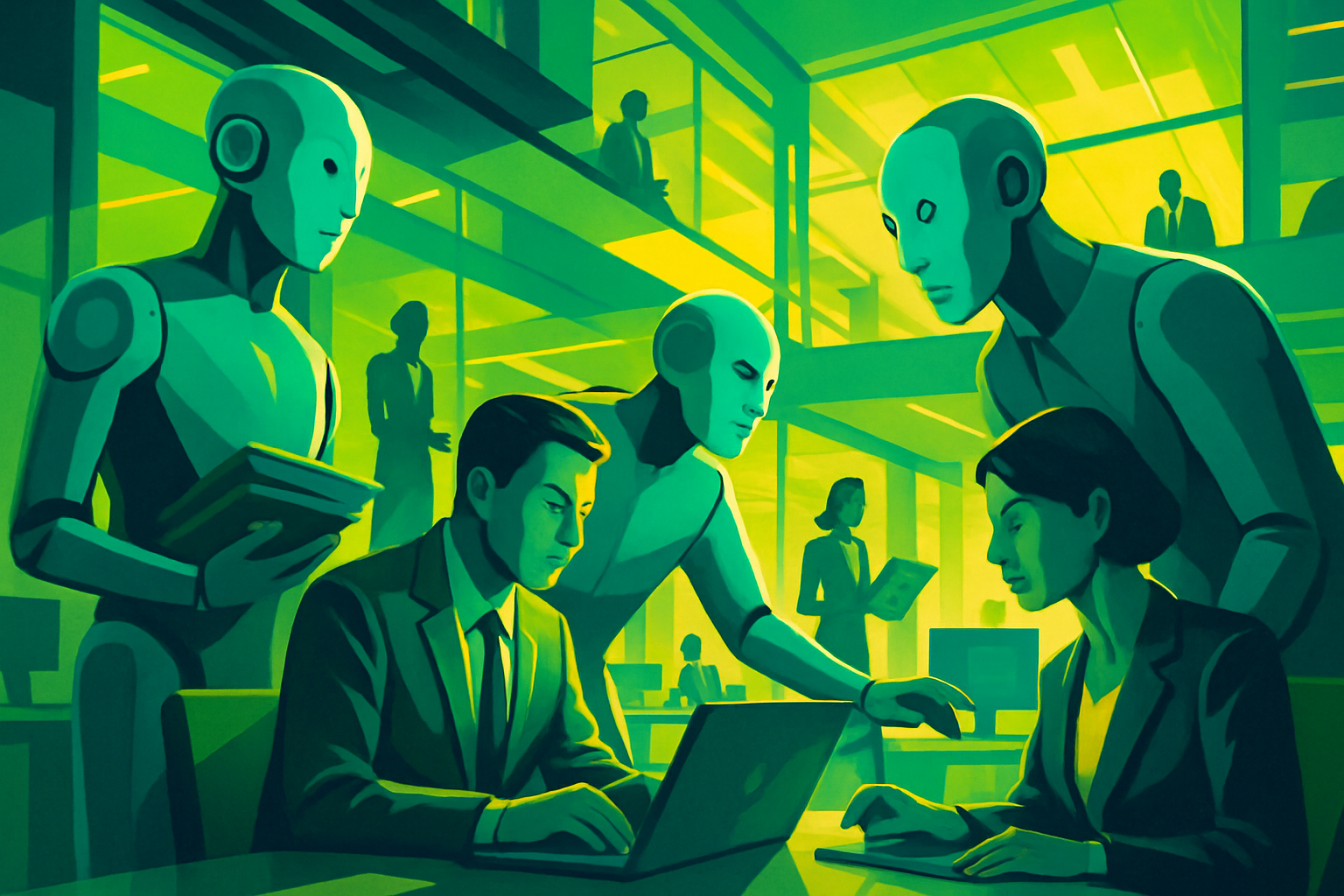
Discussions on agentic governance also provided insight into the future of businesses. According to Anil Jain, global managing director strategic industries at Google Cloud, the company of tomorrow will be characterized by augmented employees, assisted by intelligent agents capable of managing a network of specialized agents. These agents will not only perform simple tasks but will act as true collaborators, maximizing human creativity, judgment, and empathy through enhanced access to information and rapid action capabilities.
When asked about the possibility of fully automated companies reaching one billion dollars in revenue without employees, Anil Jain remains skeptical. He believes this model will only be viable in very specific cases where processes are highly technical and repeatable. For the majority of traditional sectors, AI will complement human capabilities rather than replace them.
The Potential Impact on Science and Health
Agentic AI is not limited to businesses; it could also revolutionize scientific and medical research. Intelligent agents, supported by Google DeepMind models, could accelerate the discovery of new materials, drug development, and the fight against climate change. By orchestrating massive processing flows, these agents could significantly reduce the time required to achieve major scientific breakthroughs.
However, this promise is hindered by a major constraint: the demand for compute currently exceeds the available supply. The eighth-generation TPUs announced at the event aim to address this issue by improving the cost/performance ratio, thereby increasing energy efficiency while delivering better performance. Despite this, demand continues to grow, posing a significant challenge for the industry.
The Challenges of Adoption
Although Google addressed many technical questions during the event, the main obstacle to the adoption of agentic AI remains change management within organizations. To succeed, companies must train their teams, integrate these new technologies into their business processes, and foster a climate of trust. This challenge is particularly pronounced for French and European companies, which still have progress to make in this area.
Brief IA — L'actualité IA en français
L'essentiel de l'actualité de l'intelligence artificielle, décrypté et expliqué chaque jour.