Alex Finn Revolutionizes Local AI with a Bold Installation
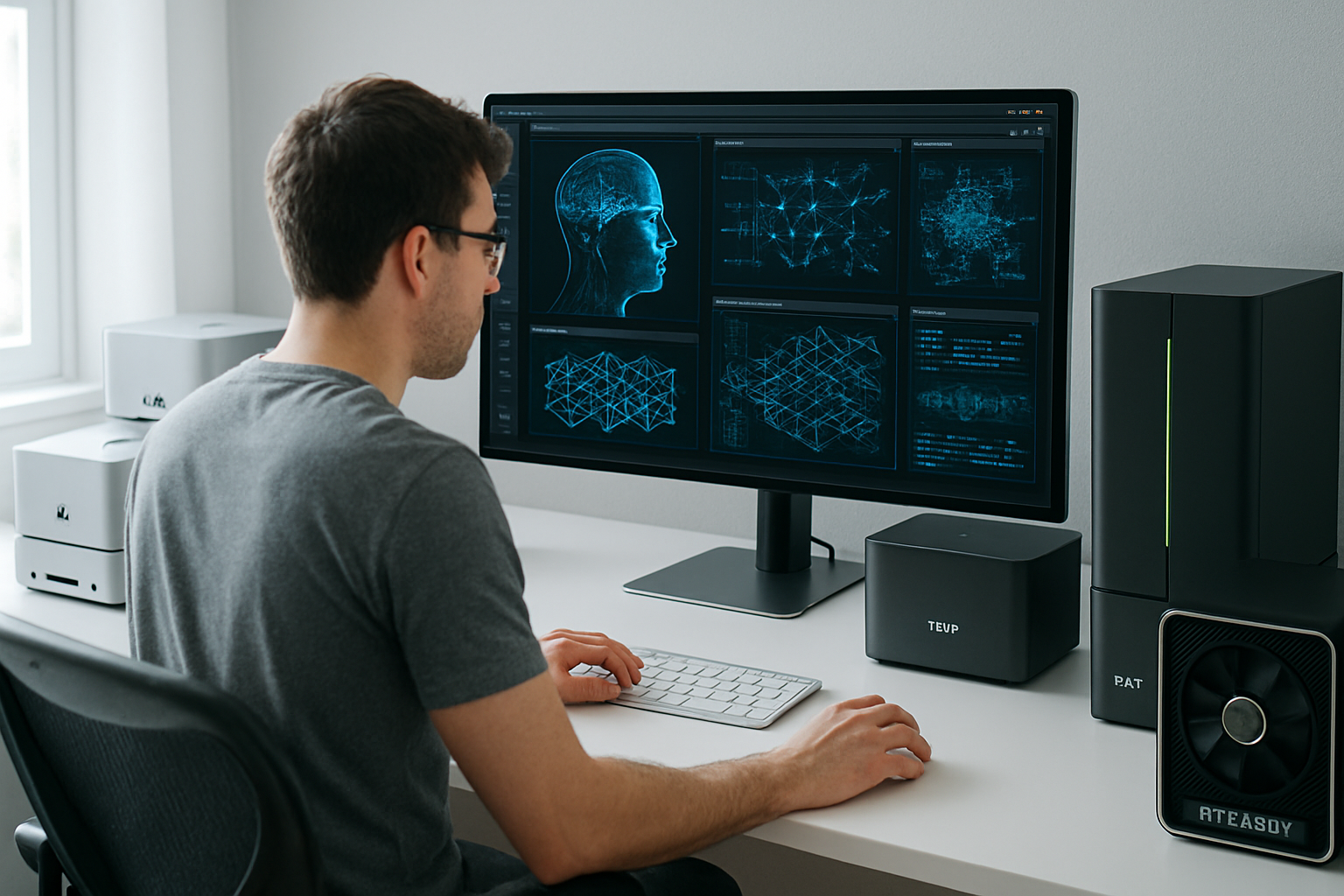
An AI Enthusiast and His Unique Setup
Alex Finn, a passionate AI builder and YouTube content creator, has established an impressive local artificial intelligence infrastructure. As the founder of Vibe Code Academy, an educational platform for AI enthusiasts, Alex has designed a complex system that relies on three Mac Studios equipped with 512 GB of memory, a DGX Spark, and a custom setup featuring an RTX 5090 graphics card. All these machines are orchestrated by a dashboard he developed himself. For five months, Alex meticulously selected local AI models suitable for each machine, integrating them into Claude Code loops to create a self-sustaining software factory.
Equipment Choices and Their Utility
In the process of building his system, Alex had to make strategic choices regarding the hardware. The Mac Studio, with its unified memory of 512 GB, is ideal for tasks requiring high processing capacity. The DGX Spark is a smart choice for intensive computations, while the RTX 5090 offers exceptional graphical power for visual tasks. Each of these machines plays a specific role in the ecosystem Alex has created, thereby optimizing the efficiency of his setup.
The Importance of Tailscale
One of the key tools in managing this infrastructure is Tailscale, software that allows for the creation of a secure virtual private network. Even when used on a single machine, Tailscale simplifies network management by enabling an agent to oversee the entire hardware fleet. This provides increased flexibility and security, essential for the smooth operation of local AI.
Build and Review Loops
Build and review loops are central elements in Alex's system. Thanks to Claude Code, these loops automate the continuous creation and improvement of AI models. Tasks are precisely allocated to each machine based on their respective capabilities, ensuring optimal use of available resources.
Advantages of Local Inference
One of the major arguments in favor of Alex's infrastructure is unlimited local inference. Unlike traditional cloud subscriptions, which are often limited and costly, local inference allows for intensive use without additional fees. This radically changes the way usage calculations are considered, offering a more economical and flexible alternative, far beyond what a $20 cloud subscription can provide.
Le brief IA que les pros lisent chaque soir
Les 7 actus IA du jour, décryptées en 5 min. Gratuit.
Inclus dès l'inscription : notre sélection des meilleurs guides & comparatifs IA.
Choisis ton rythme
Gratuit · Pas de spam · Désabonnement en 1 clic
Use of OpenClaw and Hermes
Alex also utilizes agents like OpenClaw and Hermes, each with specific strengths. OpenClaw is particularly suited for tasks requiring quick execution, while Hermes excels in managing complex processes. By combining these tools, Alex maintains a robust system with built-in redundancy, ensuring operational continuity. In total, he uses five agents to ensure this redundancy.
Technical Details and Resources
For those interested in the technical aspects, Alex shares valuable resources on platforms like LinkedIn and YouTube. He explains how to set up local models without requiring advanced technical skills, using tools like Tailscale, OpenClaw, and Hermes. His fleet control dashboard allows for continuous task assignment, thereby optimizing the efficiency of his system.
AI Models Used
In his setup, Alex allocates different AI models according to the tasks at hand: GLM 5.2, Qwen 3.6, and Ornith 1.0. Each model is chosen for its specific characteristics, allowing for fine-tuning to meet the needs of each project. This strategic allocation is essential for maximizing the performance of the entire system.
Comparison Between OpenClaw and Hermes
Alex provides an honest analysis of the differences between OpenClaw and Hermes. While both agents are powerful, they cater to distinct needs. OpenClaw is ideal for quick interventions, whereas Hermes is designed for more complex and prolonged operations. This distinction allows Alex to choose the most appropriate tool for each situation.
Alex's Software Factory
The software factory that Alex has built relies on build and review loops, representing continuous innovation and improvement of models. This dynamic approach keeps his system at the forefront of technology while adapting to the rapid changes in the AI field.
Discovering Alex's Preferences
In a dedicated section, Alex shares his preferences regarding hardware, AI models, and prompt styles. These insights provide valuable glimpses into his strategic choices, influenced by his experience and vision of AI.
Where to Follow Alex Finn
For those who want to learn more about Alex Finn and his work, he can be followed on LinkedIn, YouTube, and X. These platforms offer direct access to his latest innovations and thoughts on artificial intelligence.
Brief IA — L'actualité IA en français
L'essentiel de l'actualité de l'intelligence artificielle, décrypté et expliqué chaque jour.