Anthropic: IPO Amid AI Crisis
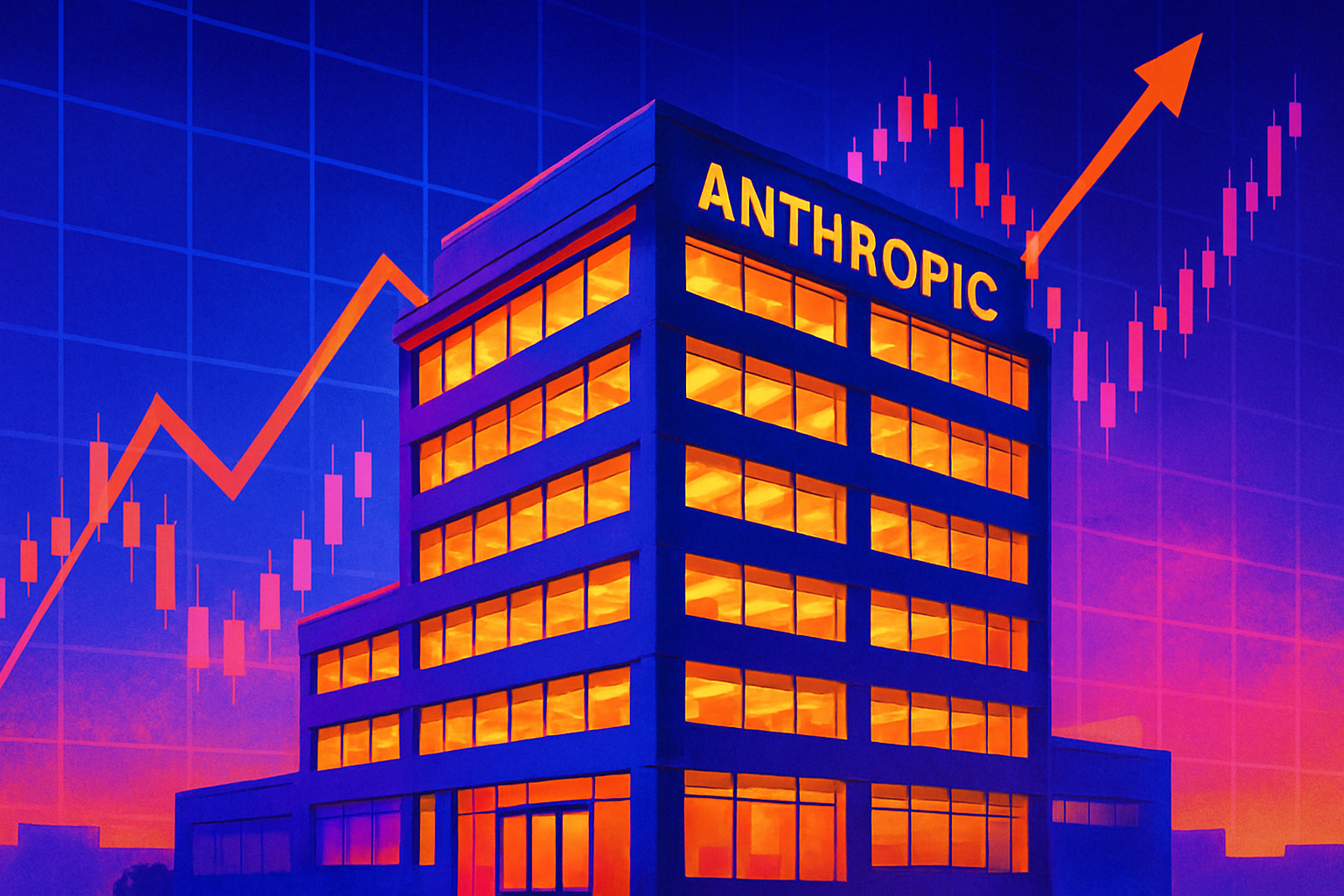
Anthropic Prepares for IPO Amid Liquidity Crisis
The artificial intelligence company, Anthropic, has recently taken a significant step towards its initial public offering (IPO). On Monday, it announced that it has submitted a Form S-1 to the Securities and Exchange Commission (SEC) of the United States. This confidential filing would allow Anthropic to become a public company, pending SEC approval. However, the company has not yet specified the number of shares it plans to offer or their price, as these decisions depend on market conditions and other factors. For now, an Anthropic spokesperson has not provided additional details regarding the timeline or valuation of this offering.
A Rush to AI with Major IPOs
Anthropic, known for its AI model Claude, is among three major tech companies expected to go public this year, in what some are calling a "rush to AI." Other companies in this group include SpaceX, the rocket company of Elon Musk, which includes the internet service provider Starlink, the AI lab xAI, and the social network X. SpaceX has already filed for an IPO in May. Additionally, OpenAI, the creator of ChatGPT, is also anticipated to follow suit soon.
This excitement surrounding IPOs reflects the market's enthusiasm to capitalize on investments worth several trillion dollars. AI companies are racing to secure the massive funding necessary for their survival, as the industry is extremely capital-intensive. The costs associated with maintaining computing power to train large language models, as well as the infrastructure for data centers, silicon, and energy networks, are substantial.
Challenges of Going Public
Although Anthropic has submitted its documents for regulatory review, this does not guarantee a final decision regarding its IPO. The company may still choose not to go public, as explained by Patrick Corrigan, a law professor at the University of Notre Dame. According to the SEC's usual timelines, a public filing could be expected in a few weeks, with a potential IPO in two to four months, he told CNET.
A Speculative Industry
The AI sector is known for being highly speculative, where company valuations are based more on future potential than current profits. Online analyses of revenues and losses show that spending on AI development far exceeds generated revenues, leading to billions of dollars in debt. Nvidia is one of the few companies benefiting from this situation, thanks to its production of essential chips for the AI industry.
Critics point to questionable accounting practices, where AI companies have raised funds using "annualized" revenue projections while neglecting fundamental costs, which could mislead investors. Ed Zitron, author of the newsletter Where's Your Ed At, emphasizes that current valuations are so high that it becomes difficult to raise more capital, and investors are likely demanding a liquidity event.
Le brief IA que les pros lisent chaque soir
Les 7 actus IA du jour, décryptées en 5 min. Gratuit.
Inclus dès l'inscription : notre sélection des meilleurs guides & comparatifs IA.
Choisissez votre rythme
Gratuit · Pas de spam · Désabonnement en 1 clic
Anthropic recently announced that it raised $65 billion in a funding round, valuing the company at $965 billion. The company is banking on strong growth by 2026, particularly through its programming tool Claude Code, which could position it ahead of OpenAI in terms of total value.
Financial Transparency, a Crucial Issue
Anthropic's confidential submission means that the necessary documents for a public stock sale, including a prospectus detailing the company's operations, are not yet available. This public filing will need to include information about the company's finances and the numerous potential risks it faces. Transparency will be essential to avoid liability for misleading investors, as Corrigan pointed out.
Like major companies such as Google, Apple, Meta, and Microsoft, Anthropic will need to hold quarterly earnings calls where executives will answer questions from financial analysts about the company's direction. The CEOs of Anthropic and OpenAI, Dario Amodei and Sam Altman, respectively, will be subject to these same requirements.
The public trading of shares in major AI companies would place their valuations in the hands of investors, including the general public, who could buy and sell based on their perceptions of the companies' movements or the AI industry as a whole.
Risks of Overvaluation and Bubbles
If, as some suggest, the industry is overvalued, such fluctuations could either deflate a bubble or inflate it further. Zitron fears this could lead to a collapse similar to that of WeWork, when investors became aware of the underlying economic weaknesses of the company. WeWork had filed for an IPO in 2019, but withdrew its filing shortly thereafter due to concerns about its corporate governance and profitability.
The future of AI companies could be binary, leading either to a collapse or significant consolidation. Zitron believes that if OpenAI or Anthropic survive, they could be absorbed by giants like Google, Microsoft, or AWS, or withdraw from the Nasdaq to operate as niche service providers.
Investors Facing Tough Choices
Wall Street may choose to overlook mediocre financial results. Meta, for example, spent billions on the "metaverse" before changing course, and AI companies could face a similar fate. Lalka stated that if AI companies remain unprofitable, investors might demand they focus on revenue-generating projects rather than "side quests," as OpenAI has done with its video generation app Sora.
Another possibility is that investors focus not on the actual value of the company, but on what they think others will pay for the shares. This approach, which Corrigan described as a "beauty contest," could provide companies with a temporary glimpse of high valuations. However, there is a real risk that prices could be driven by momentum and eventually revert to reality, he warned.
Brief IA — L'actualité IA en français
L'essentiel de l'actualité de l'intelligence artificielle, décrypté et expliqué chaque jour.