Anthropic and OpenAI: A Duel Over AI Regulation
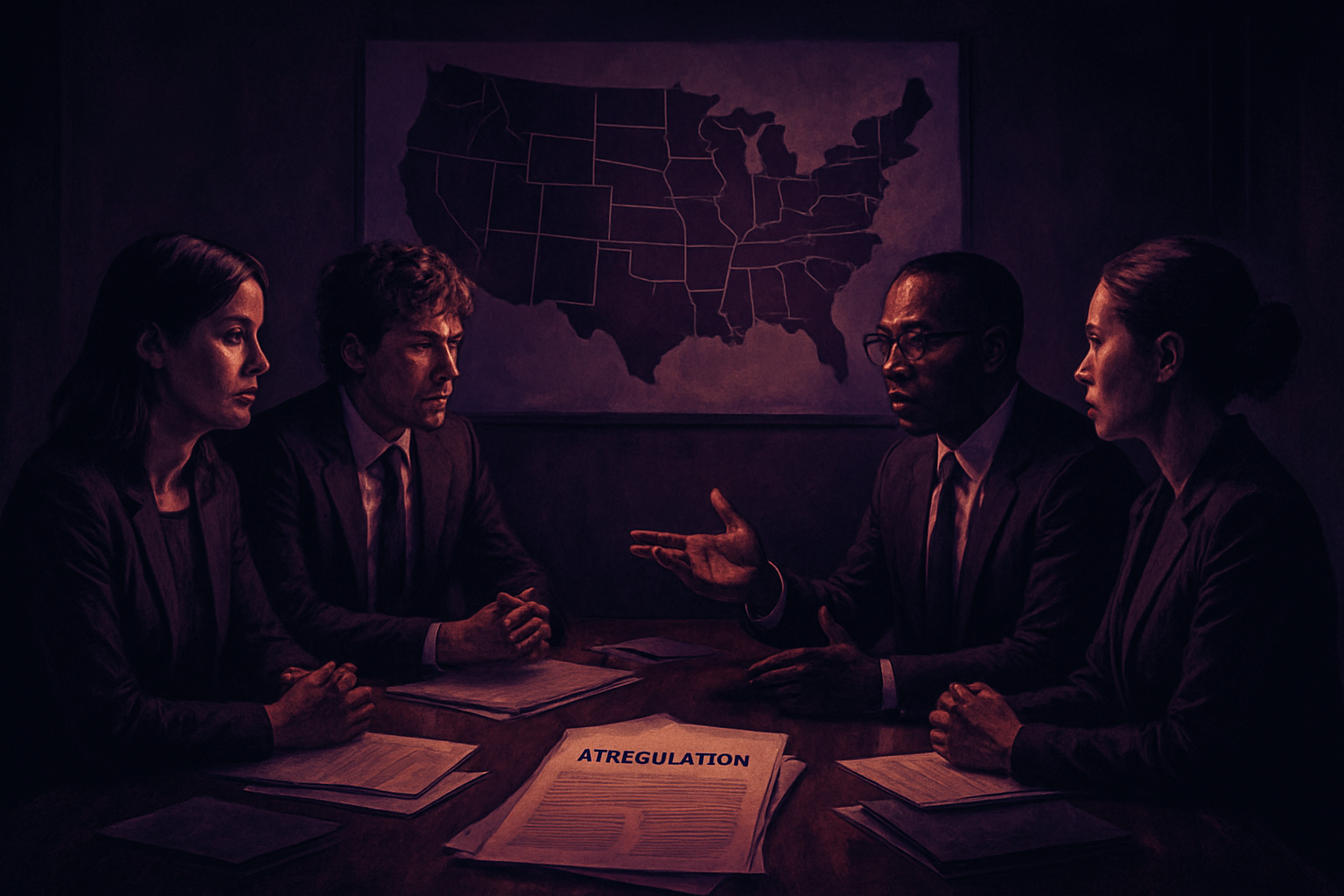
Anthropic and OpenAI: Divergent Visions for AI Regulation
Dario Amodei, co-founder and CEO of Anthropic, advocates for stricter laws regarding artificial intelligence safety in U.S. states. This approach stands in stark contrast to that of OpenAI, which is pushing for a unified national regulatory framework. This divergence in strategies is already influencing state legislation, as well as lobbying campaigns and political spending.
Anthropic, a major player in the field of artificial intelligence, has chosen a strategy aimed at encouraging states to implement increasingly rigorous safeguards for AI. This approach contrasts with OpenAI's goal of harmonizing regulations through a set of common rules at the national level.
Anthropic's Strategy for Enhanced Safety
Cesar Fernandez, head of government relations at Anthropic in the United States, expressed the company's desire to see legislation that significantly raises the safety standards for the most advanced AI systems. This statement comes as OpenAI is conducting a campaign to influence state regulations on AI. Chris Lehane, OpenAI's chief lobbyist, introduced the concept of "reverse federalism" to describe its efforts to bypass a paralyzed Congress and establish a national framework by drawing inspiration from state-by-state legislation.
This implicit criticism of OpenAI aligns with Anthropic's image, as its leaders left OpenAI in 2020, concerned about the priority given to safety. Anthropic consistently advocates for stricter AI safety rules at both the federal and state levels, an effort that some critics, including those close to the Trump administration and the venture capital sector, view as an attempt to slow down regulators and exclude competitors.
OpenAI Defends Its "Reverse Federalism" Approach
Liz Bourgeois, spokesperson for OpenAI, defended the company's approach, stating that "reverse federalism," where effective state safeguards influence national standards, helps regulators enforce the law, provides clearer protections for the public, and allows developers to focus on safety rather than conflicting requirements.
The divergence between OpenAI and Anthropic's approaches comes at a crucial moment for AI regulation. With a hesitant Congress and a White House oscillating between a light-touch and a heavy-handed approach, the AI industry is increasingly turning to states for regulatory clarity. The choice of lawmakers to adopt a unified framework or seek to outdo each other will significantly influence the final shape of AI rules in the United States.
Anthropic's Legislative Initiatives
Like Lehane, Fernandez expressed a desire for a federal framework but emphasized that a government response to the risks posed by advanced AI models "cannot wait for action in Washington." Anthropic has been the only major AI lab to support California's 2025 law aimed at regulating advanced AI models, the first of its kind in the country.
OpenAI did not take a position on the California proposal before its adoption. However, it has since turned to this law, which aims to promote greater transparency in corporate safety plans, as a model to replicate in other states. Anthropic, on the other hand, viewed the California law as a springboard to intensify its AI safety efforts.
Le brief IA que les pros lisent chaque soir
Les 7 actus IA du jour, décryptées en 5 min. Gratuit.
Inclus dès l'inscription : notre sélection des meilleurs guides & comparatifs IA.
Choisis ton rythme
Gratuit · Pas de spam · Désabonnement en 1 clic
Towards Stricter Laws
Fernandez stated that the rapid development of increasingly powerful AI models is the main factor behind his company's support for more ambitious bills — in New York, Illinois, and now Massachusetts — and its initiative to intervene earlier in the legislative process.
"Each of these laws was stricter than the previous one, and they all advanced real safety obligations," said Fernandez. "Transparency and self-reporting, we no longer believe they are sufficient." He cited Anthropic's powerful model Claude Mythos, which the company found capable of exploiting security vulnerabilities in every major computer operating system during its tests. The cybersecurity concerns raised by Mythos (and its public version, known as Fable) caused panic within the Trump administration, which imposed export controls on the technology until Anthropic and the government could address the alleged vulnerabilities.
Political Alliances and Financial Contributions
At the end of last year, OpenAI's lobbyists succeeded in convincing New York Governor Kathy Hochul to modify her state's AI safety bill to resemble California's rules more closely. However, to the surprise of some safety advocates, OpenAI joined Anthropic in supporting a measure in Illinois considered stricter than those in New York and California. This proposal, signed into law this month by Governor JB Pritzker, requires major AI companies to undergo annual independent audits of their safety plans — an unprecedented mandate.
Anthropic is pushing even further. At the end of June, it supported ongoing regulations being developed in Massachusetts for a bill on economic development obligations that the company describes as the strongest AI safety proposal at the state level. The text it supported included a requirement for major AI companies to hire independent assessors to evaluate the potential for catastrophic risks, such as technology aiding in the development of biological weapons, as well as a provision empowering the state attorney general to enforce this mandate.
Bourgeois, OpenAI's spokesperson, stated that the company is still reviewing the Massachusetts proposal but added that OpenAI supports the emphasis the state legislature places on AI safeguards.
A Political and Financial Battle
The AI giants have also clashed on the political front. Each is associated with competing super PAC networks that have so far invested tens of millions of dollars in political campaigns across the country. In June, Anthropic began making contributions directly to California lawmakers.
"We support candidates for elections and re-elections when their views on AI safety regulation align with our mission to ensure that the transition to a world with powerful AI is beneficial for people in this country and around the world," said Fernandez. "We actively support candidates where there is ideological alignment."
Fernandez clarified that the company does not coordinate with employees who have also made contributions to political candidates in California and elsewhere. "We do not direct our employees to make contributions, but they work at Anthropic because they care about the future of AI and the direction it takes if there is no appropriate safety policy put in place by governments," said Fernandez. "I suppose that drives them to engage in the political process."
Brief IA — L'actualité IA en français
L'essentiel de l'actualité de l'intelligence artificielle, décrypté et expliqué chaque jour.