Anthropic Facing the Rise of Open Source AI: A Balance
Le brief IA que les pros lisent chaque soir
Les 7 actus IA du jour, décryptées en 5 min. Gratuit.
Inclus dès l'inscription : notre sélection des meilleurs guides & comparatifs IA.
Choisis ton rythme
Gratuit · Pas de spam · Désabonnement en 1 clic
A New Perspective on Open Source AI and Cutting-Edge Models
Last Monday, Jesse Zhang published an article that generated significant interest in the world of artificial intelligence. Titled "Everyone is Wrong About Open Source AI in the Enterprise," this article explores an intriguing contradiction in the current AI economy. Zhang explains that while companies tend to adopt lighter AI models as they mature, investments in expensive, cutting-edge models remain stable.
Zhang proposes a new way to conceptualize the relationship between cutting-edge models and open source ones. According to him, these two types of models are not in direct competition. Instead, they represent different stages of the same lifecycle. The expensive models serve to demonstrate use cases that, once validated, can be transferred to more economical open source alternatives.
The Evolution of Use Cases and Spending
As use cases mature, they migrate to lighter models. However, new use cases continue to emerge, keeping overall spending on cutting-edge models high. Zhang acknowledges that he does not have much data to support his argument, but information is available elsewhere.
For example, Vercel's AI gateway dashboard reveals that just last week, DeepSeek topped the charts in terms of token volumes, processing more than a third of the tokens through the company's infrastructure. At the same time, Z.ai, known for its GLM-5.2 model, reached fourth place.
Anthropic and Spending Distribution
Despite these developments, Anthropic continues to account for more than half of the overall AI spending on the platform. A significant portion of the recent change comes from rising prices at Anthropic, but its market share has only slightly decreased. This indicates that cutting-edge models maintain a dominant position, even in the face of the rise of open source solutions.
OpenRouter presents a similar dynamic. DeepSeek V4 Flash is the most used model, although exact figures are not specified. In comparison, Opus 4.8, a cutting-edge model, handles a large volume of tokens. Although OpenRouter does not rank models by total spending, the average cost per token for Opus 4.8 is about 23 times higher than that of V4 Flash, suggesting that Opus likely still captures the majority of spending.
The Arrival of New Players
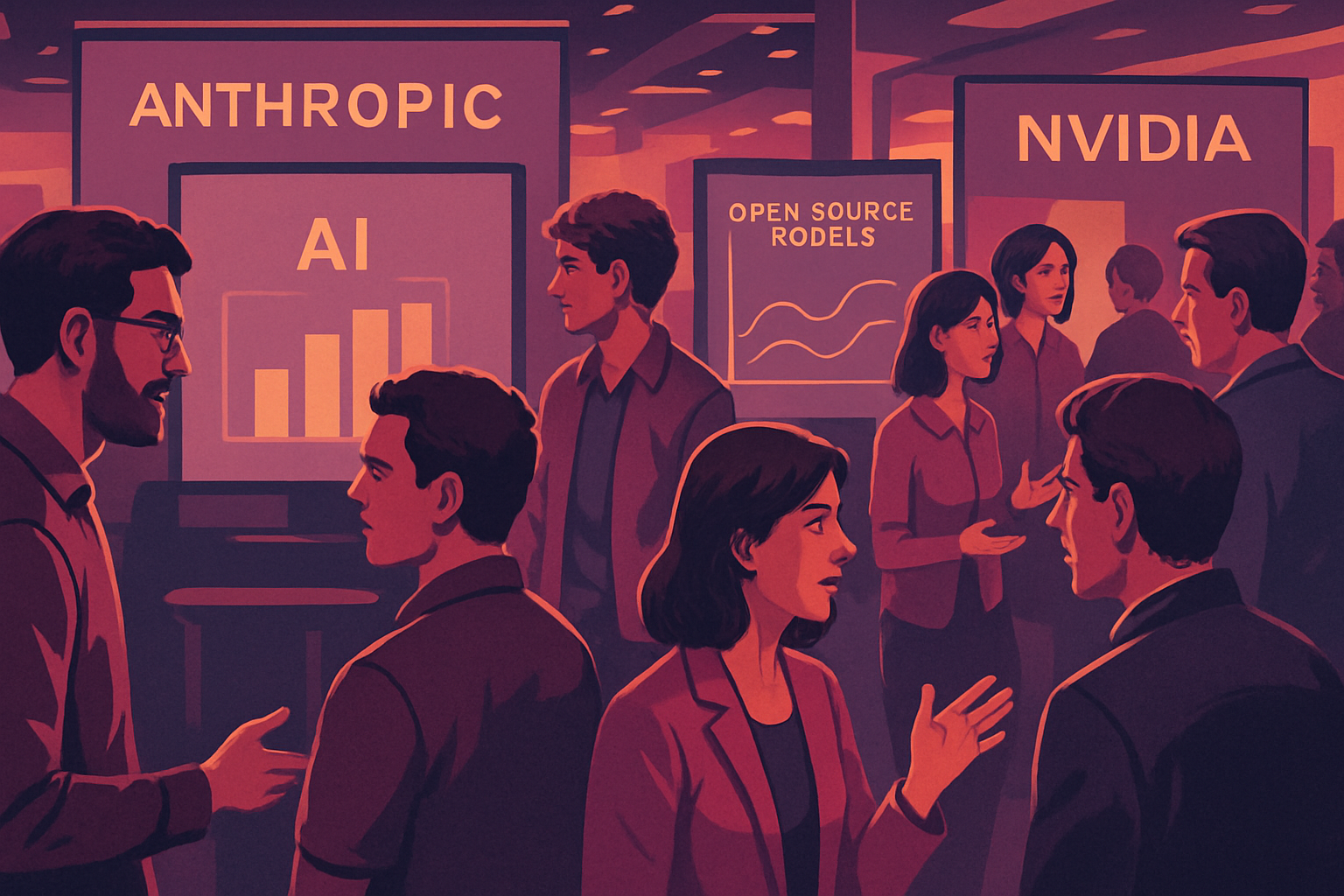
These figures do not account for the arrival of new players like Nvidia's Nemotron, which could soon dominate thanks to its strong connections and the flexibility of its model. While this data does not fully prove Zhang's theory on AI lifecycle stages, it shows that cutting-edge labs like Anthropic are not yet affected by the rise of open source.
A Two-Tier AI Economy
One possible explanation is that the market for AI-addressable tasks is growing so rapidly that the best models can maintain their position by dominating initial deployments. According to Zhang, cutting-edge labs will continue to own discovery, while open source will increasingly take over production. Many use cases are so complex that they cannot be fully replaced by cheaper alternatives.
Last September, I wrote about the idea that foundation labs might eventually provide commodity inputs, while the application layer would reap the benefits. Some parts of this prediction have come true, particularly the shift of vertical AI companies to lighter models. However, cutting-edge providers have managed to retain the most lucrative part of the market through premium token pricing, and this does not seem poised to change anytime soon.
Brief IA — L'actualité IA en français
L'essentiel de l'actualité de l'intelligence artificielle, décrypté et expliqué chaque jour.