Anthropic, OpenAI, and Google Confront the Reality of Modern Internet
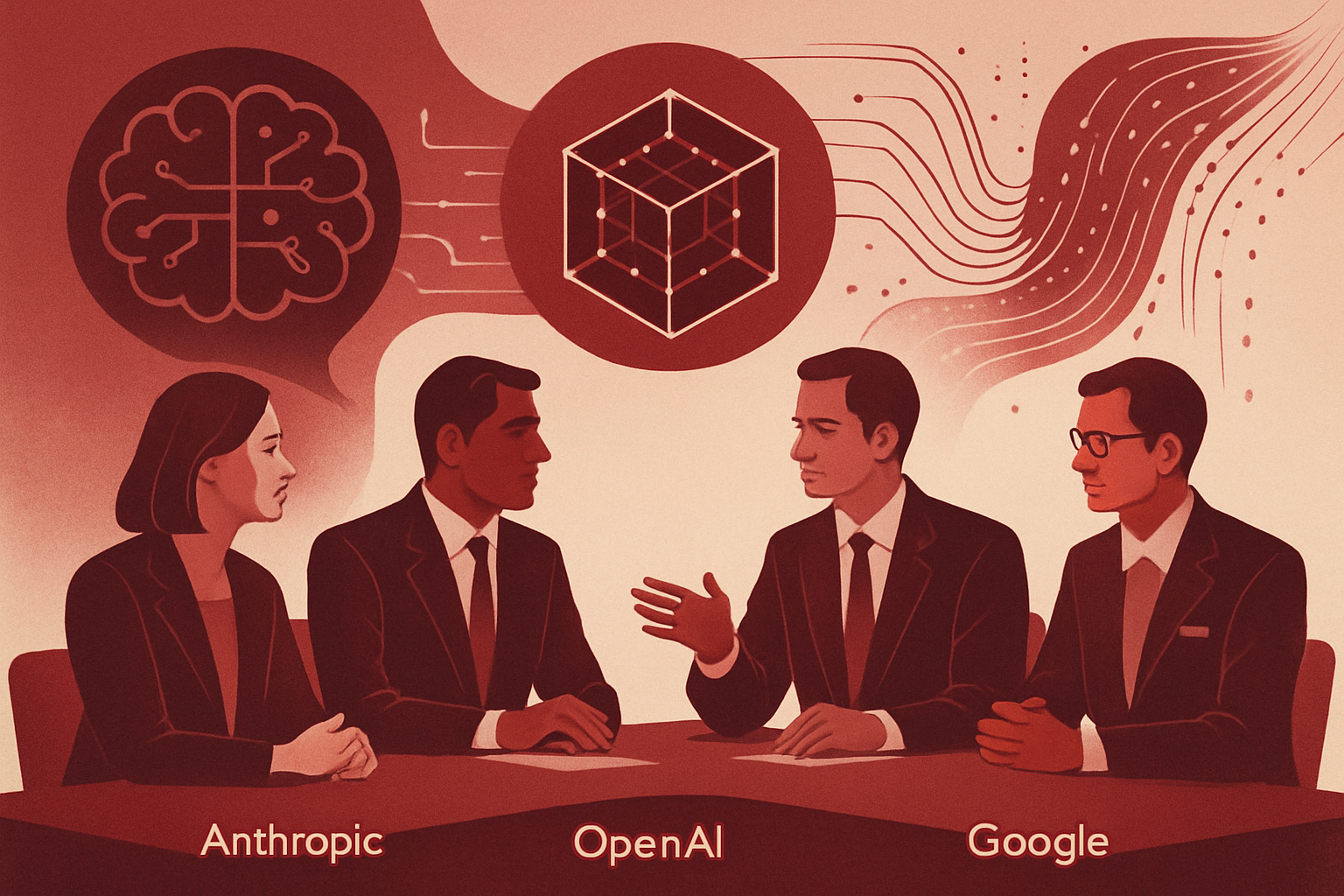
Tech Giants Confronted with Their Own Practices
For years, major tech companies have embraced the idea that any information available on the Internet can be used to enrich their artificial intelligence models, under the principle of fair use. However, content creators have often attempted to oppose this practice, generally without success.
Today, companies like Anthropic, OpenAI, and Google find themselves facing a reality that many others have already experienced: once information is online, it can be exploited in unexpected and often undesirable ways. This awareness is particularly acute in the current context where distillation has become a major point of friction.
Distillation: A New Battleground
Distillation, which involves using the results of one AI model to improve another, is at the heart of current concerns. Anthropic accuses some of its competitors of leveraging its results on a large scale, thereby turning multi-billion dollar investments into shortcuts for other companies. OpenAI and Google have also expressed similar concerns.
The question is simple: why invest heavily in developing the best AI models if others can replicate much of it at a lower cost? This situation raises legitimate commercial concerns, but it is also complex to manage.
A Troubling Symmetry
On a larger scale, distillation eerily resembles what AI companies have done with the rest of the Internet: collecting web content without permission, transforming it into sellable products, and justifying it through fair use. Anthropic, for example, accuses its rivals of extracting intelligence from its models, while website owners have long accused Anthropic of doing the same with their content.
Le brief IA que les pros lisent chaque soir
Les 7 actus IA du jour, décryptées en 5 min. Gratuit.
Inclus dès l'inscription : notre sélection des meilleurs guides & comparatifs IA.
Choisis ton rythme
Gratuit · Pas de spam · Désabonnement en 1 clic
This situation highlights a symmetry that is hard to ignore. Although Anthropic presents itself as an ethical AI company, it is often criticized for its intensive data collection practices, which overload websites with repeated requests.
Bots: A Recurring Problem
Anthropic, OpenAI, and Google describe this phenomenon as a cybersecurity issue, emphasizing that swarms of bots attack their models to extract intelligence. However, these companies have themselves used bots to collect data from numerous websites, thereby increasing operational costs for the owners of those sites.
The AI research community distinguishes distillation from web scraping, but there is no consensus on the legitimacy of distillation. Anthropic, for instance, has labeled some practices of its competitors as distillation attacks, sparking debates within the community.
An Evolving Debate
The debate surrounding distillation is complex. Some forms of distillation, such as using the results of one's own models to create new ones, are generally accepted. However, when companies use the results of others to improve their own models, it becomes more controversial.
Some experts, like Nathan Lambert, refer to "distillation panic," fearing that Anthropic's position may negatively affect all forms of distillation.
An Endless Struggle
The reality of modern Internet is relentless. Anthropic has attempted to limit access to its models to prevent competitors from learning too much, but these efforts have often failed or led to more sophisticated workarounds.
Once information is online, it is difficult to control its use. This applies to blogs, photos, software, videos, and, of course, the results of AI models. As Zilan Qian from the Oxford China Policy Lab stated, as long as AI model results are accessible, individuals will find ways to access them.
Thus, distillation could be considered fair use, but the legal implications remain uncertain. AI giants must now adapt to this new reality of the Internet.
Brief IA — L'actualité IA en français
L'essentiel de l'actualité de l'intelligence artificielle, décrypté et expliqué chaque jour.