Apple Sues OpenAI for Industrial Espionage
Apple Sues OpenAI for Industrial Espionage
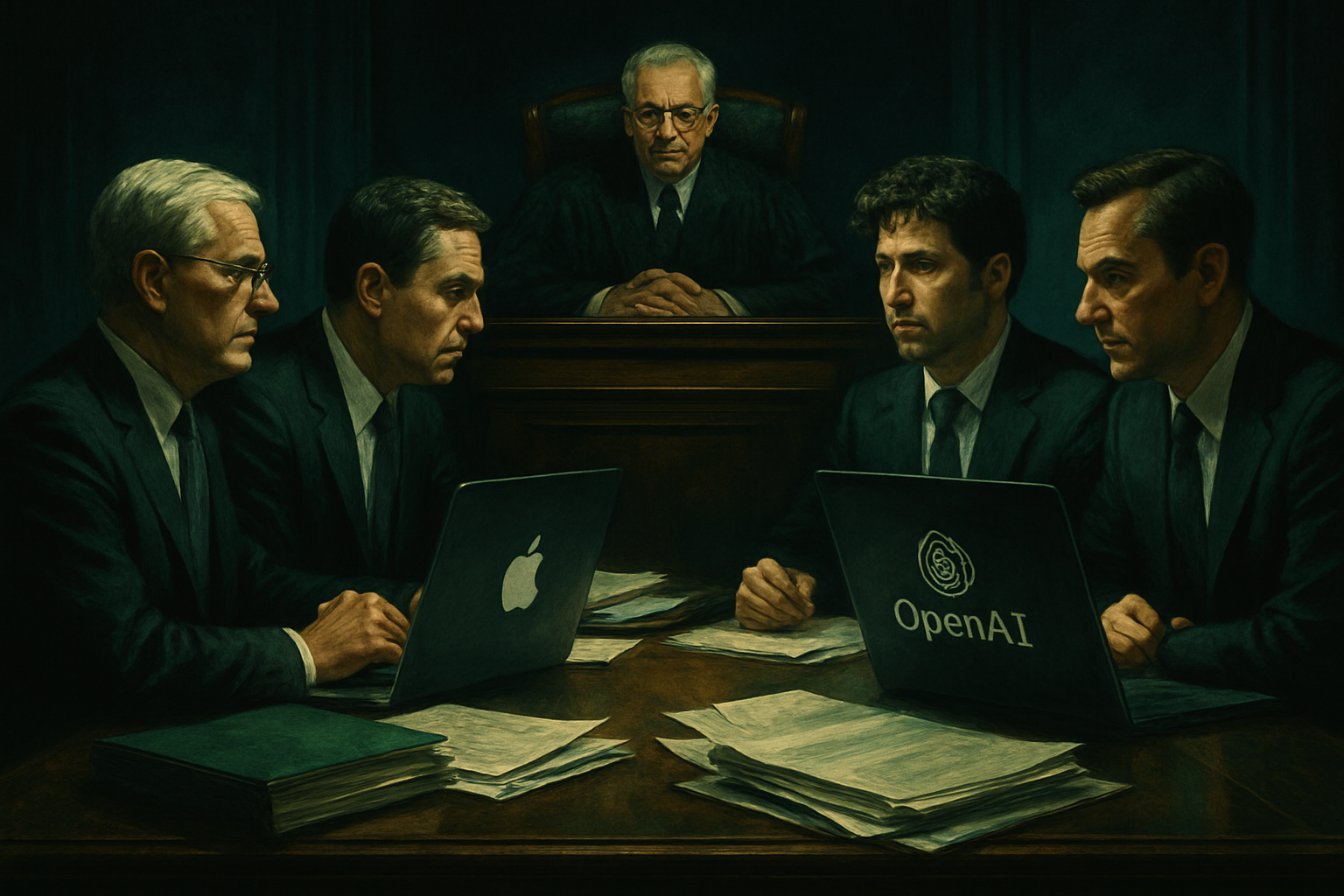
Apple has sued OpenAI, accusing engineers of stealing Apple’s trade secrets to advance the hardware projects of the AI startup. In its complaint, Apple claims to have uncovered "a pattern of theft of Apple’s trade secrets by OpenAI employees who were previously at Apple." In addition to OpenAI, the lawsuit also names IO Products — Jony Ive's hardware startup, acquired by OpenAI in 2025 — as well as two specific employees, Tang Tan (OpenAI's hardware director) and Chang Liu (who joined OpenAI from Apple in January).
An Apple spokesperson shared this statement with 9to5Mac:
"At Apple, our teams are constantly developing groundbreaking technologies to create the best products and services in the world, and protecting their work and intellectual property is something we take very seriously. Recently, significant evidence has emerged suggesting that individuals employed by OpenAI have improperly taken confidential and secret information from Apple regarding our unpublished technologies, processes, and products. We will always defend the hard work and innovations of our teams, and we will take all appropriate measures to do so."
Drew Pusateri from OpenAI told The Verge: "We have no interest in the trade secrets of other companies. We remain focused on building innovative technologies that empower people everywhere."
Liu is accused of accessing Apple’s systems after leaving the company and downloading information, including "dozens of confidential files related to Apple hardware, comprising detailed information on unpublished products, technical presentations, technical specifications, and proprietary project data." He allegedly instructed a former Apple colleague on how to copy Apple’s confidential files and "avoid issues" with the company's security team before his arrival at OpenAI. Liu reportedly suggested that they should communicate via Line Messenger to avoid detection.
Le brief IA que les pros lisent chaque soir
Les 7 actus IA du jour, décryptées en 5 min. Gratuit.
Inclus dès l'inscription : notre sélection des meilleurs guides & comparatifs IA.
Choisis ton rythme
Gratuit · Pas de spam · Désabonnement en 1 clic
"Mr. Liu's material breaches of his contract are also clear and deliberate: he accessed, copied, and directed the disclosure of Apple’s confidential information after the end of his employment, in direct violation of his post-termination obligations," states Apple.
Apple alleges that Tan "systematically used Apple’s confidential information to benefit OpenAI," including sending himself information about Apple’s suppliers before leaving the company and soliciting confidential information from Apple employees during interviews for positions at OpenAI.
OpenAI is also said to have asked Apple employees to bring items such as "CAD/design artifacts" and "prototypes" during interviews, according to the lawsuit. "This is a systematic effort to acquire, retain, and use Apple’s trade secrets to help OpenAI attempt to replicate the secret technologies, business processes, and supply chain innovations that Apple has spent decades building in its consumer hardware business," states Apple.
Apple alleges that OpenAI has also "directly targeted Apple’s partner network and supply chain," including asking an Apple partner, who collaborates with Apple on industrial design and metal finishing techniques, "to perform Apple’s proprietary and secret processes for the benefit of OpenAI."
More than 400 former Apple employees now work at OpenAI, according to Apple. The company accuses OpenAI of advising departing Apple employees to inform OpenAI if Apple staff "ask you to sign anything."
Apple claims to have contacted OpenAI in February to express its concerns and ask what OpenAI was doing to address the issue. "OpenAI never responded," according to Apple.
OpenAI's first hardware product is expected to arrive next year. In the lawsuit, Apple questions OpenAI's ability to deliver — at least without relying on Apple’s work. "OpenAI's nascent hardware business now rests on the most fragile foundations," the lawsuit states, "rotten to the core due to its illegal reliance on misappropriated trade secrets."
Brief IA — L'actualité IA en français
L'essentiel de l'actualité de l'intelligence artificielle, décrypté et expliqué chaque jour.