ChatGPT, Claude, and Gemini: The Hidden Dangers of AI in Business
Le brief IA que les pros lisent chaque soir
Les 7 actus IA du jour, décryptées en 5 min. Gratuit.
Inclus dès l'inscription : notre sélection des meilleurs guides & comparatifs IA.
Choisis ton rythme
Gratuit · Pas de spam · Désabonnement en 1 clic
The Risks of Entrusting Sensitive Data to External AIs
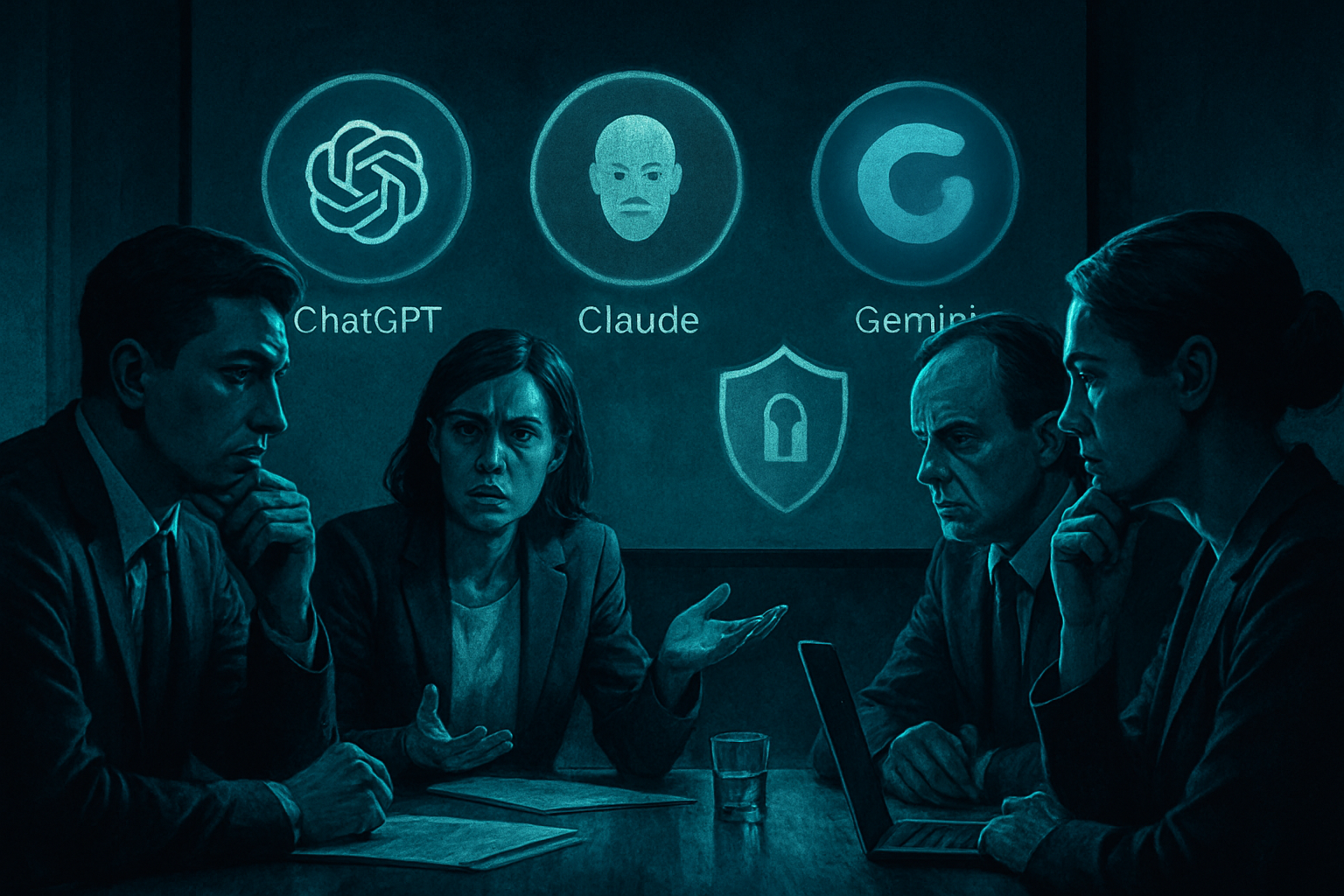
In the business world, the use of artificial intelligence tools like ChatGPT, Claude, or Gemini to handle sensitive information has become a common practice. However, this apparent ease conceals a major danger. When an employee shares a confidential contract, strategic data, or copyright-protected documents with these platforms, they open the door to considerable risks. This data is transferred to servers over which the company has no control, potentially leading to leaks of critical information.
The trust of customers, employees, and shareholders is undermined when such practices are tolerated. Corporate governance is then partially delegated to the terms of use imposed by providers based in California, which can erode the company's value and reputation. Respectable companies do not merely raise awareness among their employees; they implement clear and proportionate sanctions to prevent the tool from undermining trust. Neglecting this aspect can be perceived as a strategic weakness, severely penalized by the markets.
The Dangers of Autonomous AI Agents
The temptation to replace employees with autonomous agents is strong, particularly in financial departments. On paper, this seems like an ideal solution to reduce labor costs while increasing shareholder value. However, this approach is both an economic and moral trap. Economically, the actions of a machine can be easily replicated or surpassed by another, nullifying any competitive advantage.
Morally, the issue is even more severe. As François Dupuy highlighted in his book Lost in Management, responsibility is often diluted in automated processes, which can lead to dehumanized decisions. The machine, devoid of consciousness and ethics, merely optimizes a goal without regard for human consequences.
Concrete examples illustrate these dangers: in Australia, the Robodebt program unjustly pursued vulnerable citizens, leading to personal tragedies; in the Netherlands, an algorithm ruined families, prompting the resignation of the government; Amazon had to abandon a discriminatory recruitment tool; and Air Canada was penalized for a pricing policy devised by a chatbot. In each case, the absence of human judgment turned a tool into a disaster.
AI-Generated Meeting Minutes: An Insidious Trap
Entrusting the writing of meeting minutes to AI may seem innocuous, but it is a warning sign. Initially, recording meetings is presented as a tool for synthesis, but it quickly becomes the norm, extending surveillance to all aspects of the work environment. Employees may then feel constantly monitored, which undermines the atmosphere of trust necessary for innovation.
A meeting minute is never purely objective. It reflects subjective choices, priorities, and an understanding of human dynamics. By delegating this task to a machine, a company sends the message that human judgment is no longer valued. This leads to standardized work, devoid of nuance and creativity. AI perceives only averages, missing subtleties and emerging opportunities.
By adopting these practices, a company risks losing what constitutes its true value: judgment, responsibility, and trust. AI is a powerful tool, but it should never replace humans in their roles as decision-makers, judges, or collective memory. It is crucial to maintain control or to exit such an environment.
Brief IA — L'actualité IA en français
L'essentiel de l'actualité de l'intelligence artificielle, décrypté et expliqué chaque jour.