China: Beijing Bans AI Romance to Tackle Demographic Crisis
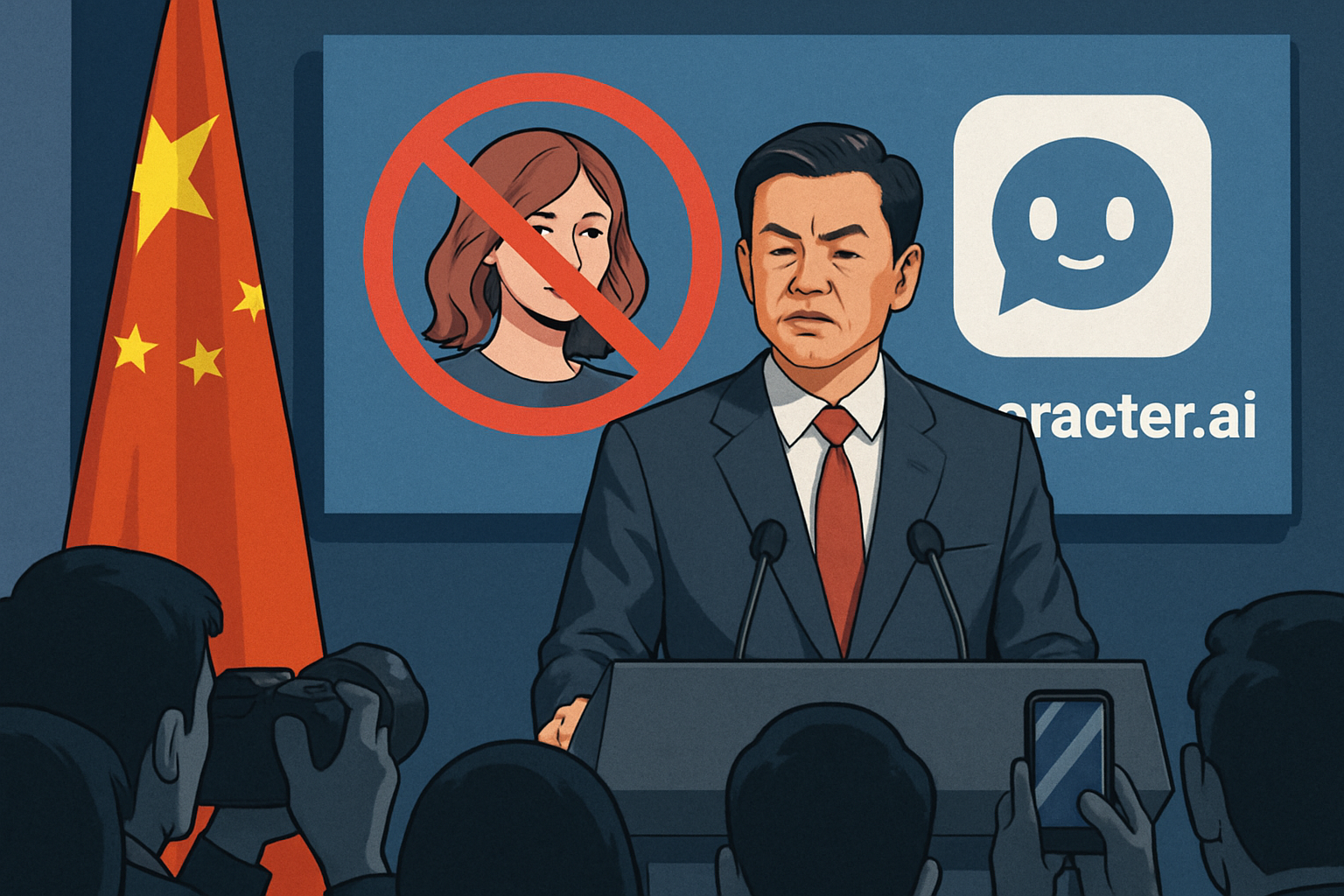
China Bans Romantic Relationships with AIs
In a context where the excesses of artificial intelligence raise numerous concerns, China has made a radical decision: to ban romantic relationships between humans and chatbots. This phenomenon, particularly affecting teenagers in the United States, sees companies capitalizing on this trend. Among them are players like Character.ai, involved in a controversial suicide case, as well as Replika, and a multitude of less regulated applications such as JanitorAI, Chai, SpicyChat, and Talkie. Some users even turn to generalist chatbots like ChatGPT to fulfill their emotional needs.
The market for "synthetic love" is experiencing rapid growth, which worries Chinese authorities. On July 15, they declared a ban on companies creating agents capable of generating emotional dependency. The legislation also prohibits any virtual relationship with minors and requires companies to report an emergency contact as soon as emotional distress is detected. Chatbots will have to undergo regulatory evaluation before being made available to the public, and the state reserves the right to deactivate those deemed dangerous.
Response to a Demographic Crisis
Matt Sheehan, a researcher at the Carnegie Endowment for International Peace and an expert on Chinese AI, explains that this law addresses a major demographic issue. According to him, the Chinese regime does not appreciate the idea that a significant portion of its population is forming deep emotional relationships with chatbots, which could divert them from the traditional marriage market.
He raises a troubling question: could we imagine a future where, in three or four years, 15 million Chinese women declare that their partner is a chatbot, and consequently, they would not have children?
Le brief IA que les pros lisent chaque soir
Les 7 actus IA du jour, décryptées en 5 min. Gratuit.
Inclus dès l'inscription : notre sélection des meilleurs guides & comparatifs IA.
Choisissez votre rythme
Gratuit · Pas de spam · Désabonnement en 1 clic
This prospect is a true nightmare for a state seeking to revive its birth rate. China's demographic situation is alarming: by 2025, the Chinese population has declined for the fourth consecutive year, falling to 1.405 billion inhabitants, with the lowest birth rate ever recorded.
Consequences of Past Policies
The one-child policy, implemented in 1979, relaxed in 2015, and finally abandoned in 2021, has left deep scars that subsidies cannot repair. The average age in China has never been higher, and prenatal sex selection, practiced for forty years, has created an imbalance such that the Chinese Academy of Social Sciences estimates that one in five men will never find a wife.
A Leap Forward
While it is understandable that Beijing wants to stem this societal leak, it is also possible to argue that the government is not truly addressing the root of the problem. If millions of young adults prefer to turn to virtual entities to fulfill their emotional desires, it is primarily due to the social violence prevailing in China.
Most young people work nine hours a day, six days a week, and are traumatized by the ultra-competition for academic and professional survival. They are also exhausted by a declining purchasing power that prevents them from accessing the basics of well-being: housing, healthcare, quality education for their future children, decent rest time, or the financial capacity to support their aging parents.
Ultimately, this new regulation does not genuinely protect users, and the age pyramid will continue to collapse. By blaming chatbots for its current ills, Beijing provides itself with an ideal scapegoat to avoid facing the failure of its social model. Births were already declining before the arrival of AI; why would they rise again today simply because the government has decided to deprive its youth of their last virtual comfort?
Brief IA — L'actualité IA en français
L'essentiel de l'actualité de l'intelligence artificielle, décrypté et expliqué chaque jour.