Claude Mythos and the 15-Year Bug: A Revolution in Firefox
Le brief IA que les pros lisent chaque soir
Les 7 actus IA du jour, décryptées en 5 min. Gratuit.
Inclus dès l'inscription : notre sélection des meilleurs guides & comparatifs IA.
Choisis ton rythme
Gratuit · Pas de spam · Désabonnement en 1 clic
A Renowned Engineer at Mozilla
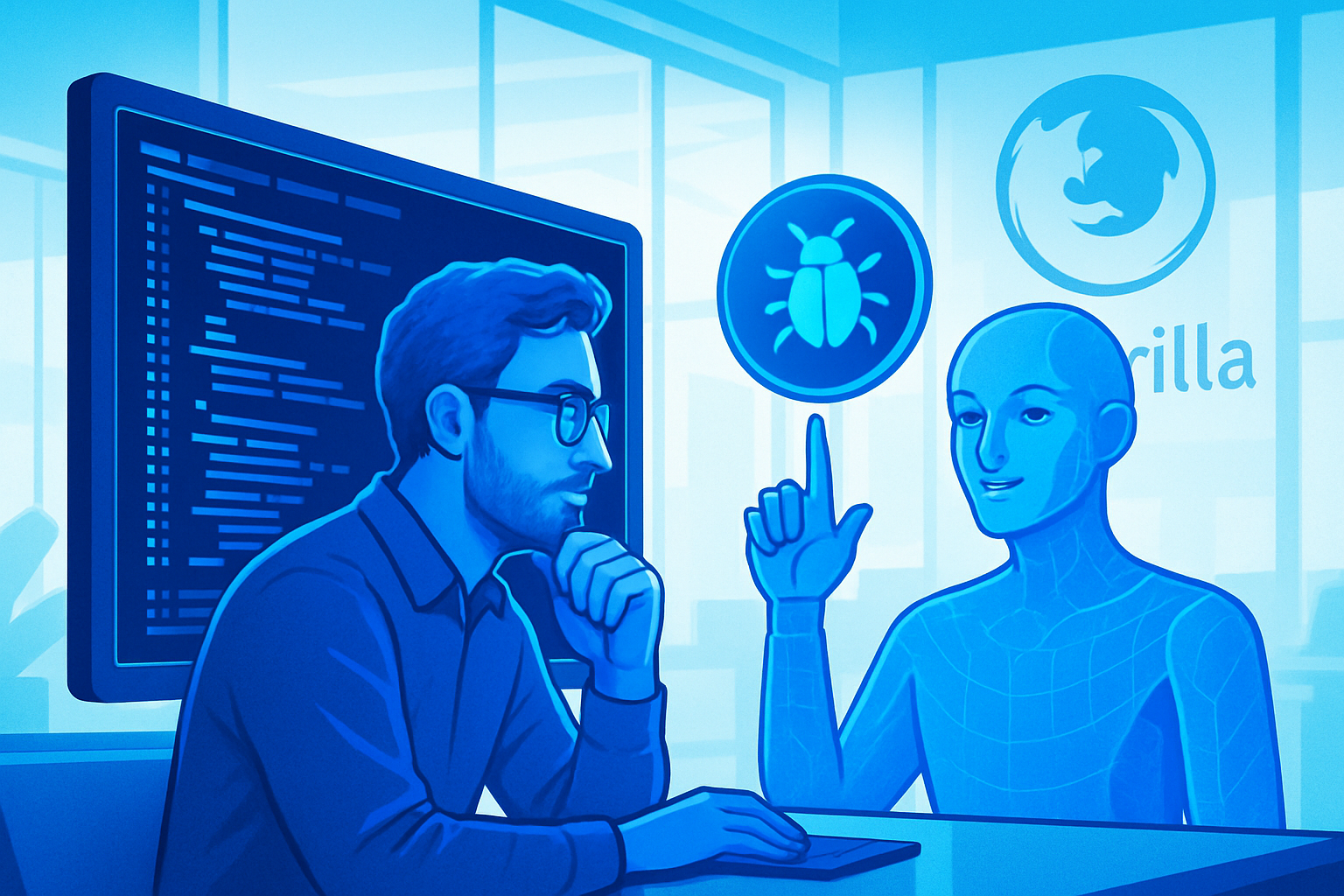
Brian Grinstead, a respected engineer at Mozilla, joined the team in 2013 to contribute to the development of Firefox DevTools. Since then, he has played a key role in enhancing Firefox and the web platform. Recently, his team established a bug detection pipeline for Firefox, an ambitious project given the massive size of the source code, which includes tens of thousands of files and millions of lines of code. This work has led to a record month for security patches. A viral graphic attributed this success to Anthropic's Mythos model, but Brian insists that the detection framework and the pipeline have been equally crucial.
The Secrets of Bug Detection
The article presents several technical aspects of setting up a bug detection framework. It is possible to create a basic framework using Claude Code or Codex with a simple command and a specific flag, without requiring a software development kit (SDK). However, directing an agent towards an entire codebase can fail. To avoid this, an LLM judge can be used to evaluate and rank the files before engaging computational resources. A verifying sub-agent is also essential to eliminate false positives by monitoring the main agent.
The Goal Loop Model
The goal loop model is an approach where an agent receives a clearly defined problem with a success or failure signal, allowing it to retry far beyond human capabilities. Teams that have already invested in techniques like fuzzing, continuous integration, and development tools benefit from a significant head start. Brian emphasizes the importance of dividing credit between the model and the framework, believing that each contributes equally.
Involvement of Non-Engineers
Even individuals without engineering training can leverage this framework to improve design quality, conversion rates, or reduce technical debt. However, despite advancements in AI, generated patches cannot be deployed without human verification, underscoring the importance of human intervention in the process.
A 15-Year Discovery
Among the bugs discovered, one had been present for 15 years, illustrating the effectiveness of the new framework. The team also decided to make the project open source, allowing other developers to benefit from these tools. Despite automation, each patch must be reviewed by humans to ensure its quality and safety.
Demonstration and Prioritization
A live demonstration showcased how to prioritize files for review, mobilizing the team for a collective effort. The article concludes with a series of rapid-fire questions, offering insights into the next steps and the team's reflections.
Tools and References
The tools used include Claude Code, Claude Agent SDK, Codex, OpenAI Agent SDK, VS Code, Docker, Firefox, Address Sanitizer, and RLBox. Mozilla's Bug Bounty program and Mozilla's GitHub are also mentioned as additional resources.
Where to Follow Key Players
For those wishing to follow Brian Grinstead, he is present on LinkedIn and GitHub. Claire Vo, another mentioned figure, can be found on ChatPRD, her website, LinkedIn, and X.
Brief IA — L'actualité IA en français
L'essentiel de l'actualité de l'intelligence artificielle, décrypté et expliqué chaque jour.