Figma and AI: Noah Levin's High Expectations for Designers
The Evolution of Expectations at Figma in the Age of AI
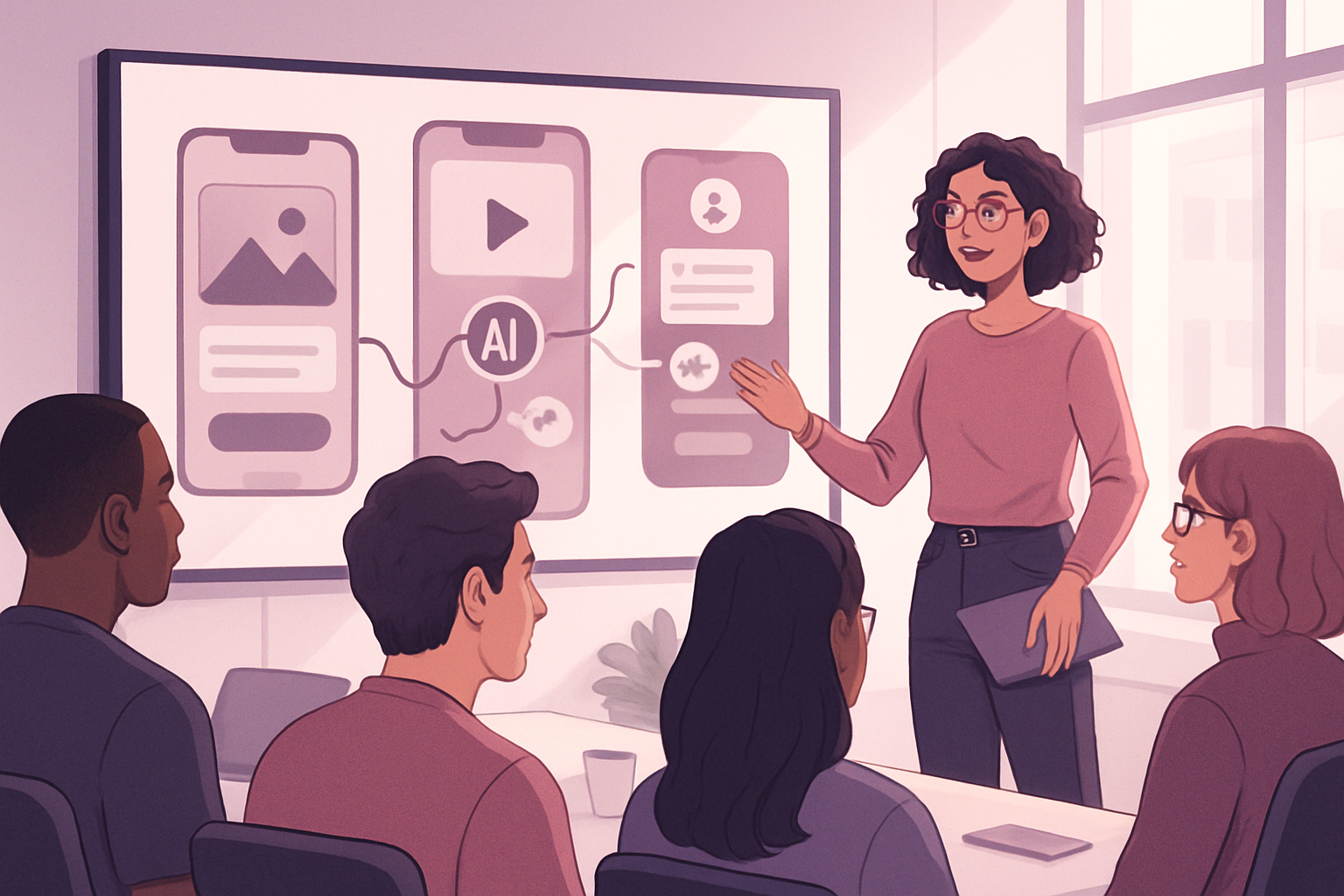
Noah Levin, Vice President of Product Design at Figma, recently shared his new expectations for candidates applying for designer positions. With the advent of artificial intelligence, Levin wants applicants to demonstrate their ability to use these technologies to create multiple interactive and realistic prototypes. However, he clarifies that this does not simply mean mass-producing AI-generated prototypes.
Levin, who has held this position for over eight years in San Francisco, explained to Business Insider that AI tools have transformed the way designers can create prototypes. Now, he expects candidates to produce interactive and polished designs, which has significantly raised his selection criteria.
A Paradigm Shift in Design
Ten years ago, finding designers capable of creating concepts close to the final product was a challenge. Technical skills were often lacking, making it difficult to produce interactive prototypes in quantity. Before AI, creating ten functional prototypes required considerable effort that was not justified by the time invested.
Today, thanks to AI, prototyping ideas can be done quickly, without requiring deep technical skills. Levin therefore expects each candidate to express their ideas with a high level of fidelity, both in terms of user interface and user experience.
Le brief IA que les pros lisent chaque soir
Les 7 actus IA du jour, décryptées en 5 min. Gratuit.
Inclus dès l'inscription : notre sélection des meilleurs guides & comparatifs IA.
Choisis ton rythme
Gratuit · Pas de spam · Désabonnement en 1 clic
The Importance of Innovation and Experimentation
Levin emphasizes the importance for candidates to stay updated with the latest AI tools. He appreciates seeing designers experiment with these new technologies rather than settling for default results. The fundamental role of a designer, which is to solve user problems with expertise, remains unchanged. It is therefore crucial for Levin that candidates demonstrate a genuine investment in their work.
He also values transparency in the creative process. Candidates who share prototypes of failed and rejected products show a deep understanding of the design process. According to Levin, behind every successful launch lie hundreds of ideas and prototypes that did not succeed, and he believes that this is not sufficiently highlighted by candidates.
The Impact of New Design Platforms
Before joining Figma, Levin led the UX team at ClassPass and worked as a designer at Google. His observations come at a time when many AI platforms are simplifying the creation of websites and products for amateurs. Tools like Lovable, Base44, and Emergent allow for the rapid design of aesthetic products with simple instructions.
More traditional platforms such as Canva and Wix are also integrating AI tools to make design accessible to everyone. However, Figma's leadership, including CEO Dylan Field, has stated that AI will not diminish the value of designers. In June, Field referred to AI-generated designs as "mediocre," emphasizing that this is an opportune time for designers to push the boundaries of creativity. Last October, he reiterated that Figma's tools will not replace world-class designers but will help eliminate repetitive tasks from the design process.
Brief IA — L'actualité IA en français
L'essentiel de l'actualité de l'intelligence artificielle, décrypté et expliqué chaque jour.