Gensler and AI: Revolutionizing Modern Architecture
Le brief IA que les pros lisent chaque soir
Les 7 actus IA du jour, décryptées en 5 min. Gratuit.
Inclus dès l'inscription : notre sélection des meilleurs guides & comparatifs IA.
Choisis ton rythme
Gratuit · Pas de spam · Désabonnement en 1 clic
Gensler and the Integration of AI in Architecture
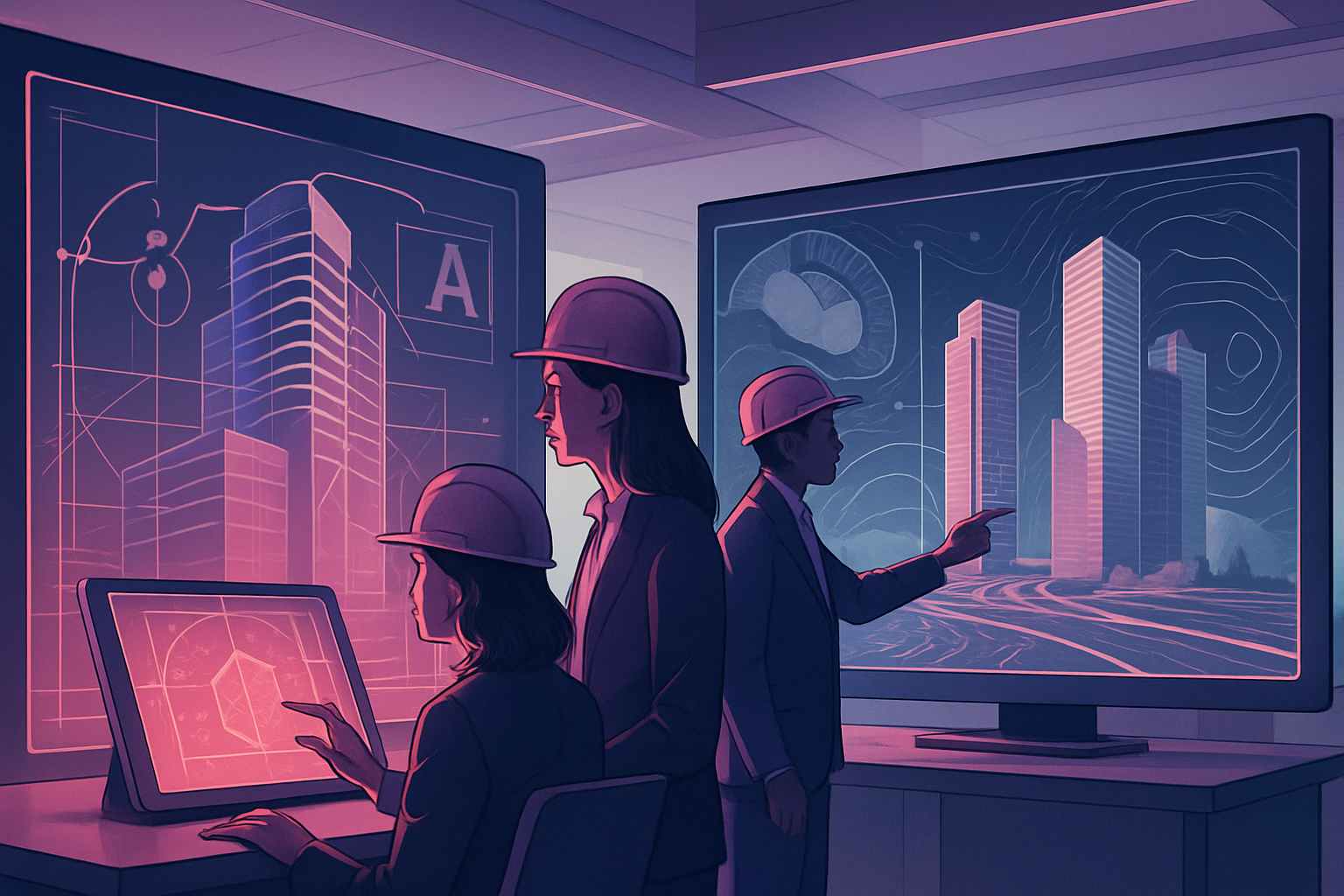
The architecture firm Gensler has taken a bold step by integrating artificial intelligence (AI) into its design processes. This technology is used to simulate various aspects of building usage, such as the impact of natural light, sound propagation, and the flow of people. Iconic projects like the Under Armor headquarters and the largest eco-development in Iraq have benefited from these innovations. Architects see AI as a way to boost creativity, although some express reservations about its adoption.
Imagine being able to design a building and virtually test how sunlight moves through its corridors, how sound travels through offices, or how people navigate its spaces—all before the first stone is laid. What once seemed like science fiction is now a reality thanks to AI, which has become an essential tool for architects, allowing them to accelerate and enrich their creative work.
Three years ago, Gensler launched an internal initiative called the "AI Sandbox," a period of experimentation with generative artificial intelligence. This phase allowed the company to explore, without fear, the possibilities offered by AI to determine what works and what doesn’t. "It was a pivotal moment for us," said Jordan Goldstein, co-CEO of Gensler, to Business Insider. "We knew we couldn’t wait and be reactive to artificial intelligence—we had to be ahead of the curve."
Although the architecture sector has been relatively slow to adopt AI, experts agree that this technology can help designers evaluate more options, better communicate their ideas, and accelerate the creative process. For Gensler, the integration of AI is not aimed at replacing humans but rather at expanding the company's capabilities. "What we’ve discovered is that AI really helps bring more ideas into the process and allows teams to explore their ideas more effectively," Goldstein explained. "It’s a tool that truly frees people to focus on that higher-value creative thinking."
From AI Design to Cinematic Narratives
Gensler manages around 3,000 projects each year, and AI is now used in the majority of them. During the sandbox phase, the Gensler team tested various generative AI tools provided by third parties, some of which were integrated into an internal interface. For example, AI enhances the development of design concepts, giving architects the ability to experiment with natural light and sound propagation within a building.
When designing the new Under Armor headquarters in Baltimore, Gensler's designers used AI to simulate the daily use of the building by employees and to assess the impact of occupancy on environmental performance, including ventilation and energy consumption.
Additionally, the firm utilizes RunDiffusion, an online platform that allows for the creation of AI-generated videos and images. Introduced about six months ago, over 3,000 employees were trained to use it in just four days. After some instructions on prompt engineering, Goldstein was able to use the tool to build a concept "in a matter of minutes." AI has thus enabled Gensler's designers to explore a greater number of ideas, assist architects in communicating their visions before construction begins, and simulate how buildings will function before they are built.
For instance, before the firm won a bid for a new mixed-use district around an upcoming stadium, they used AI to present their vision to the team owner. "The biggest breakthrough has really been in storytelling," Goldstein said. "We realized we could take AI-generated design concepts and turn them into very compelling cinematic narratives."
Gensler has also used AI in its work on the Sustainable Forests of Baghdad, employing it as a tool to envision the future of the largest eco-development in Iraq.
Examining and Pushing the Possibilities
A 2025 study by the American Institute of Architects revealed that about 90% of architects surveyed expressed concerns regarding AI inaccuracies, security risks, and the distinction between AI-generated content and that created by humans.
Jason Vigneri-Beane, an architecture professor at Pratt Institute, told Business Insider that some architecture students share similar feedback. "I find that for every person who is excited about it, there are also people who worry about losing their autonomy and authorship, as well as the use of energy and water," Vigneri-Beane said.
Vigneri-Beane sees potential in using AI for the early stages of a project, which is primarily how he has utilized it. "I’m excited about its use for experimental aesthetics," he added. "It can be useful for examining conceptual possibilities."
Sabri Gokmen, an assistant professor of architecture at the University of North Carolina at Charlotte, also uses AI in various ways. He has employed the technology to analyze large datasets in his cultural heritage preservation work and finds AI useful for everyday tasks such as writing grant proposals and critiques. Gokmen also teaches students how to generate images for design tasks using AI.
He stated that he is particularly excited about a collaborative research project with his university's computer science department. They are developing an AI model capable of generating geometric shapes, something that commercial LLMs cannot do.
"We're trying to do it in a way that a person like an architect or designer can write prompts or provide images, and what they’ll get back is a 3D model," Gokmen said. His team is currently training their AI on tower models, including office and residential buildings.
While some firms are using AI for conceptual design and business needs, Gokmen noted that "the adoption rate in the industry is still slow at the moment."
Nevertheless, Gokmen is convinced that AI is the future of architecture. "In terms of design, architecture will always depend on human decisions and social contracts," he said. "But this technology will open up other avenues for growth."
Brief IA — L'actualité IA en français
L'essentiel de l'actualité de l'intelligence artificielle, décrypté et expliqué chaque jour.