Google Chooses Ghana for Its AI Lab, Francophones Left Behind
Le brief IA que les pros lisent chaque soir
Les 7 actus IA du jour, décryptées en 5 min. Gratuit.
Inclus dès l'inscription : notre sélection des meilleurs guides & comparatifs IA.
Choisis ton rythme
Gratuit · Pas de spam · Désabonnement en 1 clic
Google Chooses Ghana for Its First AI Lab in Africa
Google recently inaugurated its very first laboratory dedicated to artificial intelligence on the African continent, and it is in Ghana that the company has decided to set up shop. This decision has raised many questions, particularly regarding the absence of a choice for a Francophone region for this strategic establishment. European companies, which are heavily investing in Francophone Africa, may need to reconsider their strategies.
A $1 Billion Investment and Clear Ambitions
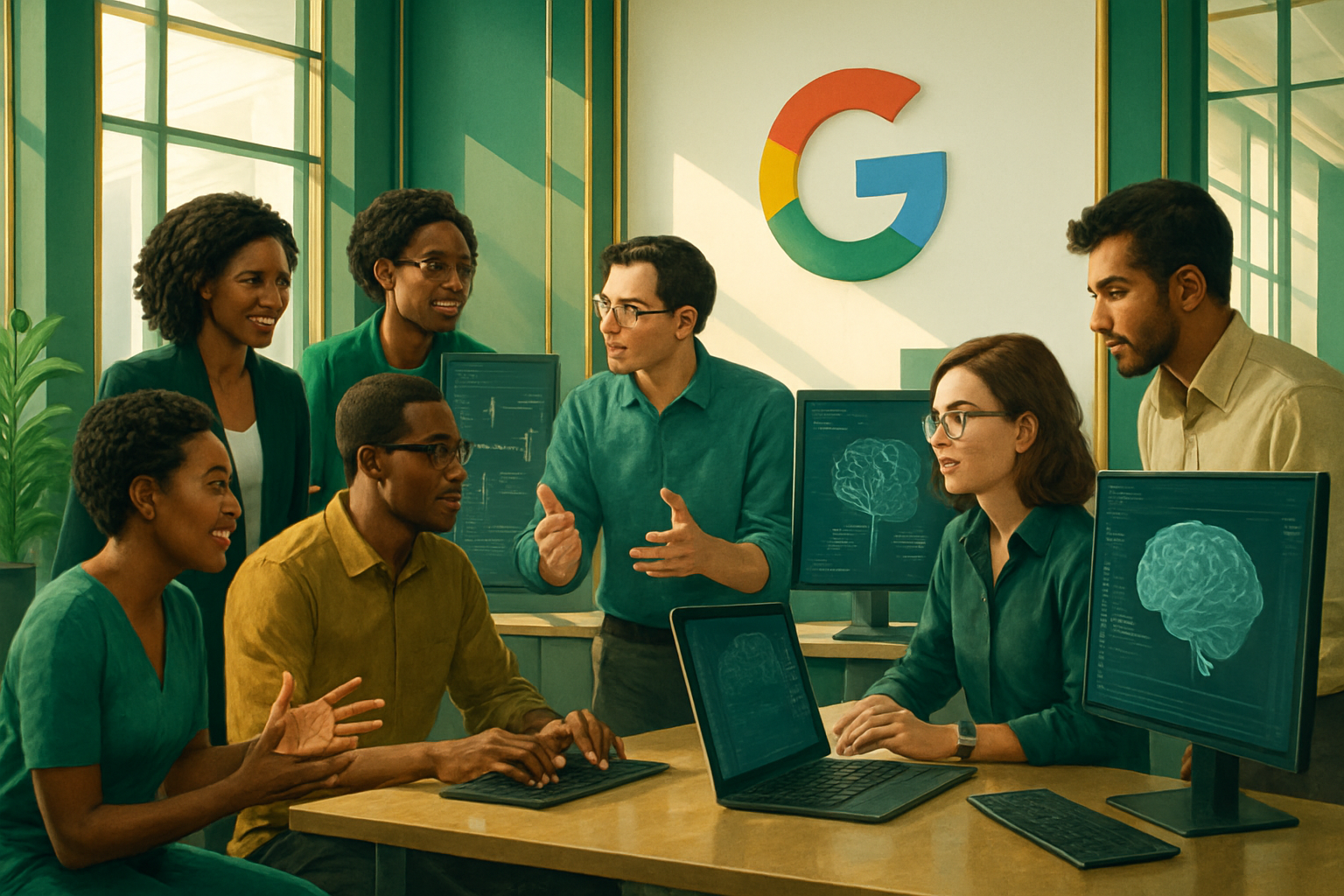
On July 1, during the Google Cloud Summit Africa in Johannesburg, Google announced that it had surpassed its initial commitment of $1 billion in investments in Africa over a five-year period. Among the flagship initiatives unveiled was the Google Africa Applied AI Lab, which will be integrated into the AI Community Centre in Accra. This lab aims to connect African startup founders with Google researchers, providing them with privileged access to the latest AI models developed by the company.
The stated goal is ambitious: to foster the emergence of the first generation of African "unicorns" specializing in AI. Applications to join this program are open until August 31, 2026, giving entrepreneurs time to prepare.
The choice of Ghana is explained by several factors. Since 2019, the country has already hosted Google's first AI research center on the continent. Additionally, the AI Community Centre has benefited from cumulative contributions amounting to $37 million. Ghana offers an English-speaking environment, recognized political stability, and a critical mass of talent trained to international standards.
Is Francophone Africa Lagging Behind?
The situation is different in the 23 countries of Sub-Saharan Francophone Africa. A report published by Ernst & Young in November 2025 highlights the enormous potential of these economies, which are brimming with talent and ideas. However, they suffer from "disarticulated" technological ecosystems. More than 70% of respondents lament the lack of a culture of cooperation among startups, universities, investors, and governments.
Despite sustained economic growth, with inflation controlled at 4% in 2025 compared to 17.4% for the rest of the continent, Francophone Africa struggles to attract tech giants. The potential is there, but it remains invisible to international investors.
Why Google Chose Accra
Three main reasons explain the choice of Accra over other cities like Abidjan or Dakar:
-
Network Effect: Ghana has managed to build a solid technological ecosystem over the years, with initiatives such as the Ghana Tech Hub and the Accra Angels Network. Startups benefit from continuous support, from incubation to Series A funding. In Francophone Africa, these structures exist, but they lack communication and coordination.
-
Standardization: International investors prefer predictable environments. Ghana, with English as the working language, legal frameworks inspired by common law, and accounting practices compliant with IFRS standards, offers a reassuring framework. In contrast, Francophone Africa is perceived as fragmented, with 15 different jurisdictions in the UEMOA zone.
-
Critical Mass: Accra concentrates a sufficient number of talents and startups to justify a structuring investment. In Francophone Africa, tech hubs like Abidjan, Dakar, or Casablanca remain dispersed and lack regional coordination, despite the ambitions expressed by Smart Africa.
An Opportunity for European Partners
This situation opens a window of opportunity for European companies, particularly French ones, that are present in Francophone Africa. The arrival of Google with its models, standards, and culture represents both a strength and a limitation. African entrepreneurs trained in Accra will be encouraged to think according to Google's norms, use Google Cloud infrastructure, and evaluate their success based on Silicon Valley criteria.
However, the challenges in Africa, whether agricultural, health-related, or financial, often require hybrid approaches tailored to local realities: intermittent connectivity, multilingualism, informal economies, and energy constraints.
Francophone Africa, still free from the dominance of a major player, remains fertile ground for the emergence of alternative models. These models could be more frugal, better adapted to African languages, and more grounded in local realities.
What Should European Companies Do?
For European SMEs and mid-sized enterprises active in Francophone Africa, three strategic axes deserve exploration:
-
Invest in Bridges: Francophone startups capable of engaging with the English-speaking ecosystem, thanks to dual linguistic and cultural skills, will be best positioned to capture technology transfers while serving local markets.
-
Focus on Sectoral Cooperation: Francophone Africa excels in certain sectors, such as mobile money in the UEMOA zone, agritech in Senegal, and edtech in Côte d'Ivoire. Rather than concentrating on general AI, it is preferable to support the integration of AI into these already structured verticals.
-
Don’t Wait for States: The $60 billion pan-African AI fund announced by Smart Africa in 2024 is still in the planning stages. Companies that establish direct partnerships with local ecosystems will gain a competitive edge.
A Race That Is Just Beginning
Google's announcement in Johannesburg is not an end, but a signal. The American giant has set a first milestone in Ghana. Others will follow, such as Microsoft, Amazon, or Meta. For Francophone Africa, the question is no longer whether it wants to participate in the AI revolution, but how it plans to do so.
For European companies, the choice is clear: wait for American giants to structure the market according to their rules, or contribute now to shaping a Francophone AI ecosystem that meets the real needs on the ground. The second option requires more commitment but also offers more value—for everyone.
Brief IA — L'actualité IA en français
L'essentiel de l'actualité de l'intelligence artificielle, décrypté et expliqué chaque jour.