Google DeepMind: AI Bioresilience Between Promises and Challenges
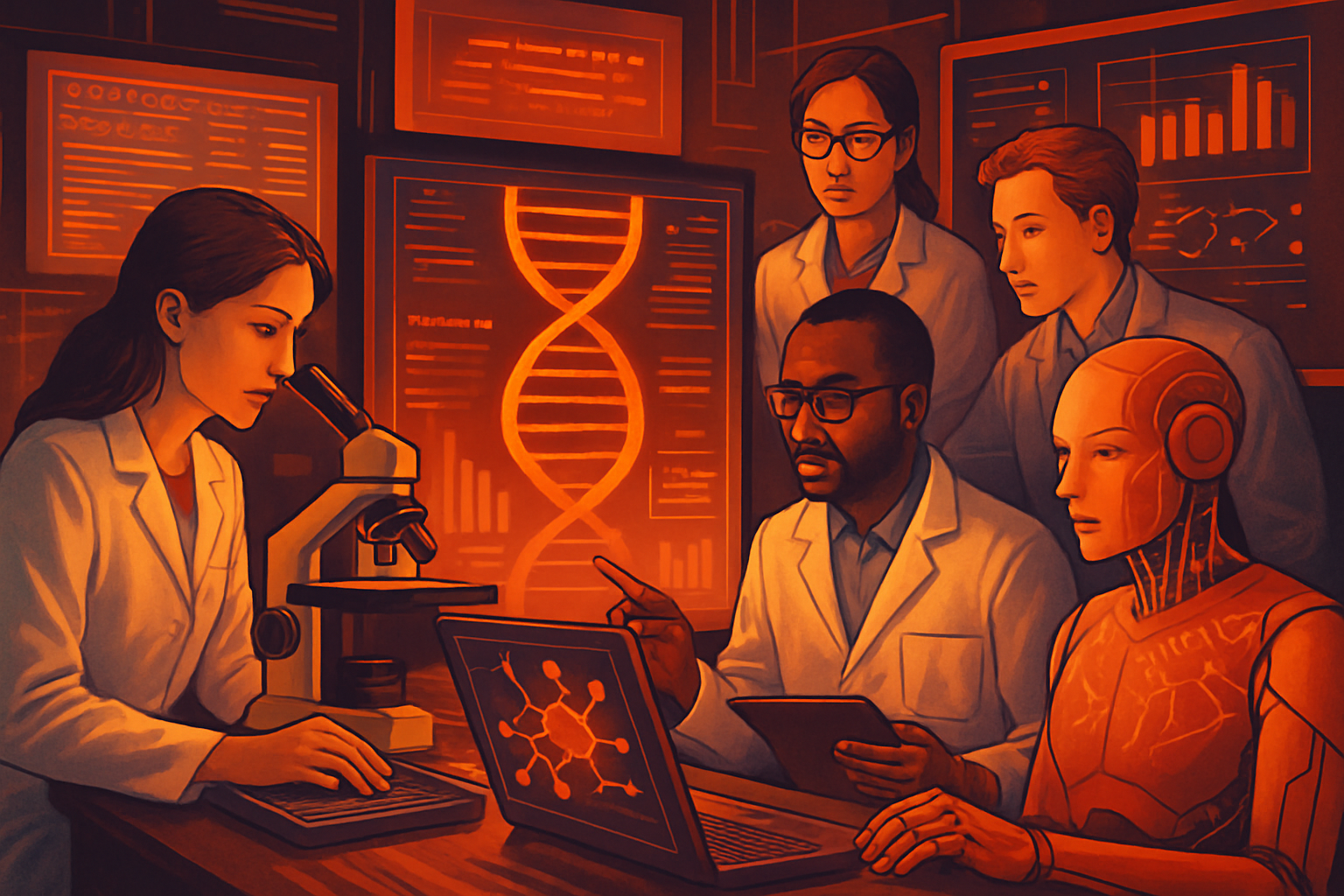
Google DeepMind and Isomorphic Labs: An Alliance for Bioresilience
Google DeepMind, in collaboration with Isomorphic Labs, has recently unveiled an ambitious program focused on bioresilience. This project aims to limit the potential misuse of artificial intelligence in the field of biology while enhancing the capacity to respond to epidemics. This initiative, which began quietly, has already established over 15 partnerships with various organizations, including government agencies, biosafety organizations, and research groups, over the past year.
The announcement of this program comes with a warning about the challenges of framing. Advanced models like Gemini are developing an increasingly nuanced understanding of biology. DeepMind acknowledges that integrating these systems with specialized biological models, such as its Antigravity platform, and external databases will only further refine this capability.
However, this same knowledge, which can help map a vaccine target, could also be exploited by malicious individuals to fill their gaps in biology. DeepMind and Isomorphic Labs describe this situation as a dual mandate: to promote scientific advancements through cutting-edge AI while preventing access to these tools for harmful purposes.
The Three Pillars of Bioresilience
The bioresilience program is based on three main axes:
- Preventing abuse
- Detecting epidemics more quickly
- Responding effectively to ongoing epidemics or attacks
The partnerships established over the past year address these three aspects, although details about the organizations involved are limited. Among the named collaborators are the Lawrence Livermore National Laboratory, the UK AI Security Institute, CEPI, and the Francis Crick Institute.
DeepMind plans to expand these relationships in the next six to twelve months, focusing on threat intelligence, assessment methods for AI agents, and strategies to mitigate jailbreaks. The company is also collaborating with the Frontier Model Forum on issues such as managing riskier training data categories, with a particular interest in virology datasets.
Protecting Gemini Without Hindering Science
Preventing abuse relies on threat modeling that identifies the actors most likely to attempt misuse and the barriers currently preventing them. DeepMind employs a combination of red-teaming expertise and randomized controlled trials to assess whether Gemini could help overcome these barriers.
Post-training methods aim to teach the model to refuse harmful requests while avoiding a over-refusal of legitimate scientific inquiries, a challenging balance to achieve in the industry. Classifiers and probes are deployed to flag risky activities in real-time, and the company conducts targeted log analyses to detect subtle abuse patterns that automated filters might miss.
DeepMind emphasizes that these mitigation measures are still under development and do not represent a finished system. A classifier tuned against known jailbreak models in a controlled environment does not guarantee equivalent performance against new attack methods in real-world situations.
The Challenges of DNA Synthesis
One of the concrete risks explored concerns DNA synthesis. Member companies of the International Gene Synthesis Consortium currently filter orders based on lists of known harmful pathogens and toxins, using filtering algorithms. DeepMind notes that this approach shows signs of weakness, as AI can now design DNA sequences that function as dangerous pathogens without sufficiently matching their sequences to trigger existing filters.
Le brief IA que les pros lisent chaque soir
Les 7 actus IA du jour, décryptées en 5 min. Gratuit.
Inclus dès l'inscription : notre sélection des meilleurs guides & comparatifs IA.
Choisissez votre rythme
Gratuit · Pas de spam · Désabonnement en 1 clic
To counter this, DeepMind proposes adapting its existing watermarking system, SynthID, used to mark AI-generated images and texts, to biological sequences. This adaptation is presented as exploratory work rather than a marketed product.
A long-term goal, described as an open technical challenge, is to develop screening capable of predicting whether a new DNA sequence is likely to be toxic or pathogenic based on its function, regardless of its resemblance to sequences in existing databases.
Reducing Sequencing Costs for Better Detection
Detection relies on metagenomic sequencing, which characterizes each microorganism in a sample rather than checking a limited list of known pathogens. Cost is a major limiting factor, and extending this approach to regions where epidemics are most likely to emerge requires a significant reduction in this cost.
DeepMind mentions a collaboration with Pacific Biosciences that has used its coding agent AlphaEvolve to improve sequencing accuracy, as a step toward this goal. The company is exploring other opportunities, from optimizing sequencing data processing algorithms to hardware design information, and is examining whether AlphaGenome could help characterize pathogens directly from sequence data.
These collaborations remain at the research stage rather than being deployed systems in the field. The gap between improved sequencing accuracy in a controlled environment and a functional early warning network in low-resource settings is considerable.
AlphaFold and the Gap in Medical Countermeasures
The response pillar relies on the gap in medical countermeasures that leaves many known pathogens without approved diagnostics, vaccines, or treatments. DeepMind cites over 10,000 publications on infectious diseases that have referenced AlphaFold over the past five years, covering work on tuberculosis and malaria transmission as well as mapping targets for threats such as Mpox and Nipah.
The latest addition to this record is a partnership with the Lawrence Livermore bioresilience program, which plans to use AlphaFold 3 for broad-spectrum antibody design work, including a pan-filovirus antibody effort. DeepMind indicates that it will continue to add structures and protein complexes to the AlphaFold Protein Structure Database this year, prioritizing targets relevant for countermeasure development.
Access to new agent systems, including Co-Scientist, is being extended to selected researchers, including scientists from the U.S. Department of Energy National Laboratories working under the Genesis Mission.
Isomorphic Labs has taken an additional step by creating a unit dedicated to rapidly deploying its drug design engine during a new epidemic, in collaboration with national government and research organizations such as Lawrence Livermore, the UK AI Security Institute, CEPI, and the Francis Crick Institute. The company has also pledged $7 million to Health for Human Potential, a program of the Philanthropy Asia Alliance, for infectious disease research in Asia.
DeepMind's Recommendations to U.S. Policymakers
DeepMind has made recommendations to U.S. policymakers that align with its three pillars and are based on specific pending legislation:
-
For prevention, it supports a federal framework for advanced AI safety, the AI-Ready Bio-Data Standards Act (H.R. 7907), mandatory screening of DNA synthesis through the Biosecurity Modernization and Innovation Act (S. 3741), and the SCALE Biology Act (H.R. 8981).
-
For detection, it wishes for metagenomic sequencing to be extended to transit hubs and densely populated centers, supported by the America’s Living Library Act (S. 4023) and additional funding from DARPA and HHS for early alert research.
-
For response, it calls for the establishment of the Web of Biological Data Act (H.R. 9307 / S. 4770) and investment in manufacturing capabilities maintained "ready for rapid activation," alongside pre-established clinical trial networks and faster regulatory pathways.
None of this legislation has yet been adopted, and the gap between a company's political wish list and a functional federal biosafety framework is where the true test of this program will unfold over the next 6 to 12 months.
Brief IA — L'actualité IA en français
L'essentiel de l'actualité de l'intelligence artificielle, décrypté et expliqué chaque jour.