DeepMind, LeCun, and Vinyals: Divergent Visions for the Future of AI
Le brief IA que les pros lisent chaque soir
Les 7 actus IA du jour, décryptées en 5 min. Gratuit.
Inclus dès l'inscription : notre sélection des meilleurs guides & comparatifs IA.
Choisis ton rythme
Gratuit · Pas de spam · Désabonnement en 1 clic
Three Visions of Artificial Intelligence
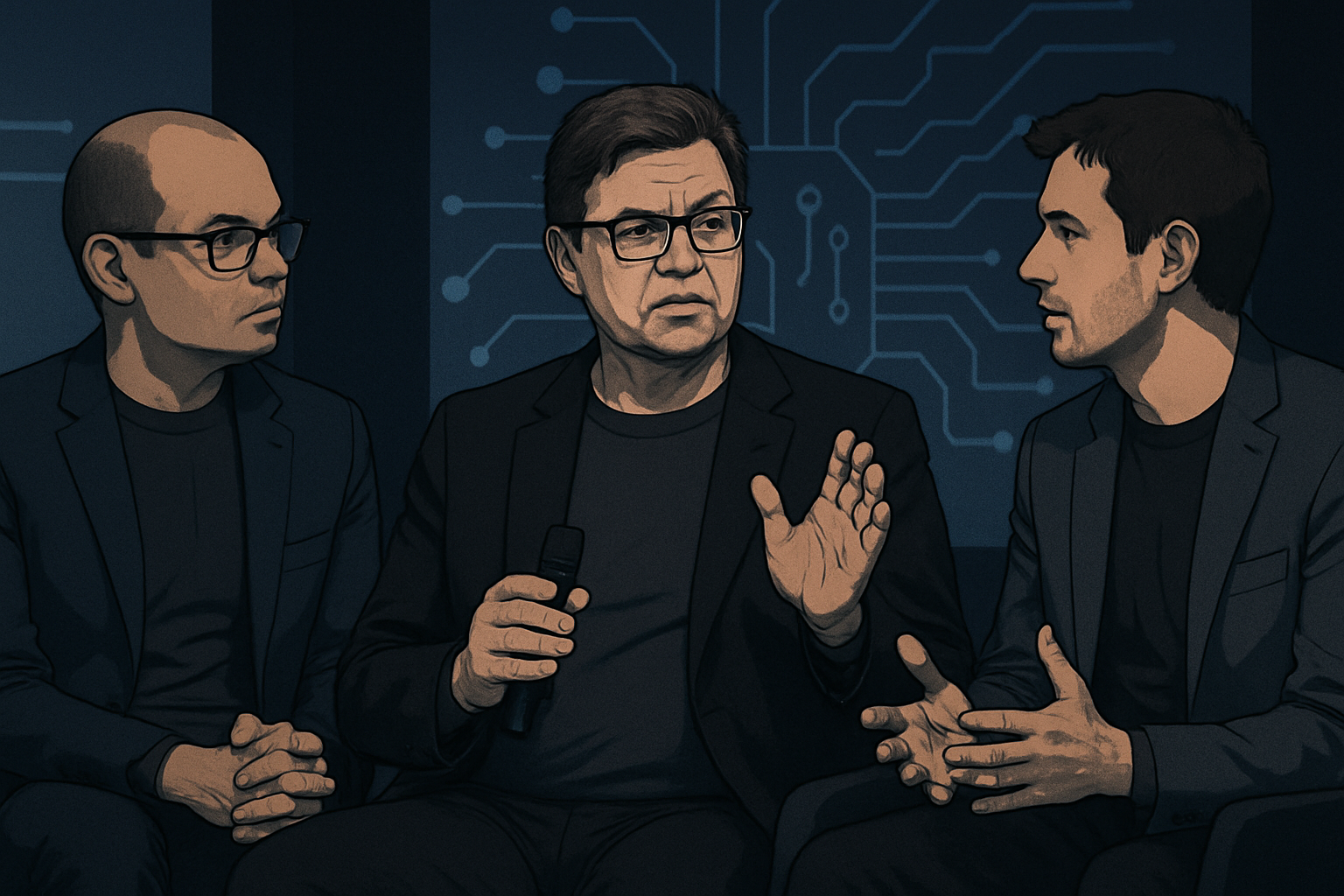
Three influential researchers in the field of artificial intelligence share their perspectives on the current and future state of the technology, revealing significant divergences.
Yann LeCun and the Critique of Current Models
Yann LeCun, a researcher at AMI Labs, questions the intelligence of current language models (LLMs). According to him, true intelligence is demonstrated by the ability to solve novel problems without prior training. He draws on an idea from psychologist Jean Piaget: “Intelligence is not what you know; it’s what you do when you don’t know.” LeCun is working on AI technologies that would surpass Transformer-based LLMs, which he considers unsuitable for learning in a manner similar to children.
Demis Hassabis and the Vision of an Imminent Singularity
Demis Hassabis, co-founder of DeepMind, expresses a more optimistic and bold vision. In his speech at Google I/O 2026, he stated that humanity is “standing at the gates of the singularity,” anticipating a “profound moment for humanity.” Hassabis predicts that artificial general intelligence (AGI) could emerge within the next five years, leading to a transformation equivalent to “ten times the industrial revolution at ten times the speed.”
Oriol Vinyals and the Assessment of Current Capabilities
Oriol Vinyals, co-lead of the Gemini program, takes a middle-ground position. He acknowledges that current models excel in coding and mathematics, and that their reasoning abilities are becoming increasingly general. He admits that if he had observed these models seven years ago, he would have likely considered them AGI. However, he notes that the ability to learn from experience and achieve true breakthroughs remains insufficient.
Brief IA — L'actualité IA en français
L'essentiel de l'actualité de l'intelligence artificielle, décrypté et expliqué chaque jour.