AI 2026: The Race for Trust Surpasses Technical Performance
Le brief IA que les pros lisent chaque soir
Les 7 actus IA du jour, décryptées en 5 min. Gratuit.
Inclus dès l'inscription : notre sélection des meilleurs guides & comparatifs IA.
Choisis ton rythme
Gratuit · Pas de spam · Désabonnement en 1 clic
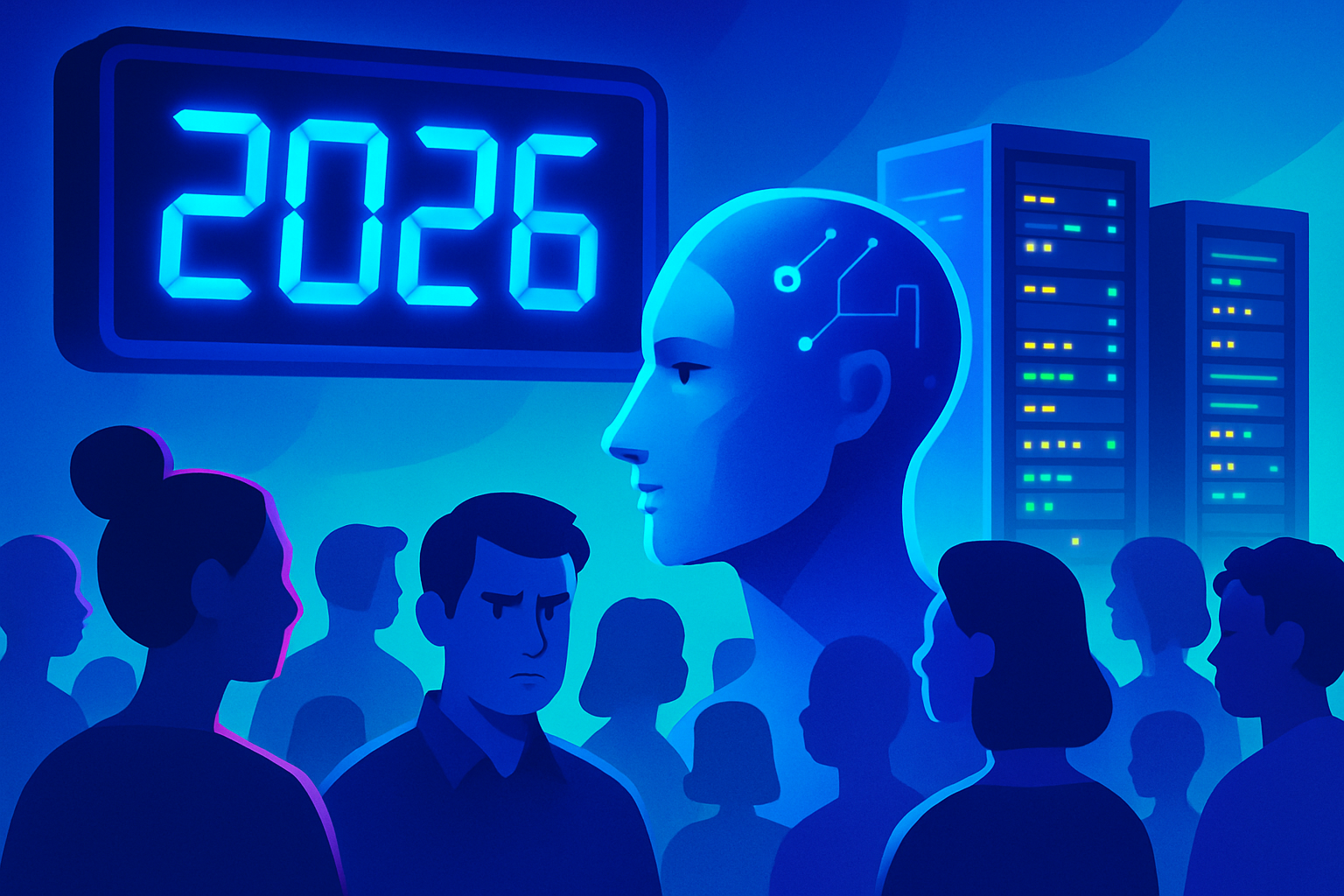
The Stanford AI Index 2026 report has recently been released, causing a shockwave in Silicon Valley. While the adoption of artificial intelligence by businesses has reached an impressive 88%, a major flaw persists: public trust. Indeed, 77% of respondents express skepticism towards this technology, highlighting the need to shift from a race for performance to a quest for reliability and acceptability.
The Scholar and the Clock
Current AI systems, although extremely effective in complex tasks, often fail in common-sense situations. For instance, they struggle to read the time on an analog clock in nearly 50% of cases. This inconsistency, known as the "dented boundary," poses a nightmare for Chief Information Officers (CIOs) who hesitate to automate critical infrastructures with such unpredictable technology. Indeed, it is hard to trust a technology that can have a "mental absence" one time out of three.
The Colossus with Feet of Clay
Geopolitically, the United States continues to dominate thanks to massive private investment of $285 billion. However, this supremacy relies on the stability of Taiwan and TSMC factories, which are essential for semiconductor chips. Without them, the 5,427 American data centers would be nothing but empty structures. Moreover, immigration of researchers to the United States has dropped by 89%, redistributing the cards of global competition towards Asia and the Middle East. Cutting-edge models have nearly closed the performance gap between the United States and China, but this advancement is fragile.
The Divorce from Reality
The gap between experts' perceptions and those of the general public is striking. While 73% of experts predict a positive impact of AI on employment, 77% of the public remains wary. This 50-point gap represents a major systemic risk. Incidents related to AI are increasing, and security struggles to keep pace with technological advancements. The crucial question is no longer whether AI can accomplish everything, but whether it can do so ethically and reliably.
For digital leaders, the message is clear: the priority must now be the reliability and acceptability of AI, rather than merely increasing technical parameters. The new frontier for AI is no longer just technical, but also political and social. Companies must ensure that AI is not only effective but also trustworthy for the general public.
Brief IA — L'actualité IA en français
L'essentiel de l'actualité de l'intelligence artificielle, décrypté et expliqué chaque jour.