India: AI Sparks Smartphone Price Surge
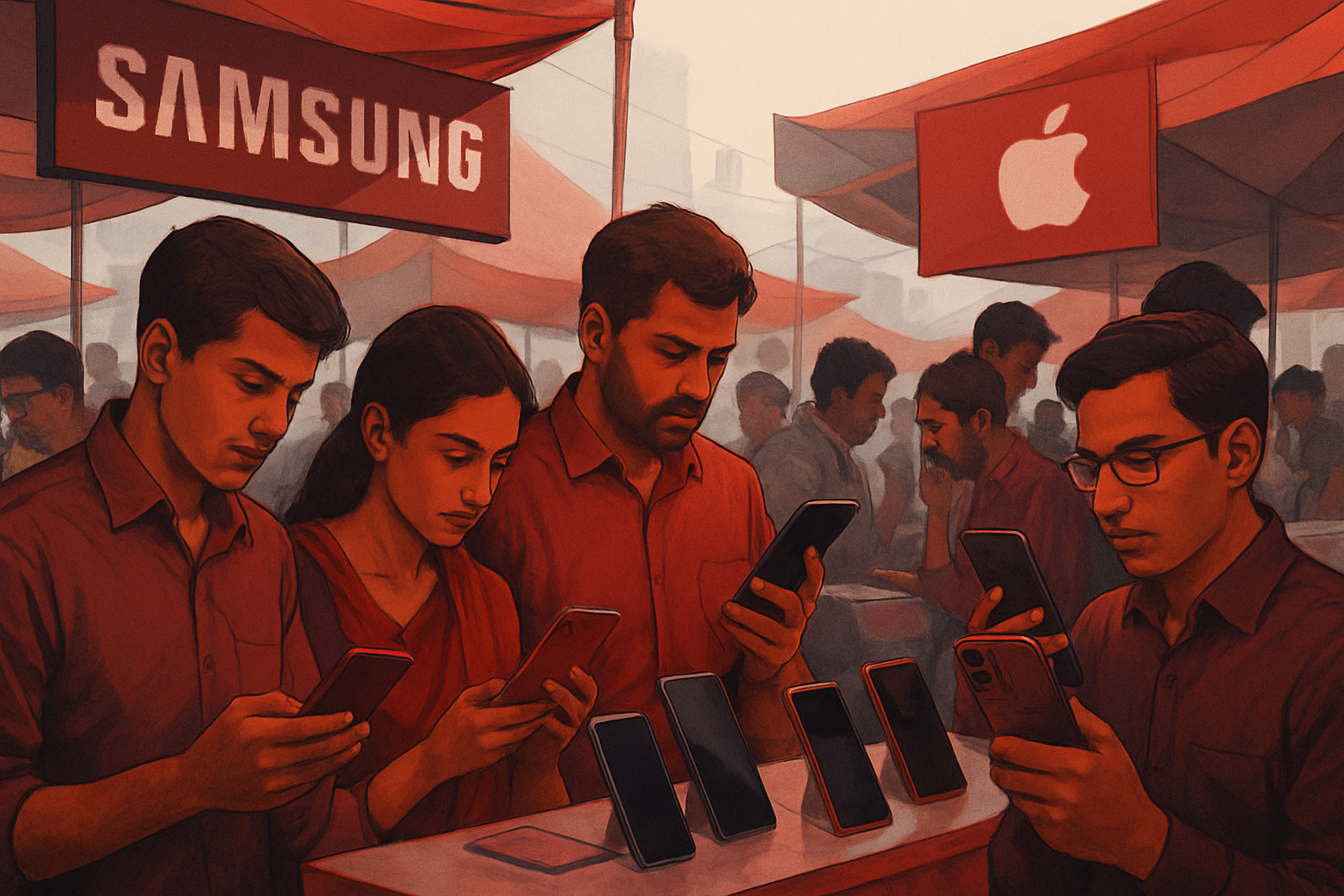
A Memory Crisis Disrupts the Indian Market
For several months, experts in the tech sector had warned that the growing demand for memory chips for artificial intelligence (AI) would have consequences for the consumer electronics market. Today, India perfectly illustrates this prediction, with a notable increase in smartphone prices that is redefining the market landscape.
The memory chips in question, particularly RAM and storage components, are essential for tech giants building AI data centers. Companies like Samsung, SK Hynix, and Micron have redirected their production capacities toward high-bandwidth memory, specialized chips used in AI accelerators. These are more profitable per wafer than standard memory used in phones and laptops, which has reduced the available capacity for consumer electronics and driven up costs.
India, a Market in Transformation
India, the second-largest smartphone market in the world after China in terms of shipments, has seen its smartphone sales drop by 10% year-on-year during the April to June quarter. According to Counterpoint Research, this marks the largest decline for a June quarter in six years. This drop is primarily due to rising memory costs that have pushed device prices higher.
In comparison, China recorded a more moderate decline of 2% in smartphone shipments in the second quarter. India has been hit harder as about 60% of its smartphone market lies in the sub-₹20,000 (under $210) segment, where memory cost increases have significantly impacted prices, explains Tarun Pathak, vice president of research at Counterpoint.
A Key Indicator for Price-Sensitive Markets
With a population of over 1.4 billion people and more than 700 million smartphone users, India has become a crucial barometer for consumer demand in price-sensitive markets. Changes in purchasing habits are closely monitored by device manufacturers, chip suppliers, and investors tracking the overall health of the AI supply chain.
Pathak noted that while Indian consumers are not ready to completely abandon smartphones, many are expected to delay their upgrades, extending replacement cycles to about four years compared to 3.5 years previously. Premium brands like Apple and Samsung are better insulated from this slowdown.
Samsung Stands Firm, Apple Stumbles
The competition among smartphone manufacturers is already being redefined. Samsung was the only major brand to record shipment growth in India in the second quarter, with a 2% year-on-year increase, according to Counterpoint. In contrast, Apple’s shipments fell by 3%, primarily due to supply constraints and stock shortages limiting the number of available iPhones.
Le brief IA que les pros lisent chaque soir
Les 7 actus IA du jour, décryptées en 5 min. Gratuit.
Inclus dès l'inscription : notre sélection des meilleurs guides & comparatifs IA.
Choisissez votre rythme
Gratuit · Pas de spam · Désabonnement en 1 clic
Consumers purchasing high-end smartphones appear less sensitive to price increases, thanks to financing options that make these expensive devices more accessible, explains Prachir Singh, senior analyst at Counterpoint Research.
Lower Segments Suffering
The lower segment of the market is the hardest hit. Shipments of smartphones in the sub-₹15,000 (under $150) segment have plummeted by 45% year-on-year, according to Counterpoint. Chinese brands, which have a strong presence in the entry-level and mid-range smartphone market, have seen their combined market share drop to its lowest level for a second calendar quarter since 2020.
Survival Strategies for Brands
In the face of these economic challenges, some brands are reevaluating their strategies. The Chinese brand OnePlus recently announced it would stop launching new products in Europe and North America while maintaining its operations in India. This decision follows a careful assessment of its markets. According to Counterpoint data, China accounted for 74% of OnePlus's global shipments in the first quarter, up from 59% a year earlier, while India's share fell to 19% from 30%.
In other words, OnePlus is focusing on markets where it can still achieve profitability, a pattern that other budget-focused brands may adopt as margins tighten.
Profitability at the Heart of Decisions
Pathak emphasizes that managing multiple sub-brands is only viable if each sells enough to cover shared costs. When margins become too thin, this model ceases to be profitable. "Sub-brands often share resources and overlaps, and you need a minimum base to justify very tight margins. Profitability is key to deciding market operations," he stated.
Consumers Facing Rising Prices
This pressure on brands is directly impacting consumers. Kiranjeet Kaur, associate director of mobile phone research at IDC, stated that the Indian smartphone market is shifting from volume-driven growth to value-driven growth. This means fewer phones are sold, but each device generates more revenue, as the higher costs of components make low-cost smartphones increasingly unprofitable.
Smartphone prices in India have already increased by 4% to 68%, depending on the model, Pathak noted. In response to these hikes, consumers are turning to more expensive devices, delaying their upgrades, or opting for the second-hand market.
Financing, a Crucial Lever
Financing has become "central to accessibility," according to Kaur. Brands and retailers are also building inventory ahead of the festive season to lock in lower costs before further component price increases.
IDC also forecasts a double-digit decline in smartphone shipments in India in the second quarter, a more significant drop than the 4.1% decrease in the first quarter and 5.3% in the previous quarter, although estimates are not yet finalized.
Uncertain Outlook
Kaur indicated that memory shortages and high smartphone prices are expected to persist until at least the end of 2027, although the pace of price increases should moderate as consumers adapt to this new norm.
"For Indian consumers, it's a double whammy as a weaker currency makes imports more expensive, adding to margin pressures for market players, and they are passing the cost onto the consumer," she added.
Brief IA — L'actualité IA en français
L'essentiel de l'actualité de l'intelligence artificielle, décrypté et expliqué chaque jour.