Google's Gemini Spark: The AI Agent Struggling to Impress
Le brief IA que les pros lisent chaque soir
Les 7 actus IA du jour, décryptées en 5 min. Gratuit.
Inclus dès l'inscription : notre sélection des meilleurs guides & comparatifs IA.
Choisis ton rythme
Gratuit · Pas de spam · Désabonnement en 1 clic
Gemini Spark: Google’s New Agentic Assistant
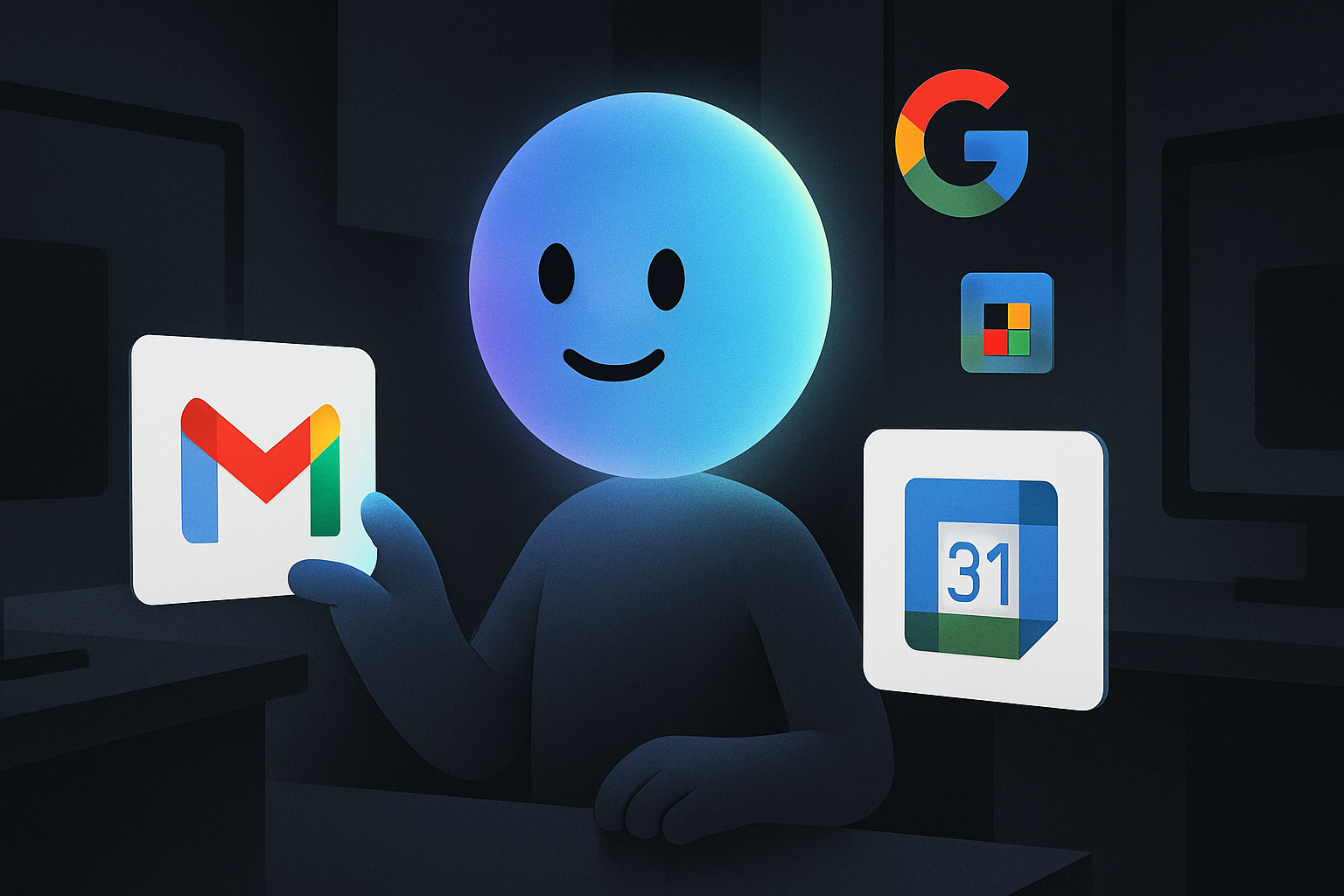
Gemini Spark, Google’s new agentic assistant, was unveiled at the annual developer conference in May. Designed to operate 24/7, Spark promises to revolutionize the management of your digital life by completing online tasks, summarizing information, and organizing items that would otherwise require too much screen time. Sundar Pichai, CEO of Google, emphasized that Spark runs on virtual machines in the cloud, allowing users to close their laptops, unlike other AI systems such as OpenClaw, which require an active machine.
In practice, Spark is primarily focused on professional tasks, integrating with Google’s productivity applications such as Gmail, Calendar, Docs, Sheets, and Slides. However, Google struggles to provide concrete examples that demonstrate its utility as an essential tool for personal use. Among Google’s suggestions for personal productivity, Spark can scan your emails and calendar to send you a summary of your top three priority tasks, or plan weekend activities based on your free time slots.
During practical tests, Spark showed mixed results. For a grocery task, Spark suggested products on sale and coupons, but some promo codes turned out to be invalid. Nevertheless, it proposed how to stack coupons for an item by combining online promo codes, which allowed for additional savings. Despite this, Spark compensated with other savings, such as "buy one, get one free" offers. For planning a grocery list for an outing, Spark failed to utilize Google Keep, a crucial app for personal productivity. Instead, it suggested creating a document or an email.
In terms of list content, Spark suggested relevant items such as garden chairs or blankets, water, sunscreen, sunglasses, a light layer for the evening, a reusable shopping bag, and an umbrella for potential light showers. It also reminded users that dogs were not allowed at the outdoor event, despite it being held outside.
Regarding summer activity suggestions for teenagers, Spark generated a list of relevant ideas by tracing the distance from home but failed to check costs and dates, requiring further research. For summarizing newsletters, Spark performed well but delivered one article less than requested, interpreting the request as "4-5" articles instead of five. Additionally, the link provided to access the articles redirected to Google.com, necessitating a manual action to reach the final site.
For another request, Spark compiled a list of weekend activities by searching for local events via the web and Gmail. It discovered interesting events like the Annual Beaver Queen Contest but still required manual confirmation to add events to the calendar.
Finally, Spark was tested for tracking price drops on a product, but the proposed checking frequency was insufficient to spot a good deal. Despite these limitations, Spark could be integrated into daily life for monitoring and reminder tasks. However, its positioning as a standalone product may be confusing, and the lack of integration with Google Keep is a notable shortcoming.
In conclusion, while Spark has shown promising capabilities, improvements are needed for it to become a truly indispensable tool in the daily management of digital tasks. iPhone users, for example, might find inputting in the app less intuitive, and the need to manually switch to Spark for certain tasks could be seen as a barrier to widespread adoption. Google might consider integrating Spark more closely into its existing services to simplify the user experience.
Brief IA — L'actualité IA en français
L'essentiel de l'actualité de l'intelligence artificielle, décrypté et expliqué chaque jour.