AI in Schools: A Parent Helps Define Its Use in Education
Le brief IA que les pros lisent chaque soir
Les 7 actus IA du jour, décryptées en 5 min. Gratuit.
Inclus dès l'inscription : notre sélection des meilleurs guides & comparatifs IA.
Choisis ton rythme
Gratuit · Pas de spam · Désabonnement en 1 clic
AI Joins the Math Homework
My teenage son has started using artificial intelligence to help him solve his math homework. This situation left me perplexed. When his school invited parents to participate in a working group on AI, I immediately seized the opportunity. Together, we designed a system that allows teachers to determine the extent to which AI could be used for each assignment.
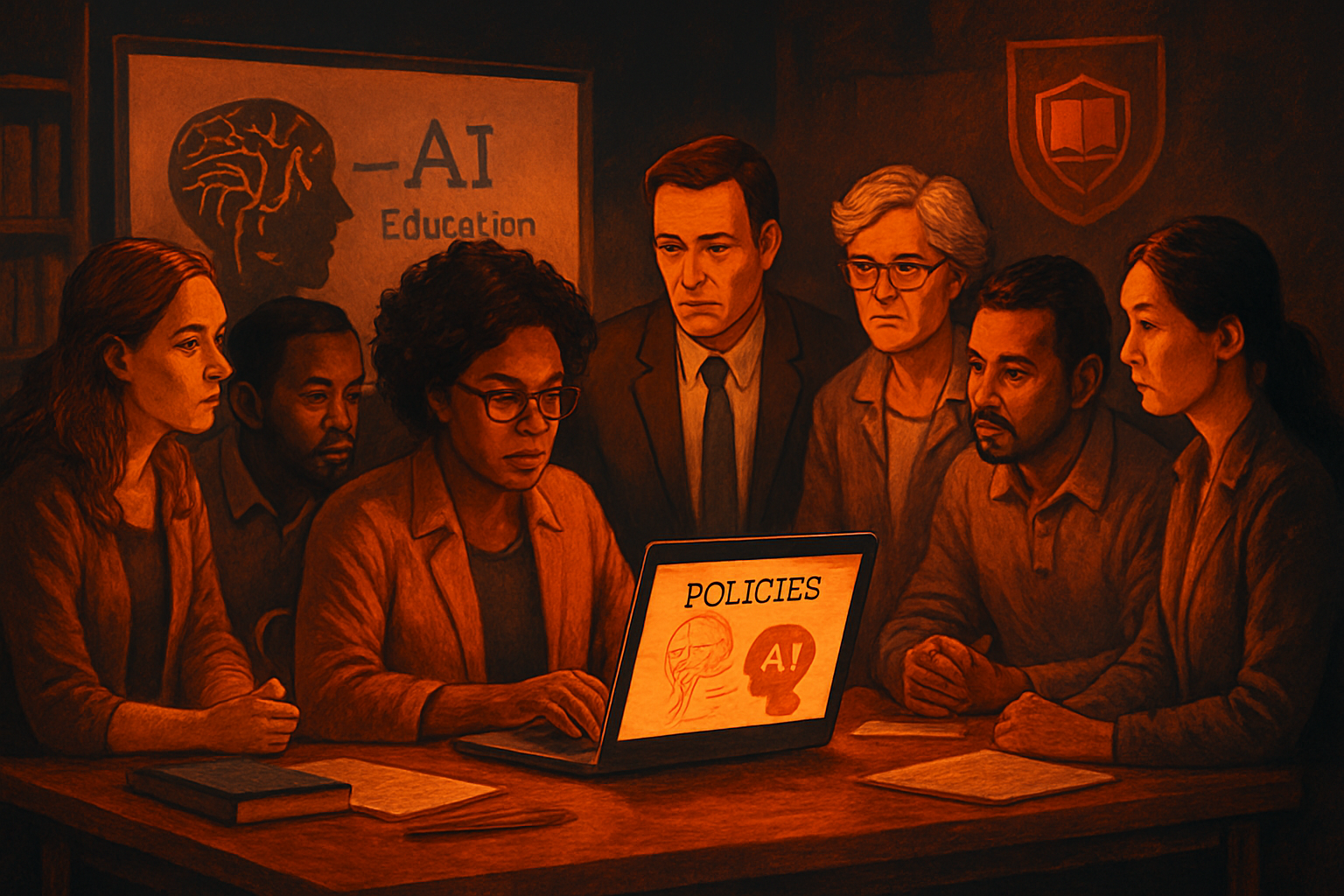
Last fall, my children's school district, located in a suburb north of San Francisco, called for parents to join a working group on AI. This district is connected with leading tech companies like OpenAI, Anthropic, and Google. The goal was to draft a vision statement on AI and develop a framework for its use in the classroom. I decided to get involved without hesitation.
The reason? My son had taken to photographing his math homework, submitting it to an AI engine with a simple instruction: Solve. While he is known for seeking shortcuts, this method worried me. As a rule-abiding person, I feared it might cause him problems.
A broader question then struck me: did I really want him to use AI in this way? I realized that many parents were facing this issue as well. Our generation had to navigate rules regarding screen time, cell phones, and social media without a clear roadmap. Facing a new, more powerful emerging technology was daunting. I began to reflect on the potential impacts of AI on a developing mind.
In discussing with other parents, I discovered I was not alone. Many saw AI literacy as a crucial skill but were also concerned about its effects on creativity, attachment, critical thinking, and children's ability to solve problems independently.
My Commitment to the AI Working Group
Last November, I joined the AI working group of the Reed Union School District (RUSD) alongside teachers, administrators, and other parent volunteers. I was struck by the district's approach. It was not just about discussing the use of AI in the classroom, but doing so thoughtfully. The idea was that this new technology, if used responsibly, could enhance learning outcomes and prepare students for a future where tech skills are increasingly valued.
Over three meetings, we contributed to formulating a vision statement for AI integration, assessing safety and ethical issues, and establishing a policy on AI literacy and its use by students. The more I listened, the more my thinking evolved. AI offered promises but also real risks to consider. Both aspects are true.
I entered this working group with a protective instinct as a parent, but I understood that finding a balance with this technology was the challenge I had accepted to tackle.
Establishing an Innovative System
Many students are unaware of the rules regarding the use of AI in their schoolwork, and the situation is more complex than it seems. My own child told me he hesitated between using AI to get good grades or avoiding it for fear of being judged by his peers or punished by his teachers. Some children take risks and experiment with these tools, while others prefer not to touch them. As a parent, I observed both sides and found that neither approach was beneficial.
The RUSD decided to guide students, teachers, and parents out of this gray area. The district implemented a traffic light model to specify when and how AI can be used for academic tasks.
-
For elementary school students (K-5), a red light means no use of AI, a yellow light allows AI as a tutor or support, and a green light indicates that AI is a partner.
-
For middle school students, the model becomes a scale from 0 to 4 with color bands. Here, 0 means no AI involvement, while 4 indicates a task where AI generates the work, and the student must critique and verify it.
This traffic light system and the digital framework will be integrated into assignment headers, classroom posters, and communications with families. This creates clear signals, helping students understand the rules and the reasons behind them. It will also help me know what to reinforce at home.
Ongoing Learning
What I want for my son is not a ban on AI. I want him to use it as a learning partner — to be curious, creative, ask questions, read carefully, and challenge his answers if they don't seem right.
I don't want him to sit, copy and paste, and then walk away. That's the difference between a student who uses AI to delegate their thinking and a student who learns to complete their own thinking.
The RUSD is trying to build the latter type of student. And so am I.
Brief IA — L'actualité IA en français
L'essentiel de l'actualité de l'intelligence artificielle, décrypté et expliqué chaque jour.