Chinese AI Challenges ChatGPT and Claude Fable in 2023
Le brief IA que les pros lisent chaque soir
Les 7 actus IA du jour, décryptées en 5 min. Gratuit.
Inclus dès l'inscription : notre sélection des meilleurs guides & comparatifs IA.
Choisis ton rythme
Gratuit · Pas de spam · Désabonnement en 1 clic
Chinese AI Challenges ChatGPT and Claude Fable in 2023
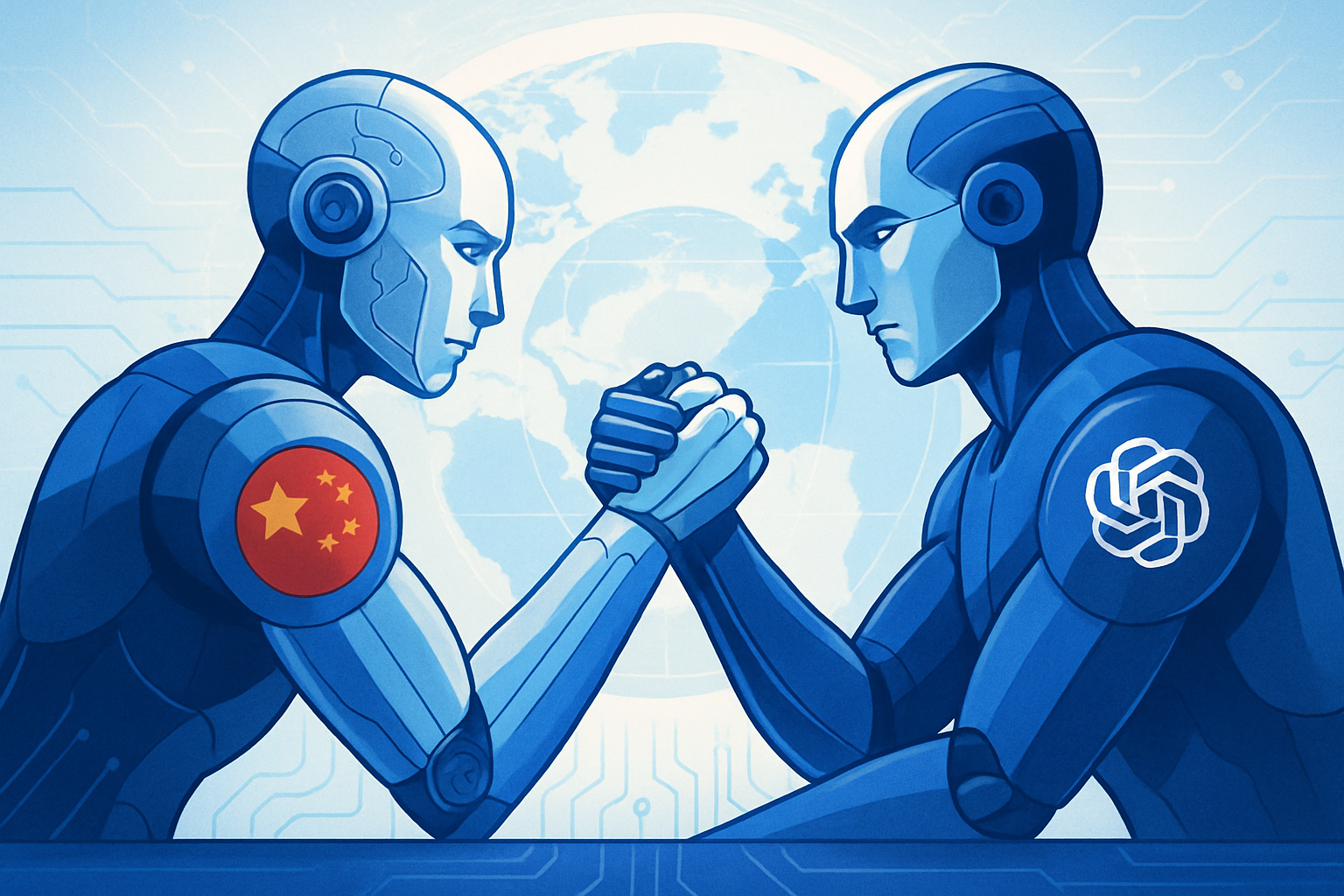
In the battle of artificial intelligences, China has just made a significant move. The Middle Kingdom aims to compete with the United States and its ultra-popular models such as ChatGPT 5.6 and Claude Fable 5. Alibaba's AI has made a notable leap forward.
In just a few days, two Chinese companies, Moonshot AI and Alibaba, have unveiled artificial intelligence models that they claim can rival the most advanced systems from OpenAI and Anthropic. These announcements come at a time when AI is becoming a major issue in terms of national security, economic power, and geopolitical influence.
Moonshot AI Launches Kimi K3, Alibaba Unveils Qwen 3.8
On Friday, Moonshot AI, based in Beijing and regarded as one of China's leading developers of AI models, revealed Kimi K3. According to the company, its own tests place this model above most American systems, except for OpenAI's GPT-5.6 Sol and Claude Fable 5 from Anthropic. However, Moonshot specifies that Kimi K3 would surpass these competitors on certain specific criteria.
Following this, Alibaba presented Qwen 3.8 over the weekend, describing this new model as "one of the most powerful available today" and "just behind Fable 5," Anthropic's flagship. Unlike American labs, which often reserve their most powerful models for internal or restricted use, Moonshot and Alibaba emphasize their commitment to making them accessible to the public.
Moonshot describes Kimi K3 as "the largest open-source AI system in the world," with 2.8 trillion parameters. While this figure is a notable indicator of the model's complexity, it does not necessarily guarantee better performance. For its part, Alibaba states that Qwen 3.8 has 2.4 trillion parameters and continues to evolve. Neither OpenAI nor Anthropic disclose comparable technical details for their most advanced models.
China Chooses Openness
These announcements come as the United States tightens its economic sanctions in the tech sector against China, particularly through export controls limiting access to the most advanced chips. Washington has also forced Anthropic to withdraw its most advanced model from the market, fearing it could benefit foreign competitors.
With these two new models, the United States finds itself in a delicate position. Despite massive investments in chips, datacenters, and model training, American supremacy is eroding. Last year, the Chinese company DeepSeek made waves by offering a low-cost model that performed well against American systems.
It remains to be seen whether Kimi K3 and Qwen 3.8 will live up to their promises once subjected to independent evaluations. Regardless of the results, these announcements confirm that the gap between the two countries is narrowing, potentially reversing as early as next year.
Brief IA — L'actualité IA en français
L'essentiel de l'actualité de l'intelligence artificielle, décrypté et expliqué chaque jour.