AI Divides America: Only 16% See a Positive Future
Le brief IA que les pros lisent chaque soir
Les 7 actus IA du jour, décryptées en 5 min. Gratuit.
Inclus dès l'inscription : notre sélection des meilleurs guides & comparatifs IA.
Choisis ton rythme
Gratuit · Pas de spam · Désabonnement en 1 clic
AI and American Public Opinion: Persistent Skepticism
As artificial intelligence continues to establish itself in the global economy, a recent study by Pew Research highlights marked skepticism among Americans regarding its future impact. Despite the growing adoption of AI in various aspects of daily life, a majority of Americans remain cautious, even pessimistic, about its long-term influence on society.
A Predominantly Negative Perception
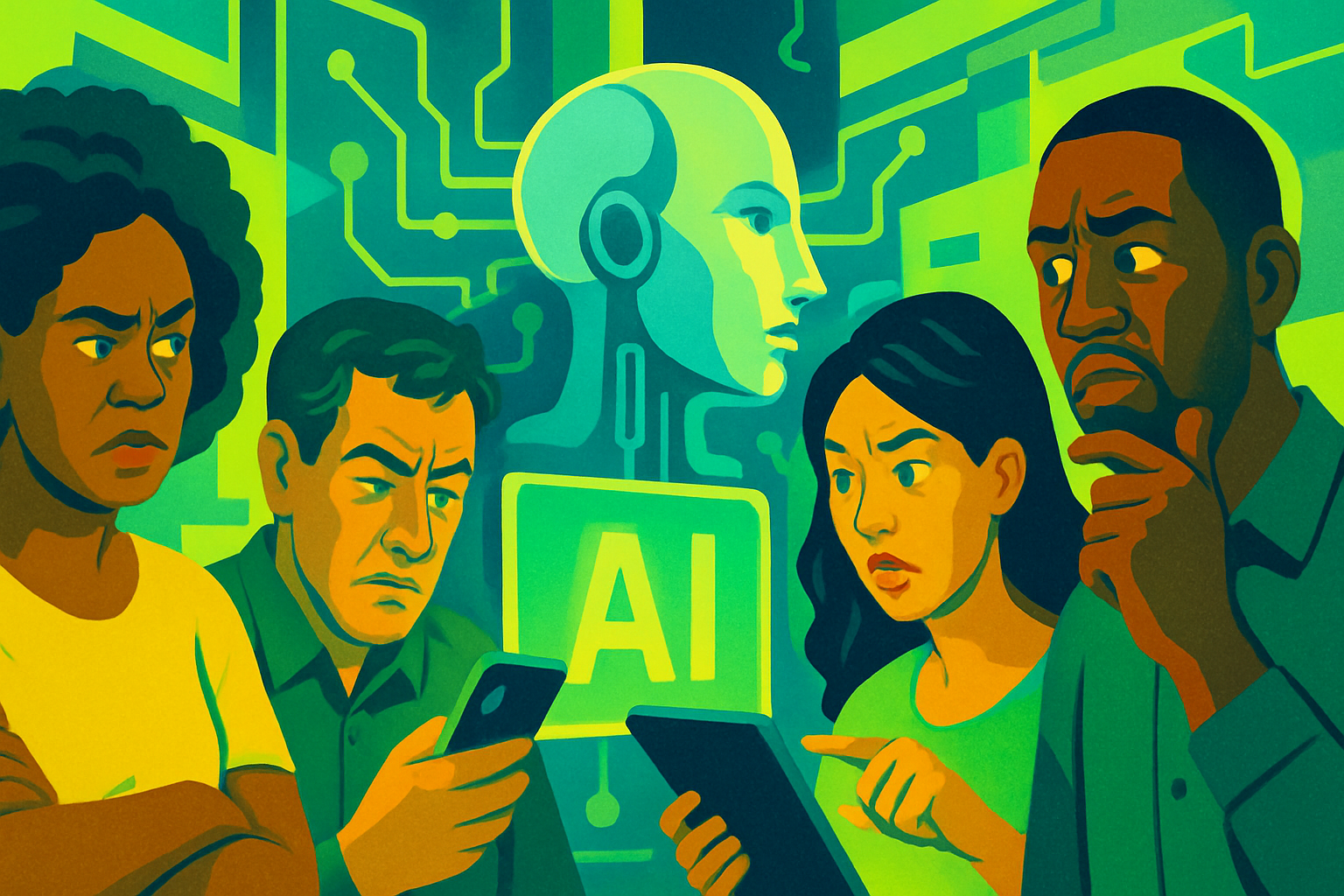
According to data collected by Pew, only 16% of Americans believe that AI will have a positive effect on society in the next two decades. In contrast, about 40% of respondents anticipate a negative impact. This distrust also extends to the capabilities of institutions to manage this technology: 67% of study participants do not believe that the U.S. government will take effective measures to regulate AI, and 59% express a lack of confidence in companies to develop AI safely.
Young People and AI: A Critical View
Young people, particularly those under 30, are even more skeptical. Only 14% of them think that AI will bring benefits to society, highlighting a growing concern among new generations regarding this rapidly evolving technology.
Rapid but Controversial Adoption
Despite these reservations, the use of AI is progressing in the United States. About a quarter of Americans report using AI chatbots daily, primarily for research or work tasks. ChatGPT, the chatbot from OpenAI, is the most popular, used by 44% of American adults, a figure that has more than doubled since the previous year.
Diversity in Chatbot Usage
Other chatbots are also gaining popularity, albeit to a lesser extent. Gemini is used by 24% of Americans, followed by Copilot at 17%, and Meta AI at 14%. Chatbots like Grok, Claude, and Character.ai are less widespread, with usage rates of 8%, 6%, and 3%, respectively.
Gender Disparities in AI Adoption
The Pew study also reveals notable gender differences in AI adoption. Men are more likely to integrate these technologies into their daily routines, with 27% of them using chatbots, compared to 20% of women. While the use of ChatGPT is evenly distributed, men are more numerous in using other chatbots like Copilot and Grok.
AI and Information Consumption
The impact of AI is also evident in how Americans access information. Six out of ten people report regularly reading AI-generated summaries online, a phenomenon increasingly common on platforms like Google. However, the use of AI for health and nutrition advice remains limited.
A Generational Divide in AI Adoption
Finally, the study highlights a generational divide in AI usage. Nearly half of Americans do not use AI in their daily lives, a trend particularly pronounced among older individuals. About 75% of Americans aged 65 and older report never using chatbots, and many of them do not plan to do so in the future, underscoring a persistent disinterest in this technology.
Development Considered Too Rapid
Nearly two-thirds of Americans believe that the development of AI is progressing too quickly. This perception of a rushed technological evolution contributes to growing concerns about its regulation and integration into society.
Brief IA — L'actualité IA en français
L'essentiel de l'actualité de l'intelligence artificielle, décrypté et expliqué chaque jour.