AI Revolutionizes eCommerce: Towards a Global Transformation
Le brief IA que les pros lisent chaque soir
Les 7 actus IA du jour, décryptées en 5 min. Gratuit.
Inclus dès l'inscription : notre sélection des meilleurs guides & comparatifs IA.
Choisis ton rythme
Gratuit · Pas de spam · Désabonnement en 1 clic
The rapid rise of eCommerce has transformed the global commercial landscape, and the integration of artificial intelligence (AI) in this field marks a crucial milestone in this transformation. As forecasts indicate that the global eCommerce market could reach the staggering sum of $6.38 trillion by 2024, businesses are compelled to adapt to this new dynamic. This involves the integration of infrastructures specifically designed to leverage AI capabilities. This change is not merely a technological advancement; it represents a true upheaval in how companies interact with their customers and manage their internal operations.
Technical Details or Key Figures
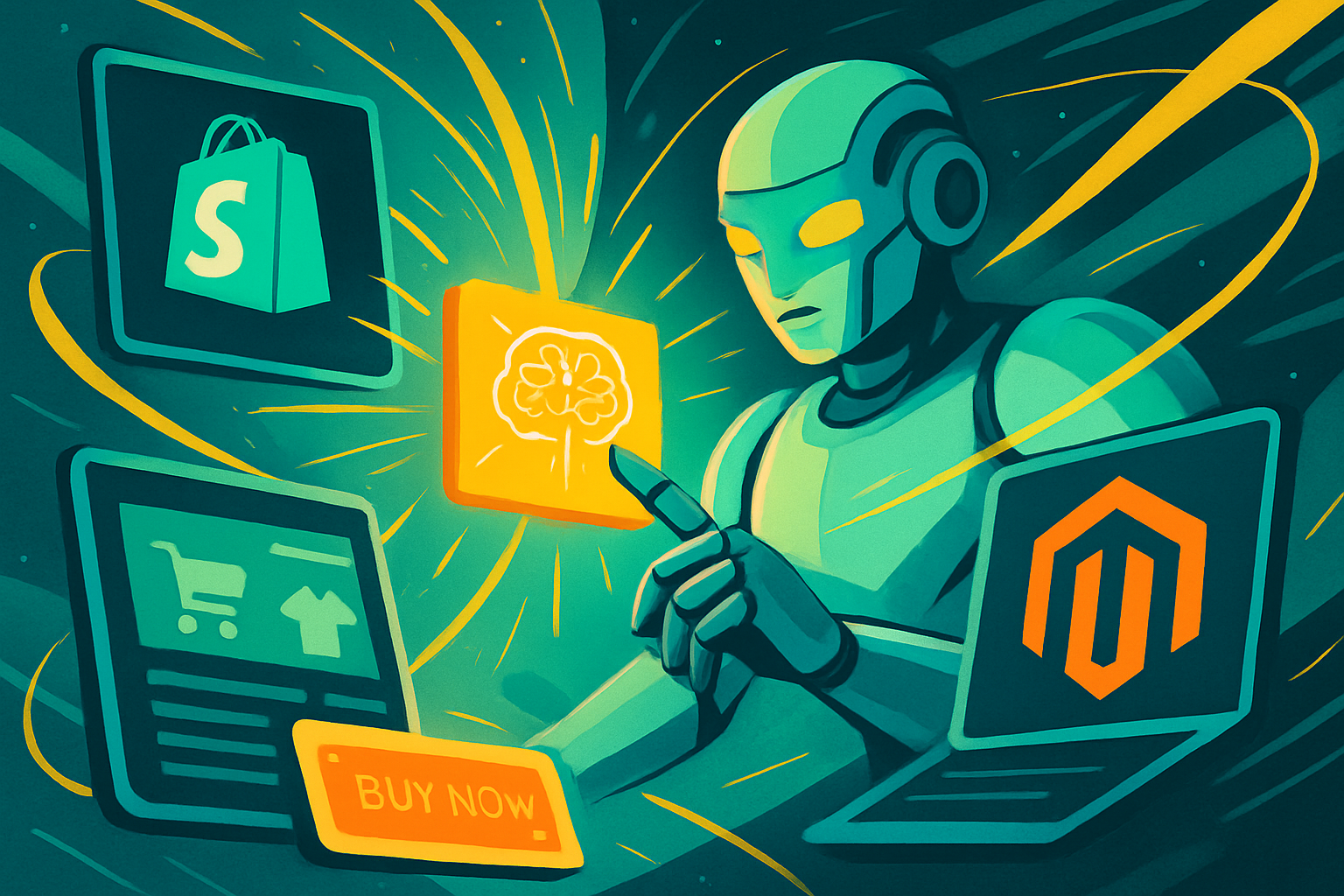
AI-native eCommerce infrastructures stand out for their ability to process enormous volumes of data in real-time, enabling unprecedented personalization of shopping experiences. For example, platforms like Shopify and Magento have begun integrating AI tools capable of analyzing consumer behaviors to recommend products based on individual preferences. A recent study reveals that 75% of consumers are more likely to purchase from a company that offers personalized recommendations. Furthermore, AI can automate essential tasks such as inventory management and customer service, resulting in reduced operational costs and improved overall efficiency.
Impact / Consequences for the Sector
The impact of AI on the eCommerce sector is already tangible. Companies that adopt these technologies are witnessing a notable increase in their conversion rates and an improvement in customer loyalty. For instance, studies have shown that businesses using AI-powered chatbots for customer service manage to reduce wait times by 80%, significantly enhancing the user experience. Additionally, AI offers better predictive analytics capabilities, allowing companies to anticipate market trends and adjust their strategies accordingly. This ability to adapt quickly is crucial in an ever-evolving business environment.
Reactions or Perspectives
Reactions from industry players to this transformation are varied. On one hand, large tech companies are heavily investing in the development of AI tools for eCommerce, seeking to establish themselves in this rapidly expanding market. On the other hand, small and medium-sized enterprises (SMEs) express concerns about their ability to keep pace with the breakneck speed of innovations. However, initiatives are emerging to make these technologies more accessible, particularly through Software as a Service (SaaS) solutions that allow SMEs to benefit from AI advantages without requiring heavy infrastructure investments.
The regulation surrounding AI and eCommerce is also sparking debates. Lawmakers are beginning to focus on the ethical implications of AI usage, particularly regarding consumer data protection. Companies must navigate this complex landscape while continuing to innovate and meet the growing expectations of customers.
In conclusion, the integration of AI into eCommerce represents a major issue to watch closely. As the market continues to grow at a rapid pace, companies that can adopt these new technologies and adapt to consumer expectations will be the ones that thrive. AI is not only transforming the customer experience; it is also redefining traditional business models, making it essential for industry players to stay at the forefront of innovation.
Brief IA — L'actualité IA en français
L'essentiel de l'actualité de l'intelligence artificielle, décrypté et expliqué chaque jour.