The EU Orders Google to Share Its AI and Android Data
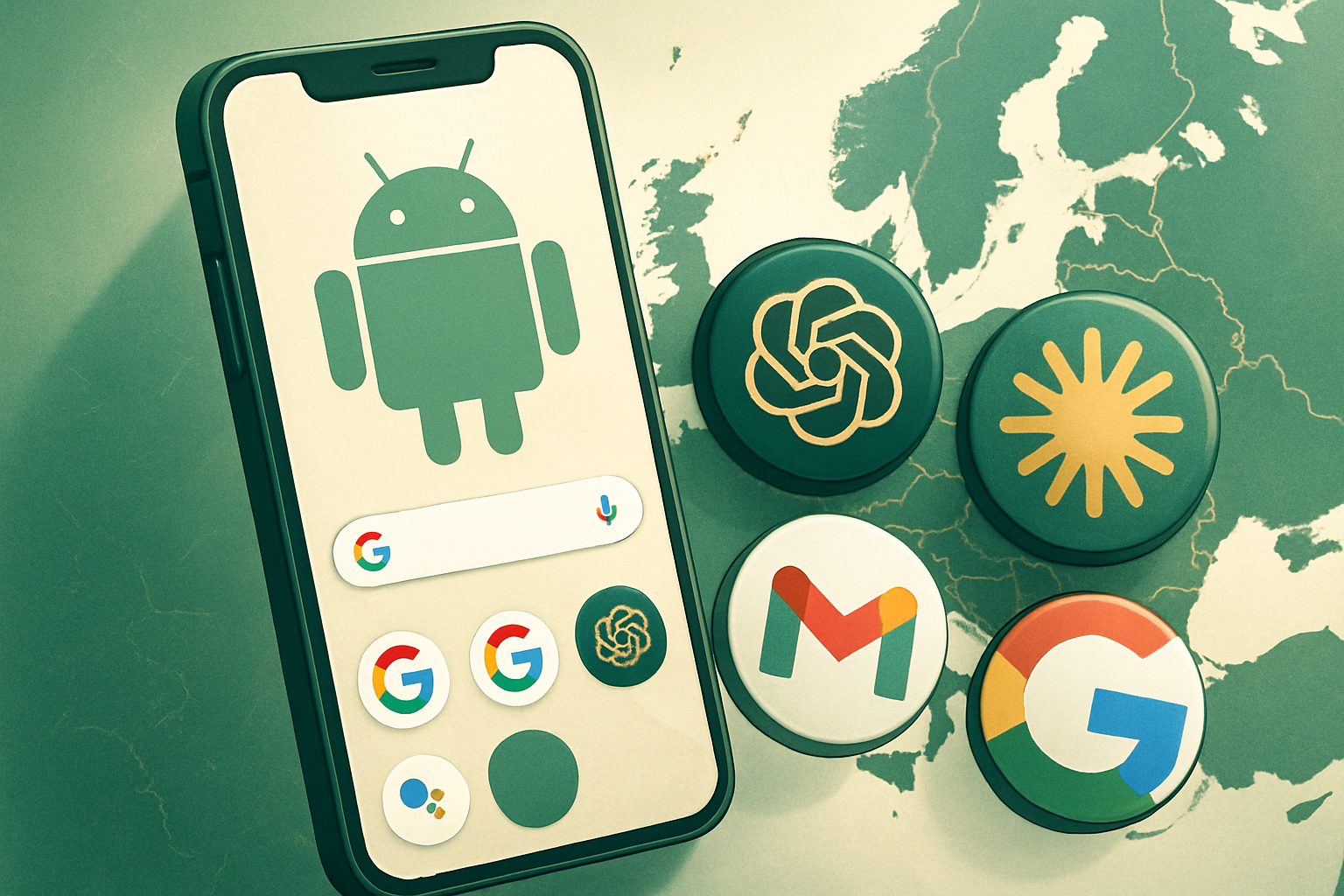
The EU Demands Openness from Android and Research Data from Google
The European Commission has recently made a significant decision by ordering Google to facilitate access for its competitors to artificial intelligence (AI) features on Android devices, as well as to its valuable search data. This directive is part of the implementation of the European Union's Digital Markets Act (DMA), which aims to prevent tech giants like Google and Apple from dominating markets due to their size and influence. The Commission insists that Google provide third-party applications and services with access equivalent to that enjoyed by its own services.
Henna Virkkunen, Executive Vice President of the Commission for Technological Sovereignty, emphasized that these measures aim to encourage innovation and diversity within the European Union. She hopes this initiative will allow alternatives to Google Search and Google's AI services, such as Gemini, to emerge, thus offering European users a broader choice of services.
Impact on AI Assistants and Android Services
Gemini AI, a core technology in Google's software and Android devices, has so far enjoyed privileged access. AI assistants from other companies have been limited in their ability to access certain essential features of Android, which has restricted their development and competitiveness. The new EU directive could allow third-party AIs to be activated by voice commands similar to "Hey, Google" and to manage tasks such as booking taxis, according to the European Commission.
Currently, about 60% of phone users in the EU own an Android device. The decision also requires Google to share its search data with third-party search engines and AI chatbots, including the data used to optimize its own search engine. This requirement is considered crucial for the development of alternative search engines, particularly those that emphasize privacy protection. Google will need to provide this data at a reasonable cost and through a transparent process, the Commission specified.
Le brief IA que les pros lisent chaque soir
Les 7 actus IA du jour, décryptées en 5 min. Gratuit.
Inclus dès l'inscription : notre sélection des meilleurs guides & comparatifs IA.
Choisissez votre rythme
Gratuit · Pas de spam · Désabonnement en 1 clic
Google's Reaction to the EU Decision
In response to this decision, Google expressed its concerns about the potential risks to the privacy and security of European users. Kent Walker, President of Global Affairs at Google and its parent company Alphabet, stated in a blog that these measures could weaken essential protections for millions of Europeans. He also mentioned that Google had proposed solutions to reconcile the goals of the DMA with user protection, but these proposals had been rejected.
In a statement sent to CNET, a Google spokesperson reiterated the company's concerns regarding privacy. Google suggested that data anonymization could be ensured by technical and legal experts, but this proposal was not accepted by the European Commission.
Google also highlighted that AI agents already have choices, but that phone manufacturers play a crucial role in protecting users by determining which applications can have system permissions and access user data. According to Google, it is the phone manufacturers who control this access, not Google itself.
Consequences for Apple and Implementation Timeline
Apple recently announced that, due to a decision from the DMA, its new AI assistant Siri would not be available for EU users at the launch of iOS 27 and iPadOS 27 later this year.
According to the European Commission's decision, Google will need to start sharing its data with search providers in January 2027, and changes regarding Android will need to be implemented starting in July 2027.
Brief IA — L'actualité IA en français
L'essentiel de l'actualité de l'intelligence artificielle, décrypté et expliqué chaque jour.