Metacognitive Regulation: The Hidden Asset of the AI Era
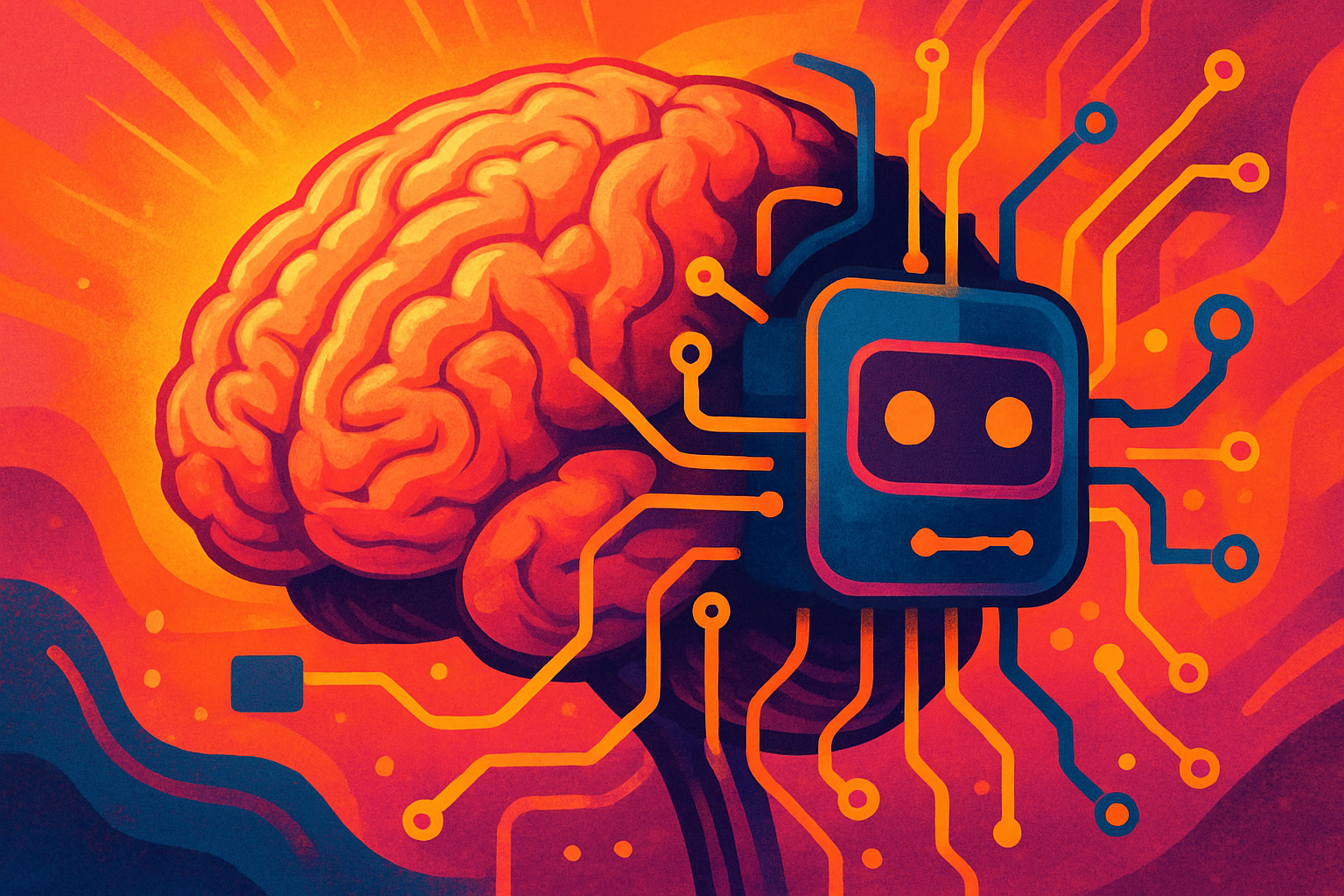
The Growing Importance of Metacognitive Regulation in the Age of AI
As artificial intelligence continues to advance at a breakneck pace, the true distinction may lie in how humans manage their own thinking processes. For nearly three years, users have learned to interact with AI, but the next major transformation could be learning not to let AI take control of their thinking.
With AI increasingly infiltrating our personal and professional lives, discussions with peers, industry leaders, and experts reveal a term that often comes up: prompting. This skill has now become fundamental for effectively interacting with AI. Users have evolved from merely adopting generative AI in their daily tasks to creating "conversational" partnerships between humans and AI agents that are precise, contextual, and goal-oriented. This partnership is crucial for bridging the gap between high-level human intent and actionable AI outcomes.
However, those who derive the most value from AI are not necessarily the best prompters. They are the ones who actively regulate their thinking while using AI. This group does not just think with AI; they actively reflect on their own thinking while using AI. This skill, known as metacognitive regulation, could quietly become the defining human advantage in the age of AI.
Understanding Metacognition
Metacognition is defined as "thinking about one's own thinking." It involves awareness of one's own mental processes and the ability to control, monitor, and adjust one's thinking to achieve a goal. The concept comes from psychology and cognitive science.
This internal human system is capable of detecting when you are rushing, overly confident, emotionally attached to an idea, or when your reasoning has gaps. It is also useful for identifying when you accept an answer simply because it seems convincing. In the AI-driven world we live in, this skill becomes incredibly important.
Think about the last time you had an original thought and pursued it without consulting the Internet. Current language models excel at producing results that appear complete, even if they are superficial, slightly incorrect, or subtly narrow your thinking, often without you realizing it. This is where metacognitive regulation becomes essential.
The highest-performing AI users constantly monitor their metacognition: Do they truly understand the output? Do they agree with it? Are they exhibiting intellectual laziness? Is AI expanding their reasoning or replacing their own creative thought? This self-awareness will be the true differentiator in AI-related skills, which few people are currently discussing.
Differentiating AI Users from AI Thinkers
An interesting trend is emerging: while most workers today use AI agents passively, a smaller group adopts a different approach. These users do not ask AI to replace their reasoning; instead, they use it to test, expand, organize, or challenge their own personal reasoning.
Rather than asking, "give me the answer to problem x," these savvy AI users ask questions such as:
- What assumptions am I missing?
- What would invalidate my argument?
- Can you critique my logic?
- What perspective have I overlooked?
- Why does this conclusion seem incomplete to me?
In the coming months, your comfort with AI will not be directly correlated to your technical abilities but will become a test of cognitive awareness. AI today does not just automate work; it is here to transform cognition.
Le brief IA que les pros lisent chaque soir
Les 7 actus IA du jour, décryptées en 5 min. Gratuit.
Inclus dès l'inscription : notre sélection des meilleurs guides & comparatifs IA.
Choisis ton rythme
Gratuit · Pas de spam · Désabonnement en 1 clic
Becoming a Metacognitive User of AI
Metacognitive regulation is not simply about improving prompting skills. It is about being more intentional in your own thinking while working with AI. The best AI users do not blindly seek to optimize speed and output; they remain mentally present. They know when to pause, question, challenge, refine, and think independently.
A concrete example:
- Before (a typical AI user): "Summarize this report and provide recommendations."
- After (a metacognitive user): "Summarize this report, and tell me what assumptions you are making, where the data might mislead me, and what conclusions would not be justified."
Becoming truly fluent with AI means resisting the urge to outsource every difficult cognitive moment. Here is what that means in practice:
-
Challenging AI outputs: AI can prematurely close reasoning if it is not questioned. It is crucial to further challenge the output produced by the AI agent, find contradictions, and remember that the quickest answer is not always the most correct.
-
Staying with uncertainty long enough to develop original thought: Humans do not appreciate discomfort, confusion, and iteration. With AI agents, it is possible to get multiple perspectives on a question in seconds. But metacognitive users resist this urge and take the time to form their own perspective.
-
Maintaining competing ideas simultaneously: AI can generate 400 lines of code or a wireframe for a dashboard in seconds, but thoughtful users evaluate them instead of rushing to a resolution. They appreciate the nuances in their work, as it pushes them to think about the gray areas and work through the details.
-
Continuously revising your assumptions: Do not use AI to validate what you already believe. Instead, be thoughtful and use AI proactively to uncover blind spots in your data, analyses, and narratives. Ask yourself: Why do I agree with this? What could change my mind? Is there a different perspective I can consider?
-
Using AI as a cognitive partner, not a replacement: The most effective users view AI as a brainstorming partner, a devil's advocate, or a reflective mirror, retaining ownership of judgment, reasoning, and decision-making.
Analytical jobs involve many cognitively costly activities that AI can instantly reduce. This is both the superpower and the risk of relying on AI. For if every difficult moment of thought is outsourced to a machine, humans will lose their cognitive endurance. Let decision fatigue lead you somewhere!
Metacognitive Regulation: An Essential Leadership Skill
This conversation becomes particularly important when thinking about leaders and decision-making in the future. In environments with high AI adoption, leaders will face new challenges: information abundance, cognitive overload. The bottleneck is no longer access to information, but rather discernment.
This means that the role of the modern leader shifts from "who has the answers?" to "who can regulate their thinking sufficiently to make sense of an overwhelming cognitive flow?"
This is where another concept from psychology becomes incredibly relevant: neuroleadership. Neuroleadership focuses on how people regulate attention, emotion, decision-making, and cognition in complex environments.
AI environments are extremely cognitively complex, and without metacognitive regulation, AI can amplify confirmation bias, superficial reasoning, reactive decision-making, false confidence, and cognitive fatigue. But with strong metacognitive skills, AI becomes a tool for deeper thinking and better strategic reasoning.
The Future of Work with AI and Human Self-Awareness
There is a growing hypothesis that the future belongs to those who can work the fastest with AI, but it will belong instead to those who can remain intentional while working with AI. In 2 to 3 years, "prompt quality" should become commonplace, but cognitive discipline will not.
And perhaps that is the irony of the AI age: the more intelligence we can generate on demand, the more valuable self-awareness becomes.
Brief IA — L'actualité IA en français
L'essentiel de l'actualité de l'intelligence artificielle, décrypté et expliqué chaque jour.