Meta: Ambitious AI Strategy with Glasses and Pendants
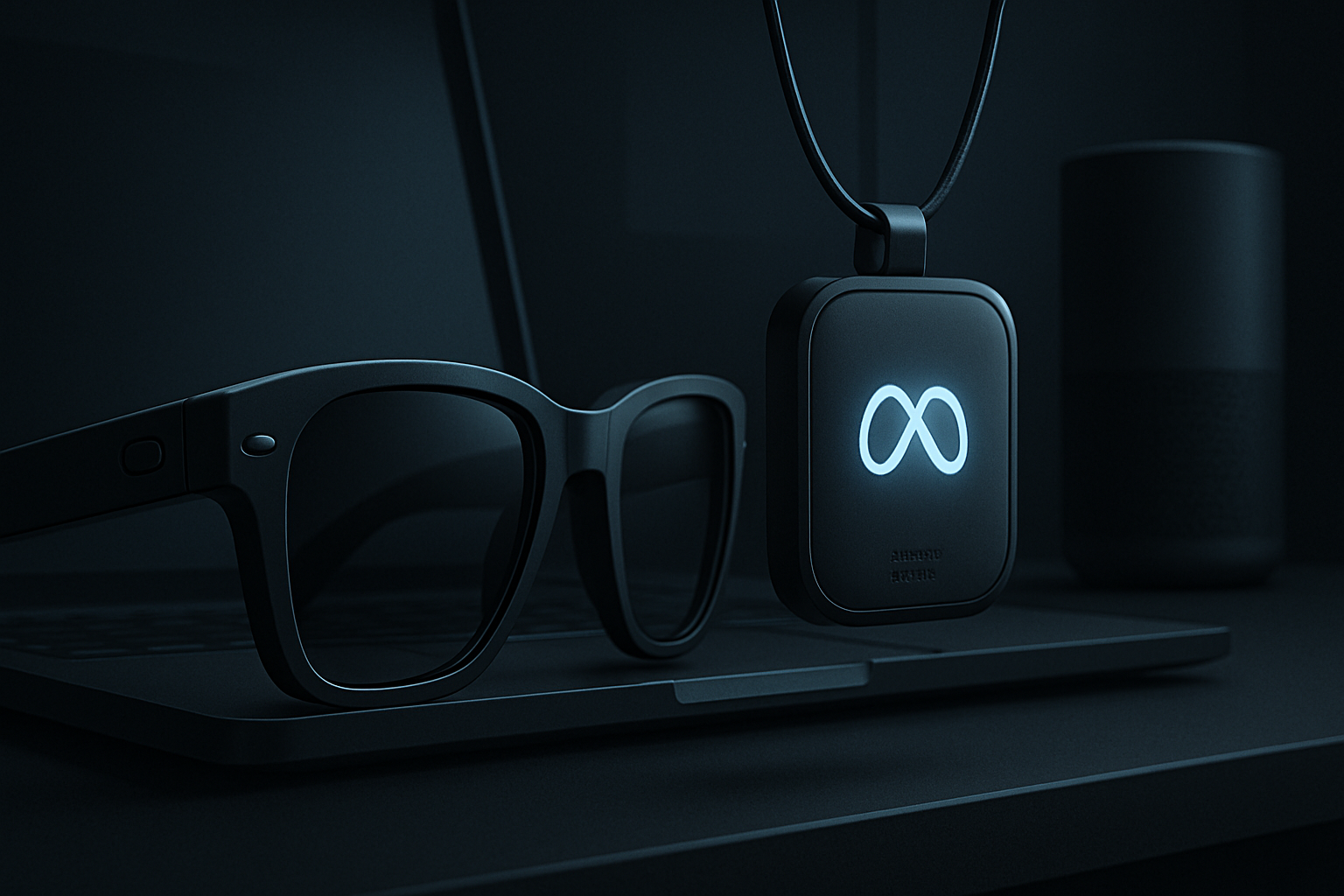
Meta Unveils Plans for AI and Wearable Devices
A recently leaked internal memo from Meta reveals ambitious plans to expand its range of smart wearable devices. The company intends to internally test a new AI pendant and broaden its lineup of smart glasses. These devices will utilize Meta's AI model, Muse Spark, along with an unreleased AI agent called Hatch. Additionally, Meta is targeting businesses with a new offering titled "Wearables for Work," aimed at integrating more eyewear brands into its portfolio.
Meta aims to test an AI companion device internally next year as part of a strategy to mitigate the massive losses from its hardware division, Reality Labs. The goal is also to promote the adoption of Meta's AI models and products. The memo, signed by Himel, outlines three main areas: a new AI pendant, an expanded range of smart glasses, and a business offering called "Wearables for Work." The latter targets enterprise customers likely to pay for devices with industry-specific features.
AI Pendant to Begin Internal Testing by 2027
The memo does not provide detailed specifications for the planned AI pendant, but it is possible that the device will be equipped with a camera. Internal testing, often referred to as "dogfooding" in industry jargon, is expected to begin in the spring of 2027. Last year, Meta acquired Limitless, a company specializing in AI pendants.
Meanwhile, Meta is expanding its range of smart glasses to include models described as "supersensitive." These glasses utilize Super Sensing technology, allowing cameras and sensors to operate for hours, enabling the AI assistant to track daily events. For instance, Meta's AI could remind you to grab an ingredient for dinner or alert you if you've forgotten your keys.
Le brief IA que les pros lisent chaque soir
Les 7 actus IA du jour, décryptées en 5 min. Gratuit.
Inclus dès l'inscription : notre sélection des meilleurs guides & comparatifs IA.
Choisis ton rythme
Gratuit · Pas de spam · Désabonnement en 1 clic
Currently, Meta's eyewear lineup is limited to the Ray-Ban Meta and Oakley Meta models, thanks to a partnership with EssilorLuxottica. However, other brands and styles are planned to reach a broader audience and improve gross margins. EssilorLuxottica reported in February that over 7 million smart glasses powered by Meta had been sold in 2025.
Growth and Software Subscriptions
Daily usage of AI-powered smart glasses has tripled year-over-year, according to Mark Zuckerberg, who describes this category as one of the most dynamic in the consumer electronics sector. Himel has set an ambitious goal of selling ten million wearable devices in the second half of 2026.
To offset hardware losses, Meta is banking on software subscriptions. The company recently launched a two-tier subscription for its AI chatbot, Meta AI, accessible via Facebook, Instagram, WhatsApp, and soon on its smart glasses. The Meta One Plus ($7.99) and Meta One Premium ($19.99) subscriptions follow the model of OpenAI and Google, offering users more computing power, longer model reasoning, and increased image and video generation. "All our glasses are designed to be easily updated to utilize our latest AI models and features," Zuckerberg stated.
Meta is also developing a platform for developers, allowing third parties to upload applications for wearable devices. However, Meta is not alone in this race. OpenAI has acquired io Products, co-founded by former Apple designer Jony Ive, for $6.5 billion and employs over 200 people working on a family of AI devices, including a smart speaker in the $200 to $300 range and potentially a smartphone. Google, for its part, has announced smart glasses in partnership with Samsung and Qualcomm for this fall.
Brief IA — L'actualité IA en français
L'essentiel de l'actualité de l'intelligence artificielle, décrypté et expliqué chaque jour.