Trump Establishes a Voluntary Framework for AI Model Security
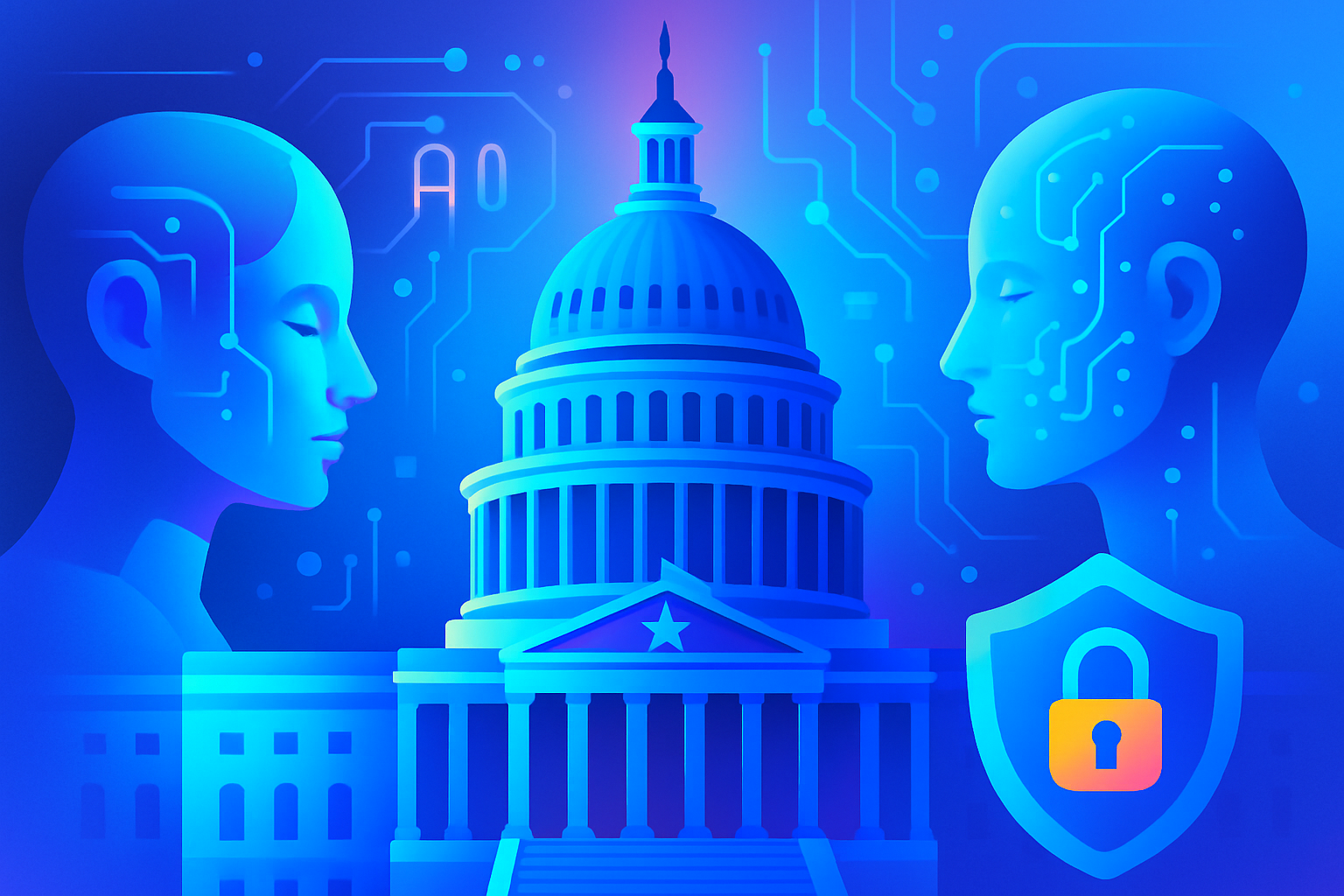
A New Executive Order for AI
The White House has recently issued an executive order under President Trump's direction, aimed at boosting innovation while enhancing security in the artificial intelligence sector. This order calls for federal agencies to strengthen the cybersecurity of government systems within 30 days. It also emphasizes the expansion of AI-powered protection tools.
Agencies such as the Department of Defense, the Cybersecurity and Infrastructure Security Agency (CISA), and the Department of the Treasury have been tasked with collaborating with the AI industry to create a one-stop shop for managing software vulnerabilities.
A Voluntary Framework for AI Models
The executive order introduces a voluntary framework for so-called "covered frontier" AI models. AI developers have the option to submit their models to the government for security testing before they hit the market. This approach remains voluntary, with no requirement for prior approval, and is accompanied by a call to intensify prosecutions against AI abuses in cyberattacks, as well as to expedite the recruitment of cybersecurity specialists.
This decision appears to be partly motivated by the debate initiated by Claude Mythos regarding cybersecurity risks associated with AI. Companies like Google DeepMind, Microsoft, and xAI have already agreed, in collaboration with the American Center for AI Standards and Innovation (CAISI), to submit their new models for review before publication. OpenAI and Anthropic reached a similar agreement in 2024.
Le brief IA que les pros lisent chaque soir
Les 7 actus IA du jour, décryptées en 5 min. Gratuit.
Inclus dès l'inscription : notre sélection des meilleurs guides & comparatifs IA.
Choisissez votre rythme
Gratuit · Pas de spam · Désabonnement en 1 clic
Ambitions and Criticisms
The question of the true willingness to cooperate remains open. The U.S. government has shown its determination to secure its AI advantages, particularly in the face of China, as evidenced by the conflict between the Pentagon and Anthropic.
The executive order aims to clarify regulatory ambitions while promising not to stifle innovation through excessive regulation. It explicitly excludes any mandatory approval process, emphasizing that participation remains voluntary. Anthropic has hailed this order as a "significant step" toward strengthening American leadership in AI.
OpenAI, on the other hand, goes further by calling for a binding national AI security framework. In its document "Democratic Governance of Frontier AI," published today, OpenAI proposes mandatory testing before the release of the most powerful models, independent audits, and protections for whistleblowers.
OpenAI argues that decisions regarding AI security should be made by democratic governments rather than private companies. The executive order is seen as a step forward, but OpenAI believes the government must build on this foundation to go further.
This position reflects both genuine security concerns and commercial interests. Mandatory pre-release reviews by a U.S. agency could favor well-funded large companies while imposing severe restrictions on Chinese open-source models, such as those from Deepseek or Qwen, which could be excluded from the American market.
Brief IA — L'actualité IA en français
L'essentiel de l'actualité de l'intelligence artificielle, décrypté et expliqué chaque jour.