Harvard Business Review: AI Invades Intimacy by 2026
An Expanding and Intimate Use of AI
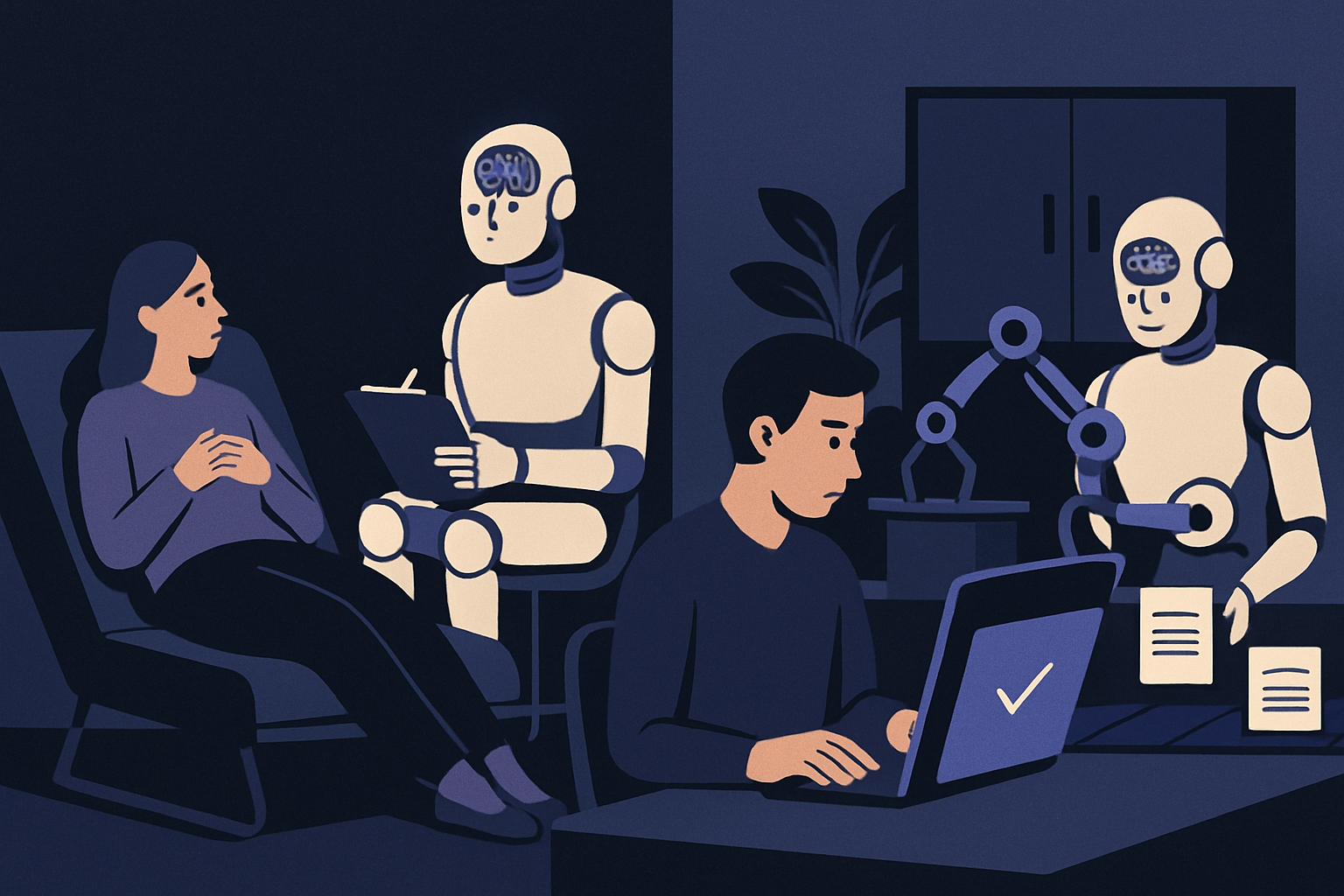
Three and a half years after the emergence of generative AI in our daily lives, its use has expanded to the point of becoming intimate. Nowadays, AI is being called upon for tasks as personal as therapy, decision-making, and even tarot reading. This is revealed in the third edition of the AI in the Wild study, published by the Harvard Business Review. With ChatGPT surpassing 900 million weekly users and Gemini reaching 750 million monthly users, the study examines how we are actually using this technology.
The Methodology of the AI in the Wild Study
The AI in the Wild study relies on a "social listening" approach, analyzing 12,637 use cases extracted from a database of nearly 50,000 records. This data was collected between March 2025 and February 2026 on platforms such as Reddit, Quora, as well as LinkedIn, TikTok, and YouTube. The identification of uses combined AI processing with human judgment, the latter remaining indispensable according to the authors.
An Expanding Range of Uses
One of the main findings of the study is that the range of AI uses continues to broaden. The authors suggest viewing these developments as "shifts in emphasis" rather than as breaks. At the top of the 2026 rankings are therapy and companionship, which were already number one in 2025. These uses are followed by technical troubleshooting and entertainment, also referred to as "fun and nonsense." Among the notable new entries, fan fiction and storytelling rank fourth, autonomous agent operations sixth, and astrology and tarot ninth. In contrast, more introspective uses like "finding meaning in life" or "learning better" have dropped in the rankings, a trend that aligns with other studies on daily AI usage.
"Thinkslop," a Delegation of Thought to AI
This diversification of AI uses fuels a central concern: as AI mimics human thought, the temptation to delegate our thinking to it grows. The authors of the study coined the term "thinkslop," inspired by "workslop," to describe the lazy thinking that excessive use of AI can induce. At least a quarter of the main uses fall under this cognitive delegation: therapy, relationship advice, decision support, or idea generation. The phenomenon manifests in several ways, such as soliciting AI before clarifying one's intention, outsourcing one's thinking, or stopping writing and thus thinking altogether. A user quoted in the study summarizes this trend by saying, "AI makes you believe you are a genius so you keep using it." However, when employed as a partner that tests ideas, AI has the potential to sharpen reasoning rather than dull it.
Le brief IA que les pros lisent chaque soir
Les 7 actus IA du jour, décryptées en 5 min. Gratuit.
Inclus dès l'inscription : notre sélection des meilleurs guides & comparatifs IA.
Choisissez votre rythme
Gratuit · Pas de spam · Désabonnement en 1 clic
AI, a New Emotional Refuge
Another tension highlighted by the study is the increasing reliance on AI for emotional support. Therapy and companionship are not only at the top of the rankings; they now account for 11% of the analyzed cases, up from 5% a year earlier, representing over 1,400 occurrences in the studied panel. AI is stepping into increasingly personal domains, such as relationship advice, personal conflict management, or interview preparation. Some users even go so far as to give their chatbot a name or assign it a gender, experiencing a model update as a loss. The authors of the study urge caution. Hamilton Morrin, a neuropsychiatry researcher at King’s College London, believes that the difficulty of accessing mental health care partly explains this reliance on AI, while reminding us that a generalist chatbot cannot replace a trained professional.
At Work, Real but Marginal Gains
The third part of the study concerns the use of AI in the professional world. 63 of the 100 main uses are work-related or applicable to work, but they are most often individual initiatives rather than management-led projects. Two new entries stand out: autonomous agent operations (6th), still experimental and often limited to note conversion, and vibe coding (21st). The benefits of AI in the workplace remain modest. It is primarily used to gain efficiency (note synthesis, drafts, recruitment), sometimes to support business growth, but rarely to rethink processes deeply. In the absence of a clear framework, shadow usage is becoming widespread: "I close twice as many tickets, but no one knows I’m using AI," reports an employee. This gap between employee practices and organizational awareness has already been noted in the latest Work Trend Index from Microsoft.
Brief IA — L'actualité IA en français
L'essentiel de l'actualité de l'intelligence artificielle, décrypté et expliqué chaque jour.