Tech CEOs Confronting the Illusions of AI: A Worrying Drift
Le brief IA que les pros lisent chaque soir
Les 7 actus IA du jour, décryptées en 5 min. Gratuit.
Inclus dès l'inscription : notre sélection des meilleurs guides & comparatifs IA.
Choisis ton rythme
Gratuit · Pas de spam · Désabonnement en 1 clic
An Industry in Turmoil
The tech industry is currently undergoing a period of upheaval reminiscent of past major revolutions, such as the advent of cloud computing, when costs were exorbitant in the early days. However, this time, the situation is unprecedented, with record revenues accompanied by waves of massive layoffs. This duality is partly explained by an excessive fascination among leaders with artificial intelligence.
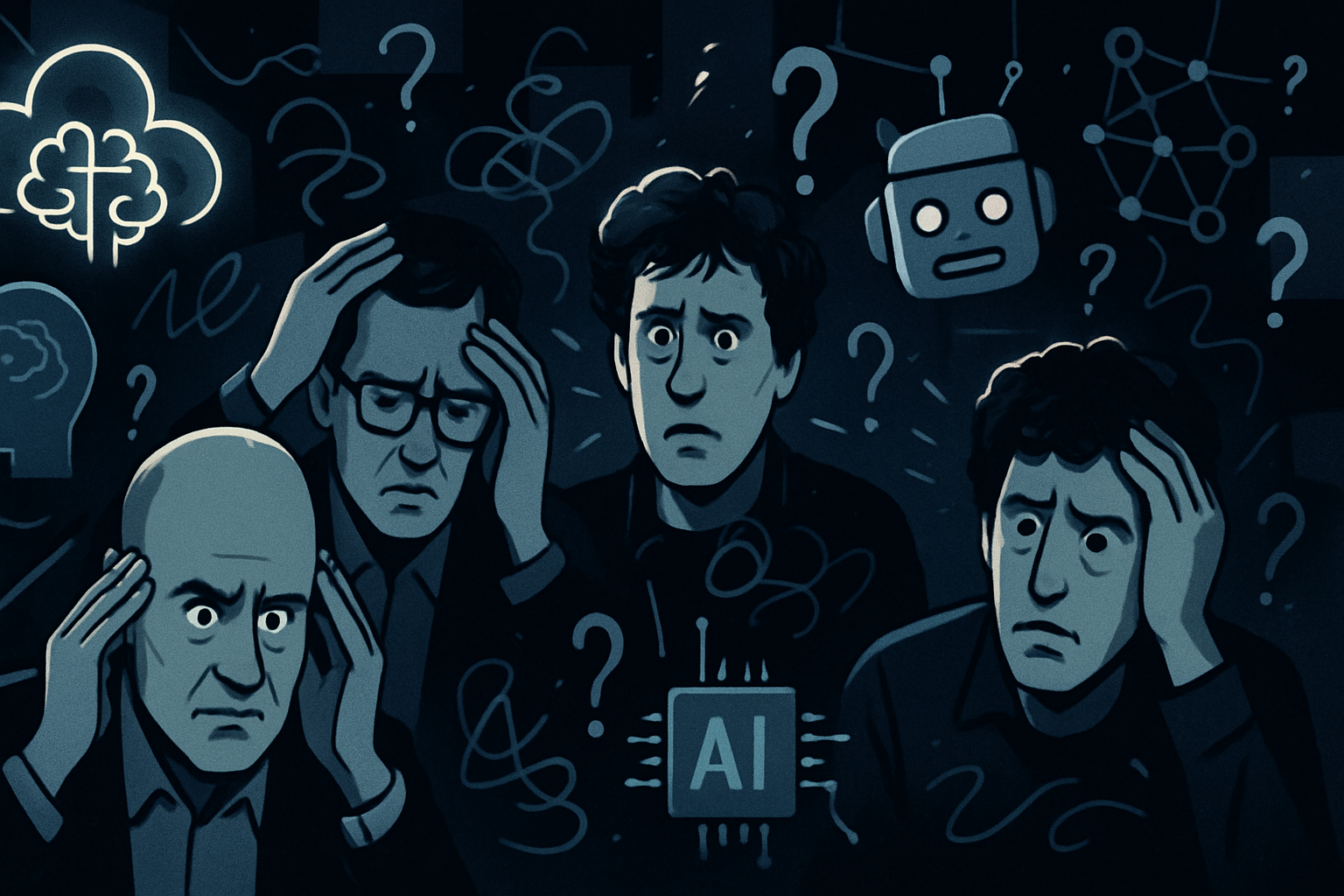
According to Aaron Levie, founder of Box, tech CEOs are suffering from a form of AI-related delusions of grandeur, leading them to erroneous conclusions. Levie expressed this idea on X, emphasizing that these leaders are often too far removed from operational realities to fully understand what can be automated by AI. "CEOs are particularly prone to AI psychosis because they are far enough removed from the last mile of work that still needs to be done to generate most of the value with AI," Levie wrote on X.
A Limited Understanding of Processes
Levie explains that these CEOs are not the ones examining the code, discovering bugs, or identifying calls to erroneous libraries before software deployment. They are also not involved in training AI models on company-specific contractual terms or meticulously searching for problematic clauses in contracts. This distance from technical processes leads to a misunderstanding of what is actually possible with AI.
Levie, while criticizing this approach, is not opposed to AI. On the contrary, he is a strong advocate for the technology, regularly sharing positive messages with his 2.7 million followers on X. He has even written blogs titled "Headless Software is the Future" about how software designed for AI agents is the way forward, and he actively invests in AI startups as an angel investor.
Levie's Advice to Leaders
For Levie, CEOs should use AI intensively to understand its true capabilities and limitations. He advises that they should emerge from this experience with an appreciation of both the benefits and the actual work required. Levie believes there are CEOs who adopt this approach, but they seem to be in the minority.
Massive Layoffs in the Tech Sector
In 2026, the tech industry has already seen nearly as many layoffs as in 2025. In the first five months of the year, 115,430 people were laid off across 152 companies, compared to 124,636 people in 275 companies the previous year, according to Layoffs.fyi. The majority of companies cited AI as the reason for these job cuts, although many argue that the largest tech firms are engaging in AI greenwashing, wrongly attributing productivity gains to this technology.
The Example of ClickUp
A notable case is that of Zeb Evans, CEO of ClickUp, who laid off 22% of his employees after deploying around 3,000 AI agents for internal tasks. Evans stated on X that this decision was not driven by cost-cutting, but by the desire to create a workforce that manages AI agents, with the goal of building a "100x organization."
Data on AI and Productivity
Despite the enthusiasm for AI, the data does not always support the high expectations. A meta-analysis published in October in the California Management Review from UC Berkeley found little evidence of a link between AI adoption and a significant increase in productivity. Similarly, research published in March by the National Bureau of Economic Research highlighted a paradox where perceived gains exceed measured gains.
Researchers from MIT concluded that agents are not yet performing human-quality work in many cases. They estimate that at the current pace of improvement for LLMs, models could accomplish most text-based tasks with a success rate of 80% to 95% by 2029, but they will not surpass humans for several more years. AI is on track to achieve basic competency in most tasks in about three years.
Towards Organizational Chaos?
Meanwhile, research published in the Harvard Business Review has shown that when everyone uses AI to produce more, the bottleneck simply shifts to the leaders. Their work awaits the individuals who must authorize everything that everyone produces. If everyone is empowered to act, then based on what OpenAI experienced last year, we can say that things can become uncontrollable.
The question remains: are CEOs ready to manage the consequences of their enthusiasm for AI? If leaders do not become aware of the current limitations of AI, the risk is that they will plunge their companies into organizational chaos, where hasty decisions based on technological illusions could have disastrous repercussions.
Brief IA — L'actualité IA en français
L'essentiel de l'actualité de l'intelligence artificielle, décrypté et expliqué chaque jour.