White House and Anthropic: AI Safety Standards on the Horizon
Le brief IA que les pros lisent chaque soir
Les 7 actus IA du jour, décryptées en 5 min. Gratuit.
Inclus dès l'inscription : notre sélection des meilleurs guides & comparatifs IA.
Choisis ton rythme
Gratuit · Pas de spam · Désabonnement en 1 clic
The White House and Anthropic Join Forces for AI Security
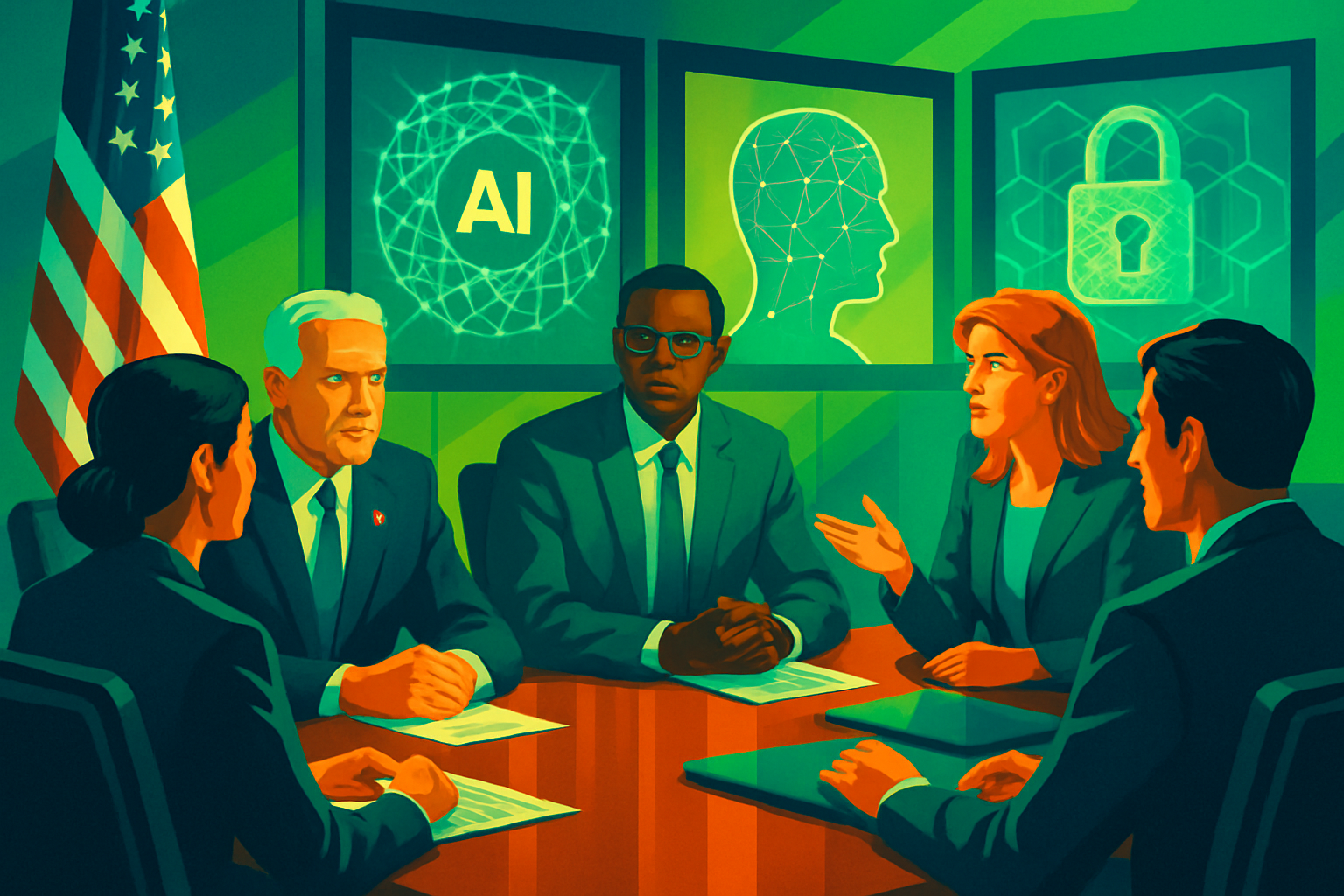
Amid growing concerns about the safety of artificial intelligence technologies, the White House and Anthropic have begun discussions to create a framework for assessing AI security vulnerabilities. According to exclusive information obtained by POLITICO, Anthropic's AI models, including Fable 5 and Mythos 5, are currently subject to export controls due to identified vulnerabilities.
Towards a Risk Assessment Framework
The discussions between the White House and Anthropic aim to establish benchmarks for evaluating security risks related to AI. This framework would be designed to assess the severity of security vulnerabilities in new AI models and could guide potential government intervention. A senior White House official and an administration official, who requested anonymity, shared these details with POLITICO.
Impact of Export Controls
The White House recently imposed export controls on Anthropic, forcing the company to suspend access to its Fable 5 and Mythos 5 models. This decision was motivated by a perceived security vulnerability known as a "jailbreak" in the industry. This situation highlights the challenges faced by tech companies when their innovations outpace existing regulatory infrastructures.
Disagreements on the Severity of Vulnerabilities
Disagreements have emerged between administration officials and Dario Amodei, CEO of Anthropic, regarding the severity of the security vulnerability. While technology has advanced more rapidly than the government's ability to assess these incidents, the administration is striving to establish safeguards for new powerful models that could threaten economic and national security if left unchecked.
Understanding the Limits of AI Security
The negotiations between Anthropic and the administration reflect a shared recognition that no AI model can be completely invulnerable to hacking. This reality has been part of Anthropic's initial defense regarding its models. The government seeks to establish rules for companies to measure security risks, a sentiment echoed by other AI companies and international leaders during recent G7 meetings in France.
Towards a Common Set of Benchmarks
The discussions, led by Sarah Heck, head of public policy at Anthropic, and Tom Brown, co-founder, aim to develop a common set of benchmarks. These benchmarks would be used to evaluate future "jailbreak" incidents, including the extent of security measures circumvented, the capabilities exposed, and the practical consequences of these breaches.
Progress in Negotiations
Although neither Anthropic nor the White House immediately responded to requests for comment, the shift towards a technical standards-setting exercise indicates that negotiations are progressing. The export controls on Anthropic remain in place, but the establishment of these standards could be a positive sign for the future.
Intensive Discussions in Washington
After an initial refusal from Anthropic to deploy Fable, citing a limited vulnerability, the White House imposed export controls. However, intensive discussions took place over the weekend between administration officials and Anthropic leaders, including Tom Brown, Commerce Secretary Howard Lutnick, and National Cyber Director Sean Cairncross. These exchanges led to a week of in-person meetings in Washington, where Anthropic sent senior researchers and security experts to the Department of Commerce to attempt to resolve the tensions.
Brief IA — L'actualité IA en français
L'essentiel de l'actualité de l'intelligence artificielle, décrypté et expliqué chaque jour.