Match Group reveals: singles reject AI companions
Le brief IA que les pros lisent chaque soir
Les 7 actus IA du jour, décryptées en 5 min. Gratuit.
Inclus dès l'inscription : notre sélection des meilleurs guides & comparatifs IA.
Choisis ton rythme
Gratuit · Pas de spam · Désabonnement en 1 clic
Singles and AI: A Complex Relationship
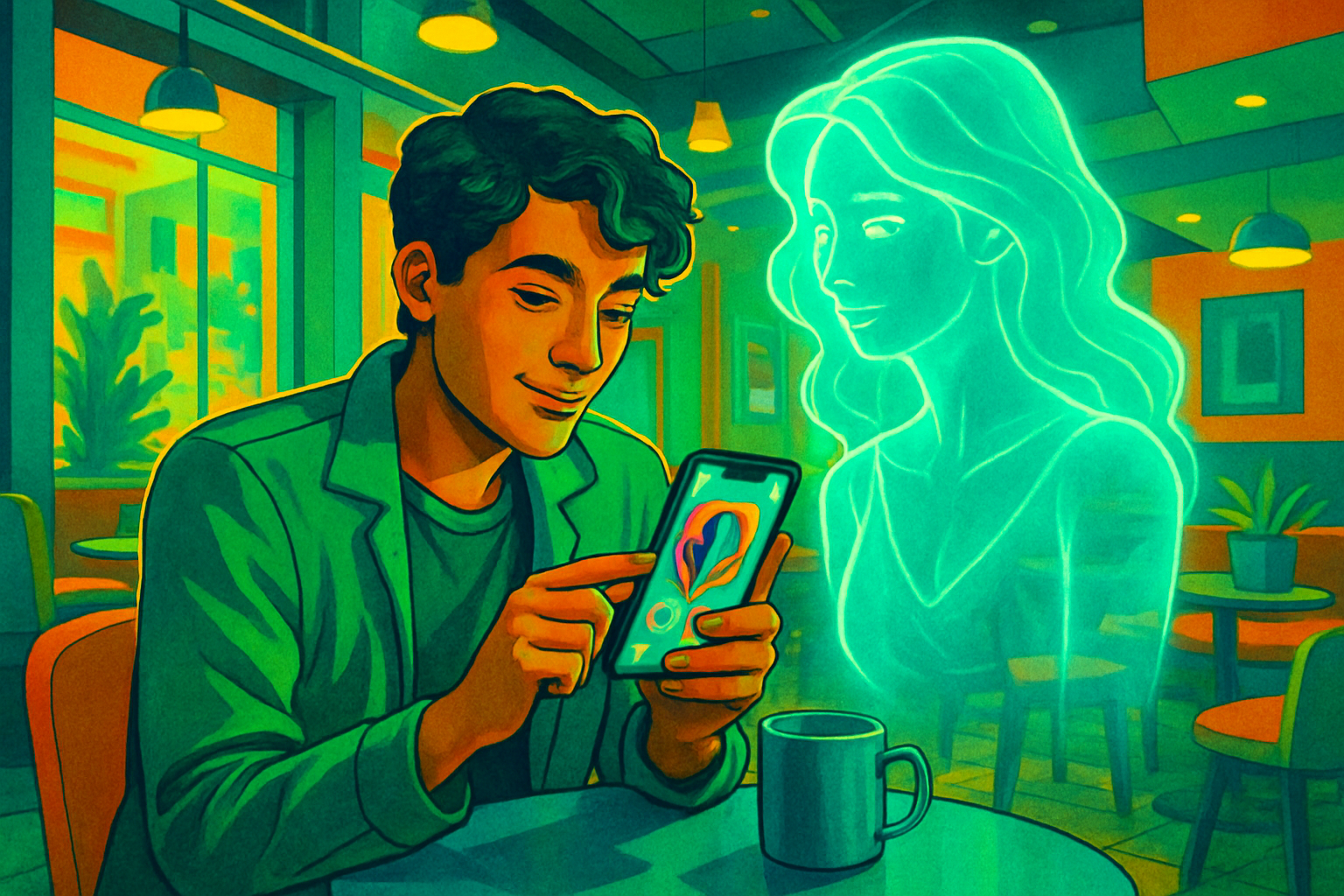
In the world of modern dating, the idea of integrating artificial intelligence into romantic relationships does not appeal to the majority of singles. A recent survey conducted by Match Group, the giant behind popular dating apps like Tinder and Hinge, revealed that nearly half of the participants aged 18 to 39 have a negative perception of AI in a romantic context. Among the 1,000 respondents, 47% view AI unfavorably when it comes to love relationships. Furthermore, two out of five singles in this age group refuse to date someone using AI companion apps, such as Kindroid and Replika. This reluctance is particularly pronounced among women aged 18 to 24, where more than half express their disagreement.
The quest for love through AI proves to be a slippery slope. Singles, while using AI for everyday tasks, prefer authentic human interactions when it comes to romantic relationships. Concerns are numerous, ranging from the fear of saying the wrong thing to the use of AI to embellish a dating profile. The desire for human connection remains predominant.
AI in Relationships: A Massive Rejection
The incursion of AI into personal relationships is not a new phenomenon, but it elicits mixed reactions. Imagine consulting ChatGPT to arbitrate a dispute with your partner or even considering a relationship with a bot. While this may seem futuristic, these scenarios are already unfolding with AI applications that mimic human relationships, sometimes with avatars.
The Match Group survey shows a categorical rejection of AI bots in the dating realm, with an opposition ratio of 4 to 1. Only 12% of singles have recently experimented with AI companion apps, primarily out of curiosity or for entertainment, and not to replace an authentic romantic quest. Reasons include boredom (45%), role-playing (43%), and to a lesser extent, seeking a genuine connection (38%) or managing emotions (26%).
Rather than turning to AI, singles prefer to seek advice from friends and family, at a rate of 60%, while AI is consulted by only 20%. A study published in the journal Science highlights that AI tends to agree with the user, which limits its effectiveness in areas like relationship repair.
Human Advice Preferred Over AI
Michael Salas, a couples therapist, shares this distrust of AI for relationship advice. After testing AI in a personal situation, he found that the responses provided lacked wisdom and nuance. "It told me that this friend didn't care about me, which was false," Salas recounts. He advises prioritizing advice from real people who are familiar with the situation.
AI and Dating: Clear Limitations
Despite the widespread use of AI for productivity tasks, such as writing or problem-solving, its application in the dating realm remains limited. According to the Match Group study, 74% of singles use AI tools like ChatGPT, and 69% employ them for productivity tasks such as summarizing, problem-solving, and content writing. However, only 64% would consider using them to find love, for example, to maintain a conversation or plan a date. More specifically, 27% might consider enhancing their profile with AI assistance, 26% to start a conversation, and 27% to plan a date.
Some AI features, like Tinder's matching or date-planning apps, are beginning to align with these preferences. Hinge has also introduced 'Convo Starters' to facilitate sending the first message. However, adoption remains below half of potential users, indicating a persistent reluctance to let AI influence their love lives.
The future of dating apps could be influenced by these findings, prompting Match Group to adapt its AI features according to user expectations. For now, the company has not commented on these results.
Brief IA — L'actualité IA en français
L'essentiel de l'actualité de l'intelligence artificielle, décrypté et expliqué chaque jour.