Microsoft Sells OpenAI in China, OpenAI and Anthropic Hold Back
Le brief IA que les pros lisent chaque soir
Les 7 actus IA du jour, décryptées en 5 min. Gratuit.
Inclus dès l'inscription : notre sélection des meilleurs guides & comparatifs IA.
Choisis ton rythme
Gratuit · Pas de spam · Désabonnement en 1 clic
Microsoft Establishes Itself in China with OpenAI Models
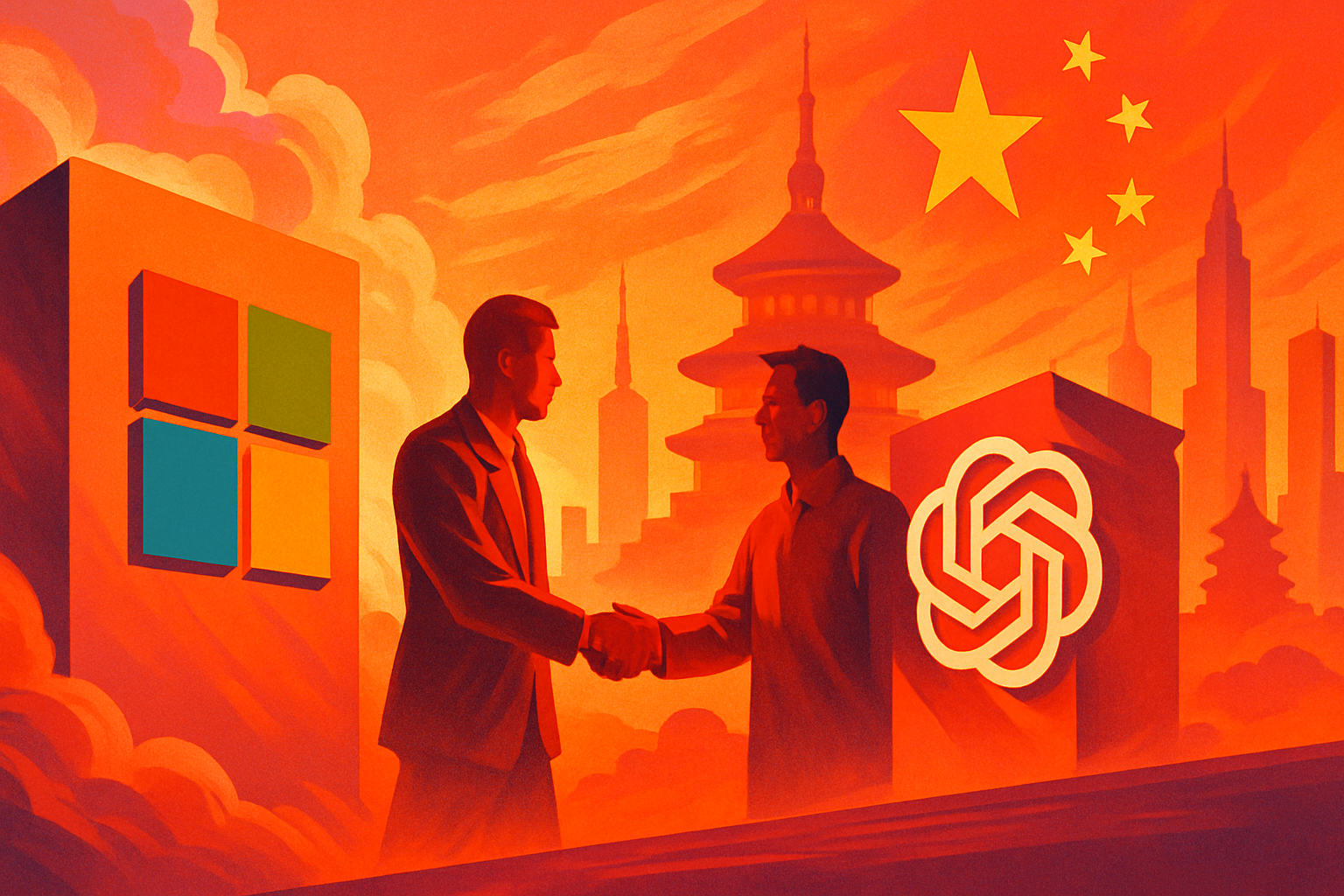
Microsoft has quietly taken the lead in the OpenAI model market in China, becoming the primary provider of this technology for the country's major internet companies. This unique position is bolstered by the fact that OpenAI and Anthropic, the creators of these models, have chosen not to engage directly in the Chinese market. The reasons for this reluctance include concerns related to intellectual property and the potential for misuse of the technologies. This development, reported by Bloomberg, places Microsoft in an exclusive position, as it sells the GPT series to Chinese companies that the model's creator prefers to avoid.
The scale of Microsoft's operation in China is significant. ByteDance, for example, has become Microsoft's largest AI client in recent years. The company heavily relies on OpenAI models and could spend over a billion dollars annually on AI and cloud services provided by Microsoft, according to sources close to the matter cited by Bloomberg. Other Chinese giants like Ant Group, Meituan, and Tencent are also turning to Azure for their AI model needs, although Ant Group claims to be developing its own models and does not rely on external systems for its core products.
Within Microsoft, this expansion in China is viewed as a major success. Azure's AI revenue from China has seen spectacular growth, tripling during the fiscal year ending in June 2025, after already quadrupling the previous year. Judson Althoff, former Chief Commercial Officer of Microsoft, highlighted during a sales meeting in July 2025 that China was the fastest-growing sales territory for Azure. This momentum is particularly notable as Microsoft President Brad Smith informed U.S. lawmakers that activities in China accounted for about 1.5% of the company's revenue in 2024.
Why Microsoft is the Only Seller of OpenAI in China
The key to this situation lies in the exclusive contract that Microsoft signed with OpenAI, allowing it to set its own terms for selling GPT models abroad. OpenAI and Anthropic have chosen not to sell directly in China, and Anthropic's models are completely absent from Microsoft's offerings in the country. Thus, Microsoft acts as an intermediary for models that their creators deem too risky to sell directly in the Chinese market.
The risk of model distillation is a constant concern. OpenAI has privately expressed its worries to Microsoft, urging it to strengthen measures to prevent Chinese clients from reproducing its models through distillation techniques. Microsoft claims to have implemented automated monitoring and only sells to established companies, avoiding individual developers. However, sources have indicated to Bloomberg that Chinese buyers do not face increased scrutiny, and the synthetic data generated by the models is difficult to control. To limit risks, Microsoft does not host OpenAI models on Chinese soil; clients access them via the internet from data centers located elsewhere, including Singapore.
The situation becomes even more complicated with Microsoft's addition of DeepSeek's R1 model to Azure AI Foundry in January 2025. This month, Microsoft confirmed to Axios that it is testing an adjusted and Azure-hosted version of DeepSeek-V4, presented as a cheaper option for Copilot Cowork, a business agent currently powered by OpenAI and Anthropic models. Thus, Microsoft sells a Chinese model to Western companies while providing American models to Chinese firms, profiting from both sides of this exchange.
The future of this balance is uncertain, especially in light of political stakes. Microsoft's activities in China are controversial in Washington, where lawmakers view the rise of AI in China as a threat to the American industry. OpenAI's private objections could also strengthen. For now, Microsoft holds a unique position in the OpenAI model market in China, being the only player to financially benefit from both sides of this complex business relationship.
Brief IA — L'actualité IA en français
L'essentiel de l'actualité de l'intelligence artificielle, décrypté et expliqué chaque jour.