Mistral AI Surpasses Meta in Data Collection
Le brief IA que les pros lisent chaque soir
Les 7 actus IA du jour, décryptées en 5 min. Gratuit.
Inclus dès l'inscription : notre sélection des meilleurs guides & comparatifs IA.
Choisis ton rythme
Gratuit · Pas de spam · Désabonnement en 1 clic
Mistral AI Surpasses Meta in Data Collection
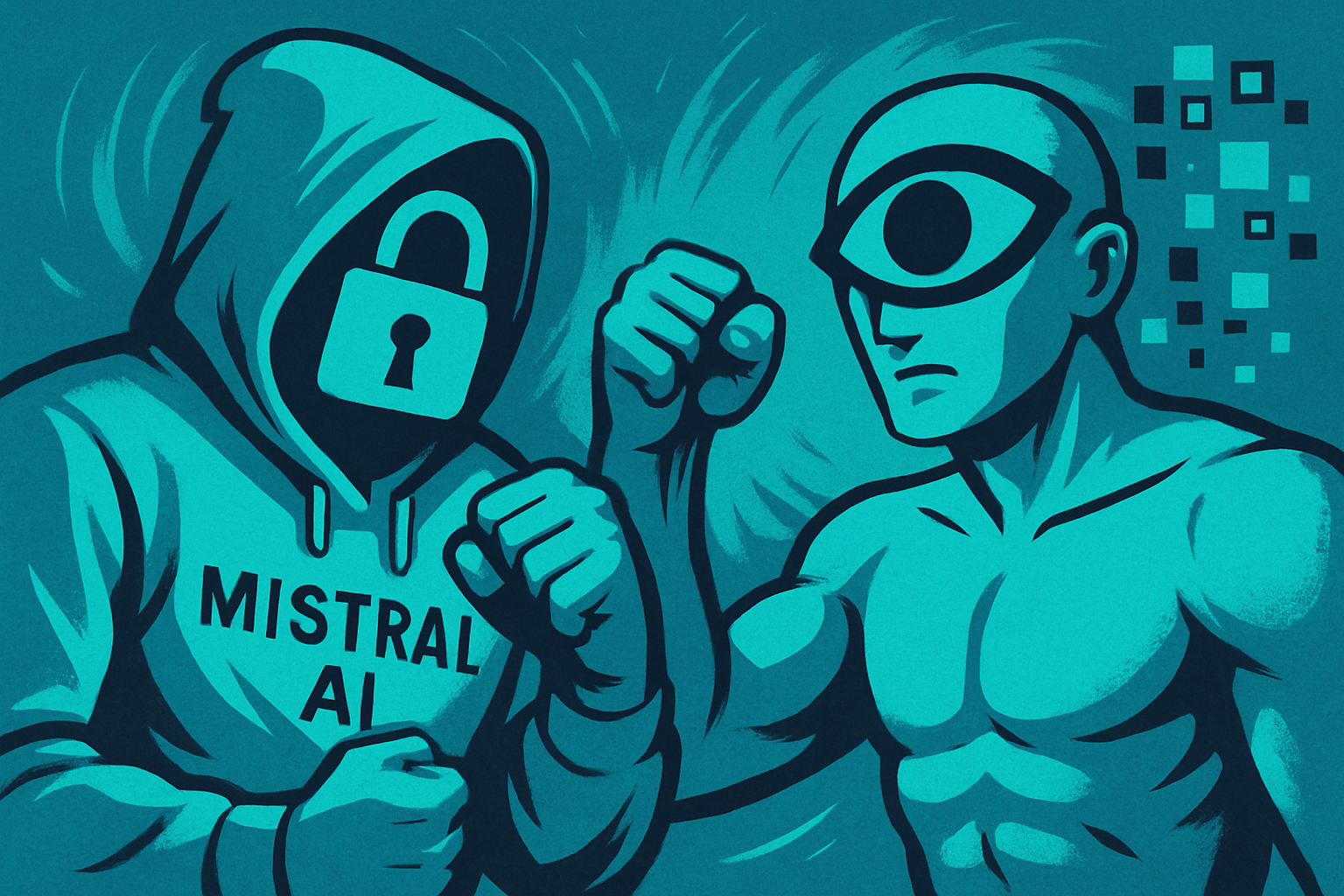
A study by Surfshark on the data collection practices of AI chatbots places Mistral's Vibe model among the most privacy-conscious assistants, far ahead of Meta AI and other American giants in generative AI. Mistral collects five times less data than Meta AI; here are the details.
As noted in the latest edition of the Digital Barometer, generative artificial intelligence has become part of the daily lives of nearly one in two French people. However, behind the responses generated by these assistants lies a question that is often overlooked: how much personal data do they actually collect? Interestingly, Surfshark, which released its findings on Tuesday, June 30, scrutinized twelve AI chatbots available to the public on the App Store. The discrepancies revealed between the American giants and the French alternative Mistral AI can be significant, very significant. But be careful, as there are not only bad students.
Mistral, the Good French Student Against Data-Hungry AI Assistants
Among the twelve most popular chatbots analyzed by Surfshark, ten come from American companies, including Google, Meta, OpenAI, and Anthropic. Only two outsiders escape this hegemony: the Chinese DeepSeek and the French Vibe by Mistral, developed by the French unicorn Mistral AI, which stands out as an excellent student. The scarcity of models speaks volumes about the certain lag of the Old Continent, but it is not the time to replay the match.
This imbalance is not solely a matter of nationality, as it also has a concrete impact on the amount of information we share online, sometimes without even realizing it. This situation fuels ongoing discussions about a still nascent European technological independence in the face of industry giants.
Nevertheless, this American concentration does not tell the whole story. It was also necessary to verify whether the data collection practices followed the same logic of dominance. This is what Surfshark aimed to measure by comparing, category by category, what each assistant officially claims to collect from its users on Apple's App Store.
Mistral AI is the Top Student Among the Studied Chatbots
The verdict is not flattering for Meta AI, the assistant from Mark Zuckerberg's firm, which dominates the data collection ranking by ticking off 33 of the 35 categories of personal data identified by Surfshark, representing nearly all the information an application can collect from its users. Following are Google Gemini (23 categories) and ChatGPT (17), which are significantly above the average observed among the studied assistants. A commendable mention goes to Claude, Poe, and DeepSeek, each reaching 13.
Finally, Vibe, formerly known as Le Chat from French Mistral, stands out as an exception, receiving the highest score in the class with only six categories recorded, which is five times less than Meta AI and nearly three times less than ChatGPT. In its data collection, the French assistant limits itself to the name and email of the user, along with four types of anonymized data, of which only one is for statistical purposes.
On the side of Meta AI, the list is unfortunately much broader, including elements of location, browsing history, financial information, contacts, search history, and device identifiers. Tomas Stamulis, the head of information systems security at Surfshark, explains that it is advisable, before adopting an AI assistant, to "check what information it collects" and adjust privacy settings accordingly.
Brief IA — L'actualité IA en français
L'essentiel de l'actualité de l'intelligence artificielle, décrypté et expliqué chaque jour.