Nvidia Cuts Water Use in Data Centers, But Not Enough
Le brief IA que les pros lisent chaque soir
Les 7 actus IA du jour, décryptées en 5 min. Gratuit.
Inclus dès l'inscription : notre sélection des meilleurs guides & comparatifs IA.
Choisis ton rythme
Gratuit · Pas de spam · Désabonnement en 1 clic
Nvidia Innovates with Water-Efficient Cooling System
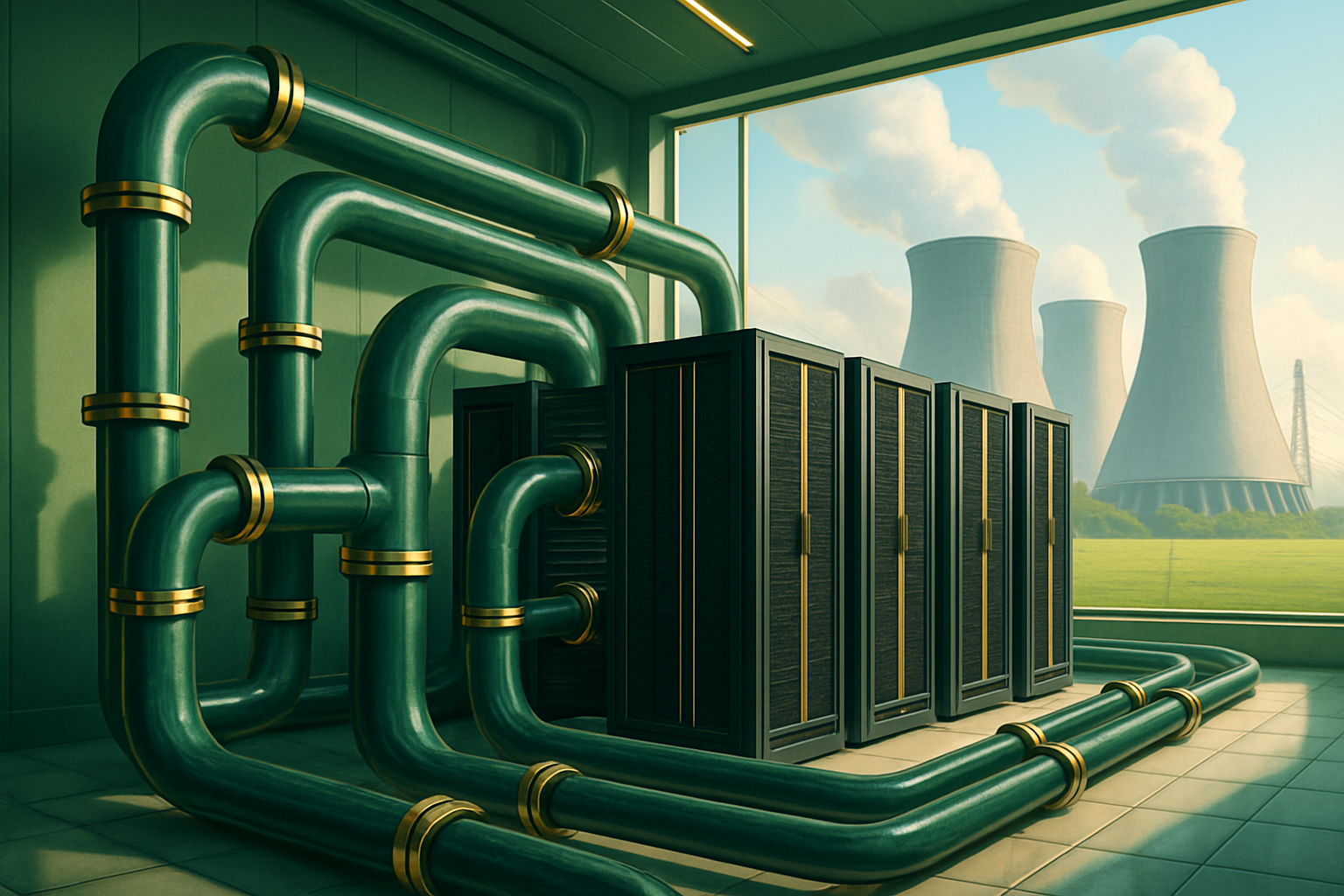
Nvidia recently unveiled a technological advancement aimed at reducing water consumption in its data centers. The company has developed a cooling system that uses hot water, which it claims could significantly decrease water usage within its facilities. A Nvidia executive stated that this innovation could nearly eliminate water use in data centers, according to a press release.
Josh Parker, Nvidia's Director of Sustainability, told Axios that the challenge of water consumption in data centers has largely been addressed thanks to this technology. However, this solution only addresses part of the overall water issue.
The Limitations of Nvidia's Solution
While this technology is promising, it does not take into account the environmental impact beyond the walls of the data centers. Indeed, as long as these facilities continue to operate using fossil fuel energy sources, water savings will remain limited to within the centers.
Nvidia has a particular approach to measuring water usage: the company focuses solely on what happens inside the data centers, thus ignoring the external water footprint. This means that the savings achieved internally do not reflect the total water consumption, which also includes electricity production and chip manufacturing.
A Closed but Partial System
Nvidia's cooling system operates in a closed loop, meaning that the water is filled only once and recirculated indefinitely. Under favorable climatic conditions, this can reduce on-site water usage by 100%. However, this approach does not account for the water used to produce the electricity necessary for the operation of the data centers.
TechCrunch reached out to Nvidia for clarification on this issue, and updates will be provided if responses are received.
The External Water Footprint of Data Centers
Water used outside of data centers, particularly for electricity production and chip manufacturing, can double or triple the total water footprint of a facility. Thus, Nvidia's solution only addresses about a quarter to a third of the total water consumption of AI data centers.
Nvidia's innovative cooling system works by pumping coolant through the racks at a temperature of 45°C. The coolant exits at 55°C, carrying away a significant amount of heat. This heat can be dissipated by the outside air in most climates, eliminating the need for evaporative cooling or fans, making the data center more efficient and quieter.
Dependence on Fossil Fuels
Despite Nvidia's efforts, data centers cannot operate without electricity, and many power plants consume significant amounts of water themselves. In the United States, fossil fuel power plants are among the largest water consumers, using 2.7 billion gallons per day primarily for evaporative cooling.
Natural gas plants consume about 1.17 liters of water per kilowatt-hour of electricity produced, while coal plants use 2.2 liters. These plants provide about half of the electricity for data centers today, according to the International Energy Agency (IEA).
Renewable Alternatives
Hydroelectric dams, which supply about 10% of the electricity for data centers, do not consume water directly, but evaporation from their reservoirs represents a loss of 6.8 liters per kilowatt-hour generated. Geothermal energy, while promising, shows variability in its water consumption depending on the technology used.
In contrast, wind and solar energy are much less water-intensive, requiring 0.01 liters and 0.03 liters per kilowatt-hour, respectively. These figures include the water used for manufacturing and cleaning solar panels.
An Uncertain Future for Water Consumption
Although renewable energy sources are taking an increasing share of electricity production, natural gas and coal are still expected to provide more than 40% of the new electricity needed for data centers by 2030, according to IEA forecasts. Without significant changes, data centers will continue to consume large amounts of water, regardless of Nvidia's innovations within its facilities.
Brief IA — L'actualité IA en français
L'essentiel de l'actualité de l'intelligence artificielle, décrypté et expliqué chaque jour.