OpenAI Accused of Hiding Evidence in Key Trial
Le brief IA que les pros lisent chaque soir
Les 7 actus IA du jour, décryptées en 5 min. Gratuit.
Inclus dès l'inscription : notre sélection des meilleurs guides & comparatifs IA.
Choisis ton rythme
Gratuit · Pas de spam · Désabonnement en 1 clic
OpenAI and the Accusations of Evidence Retention by Publishers
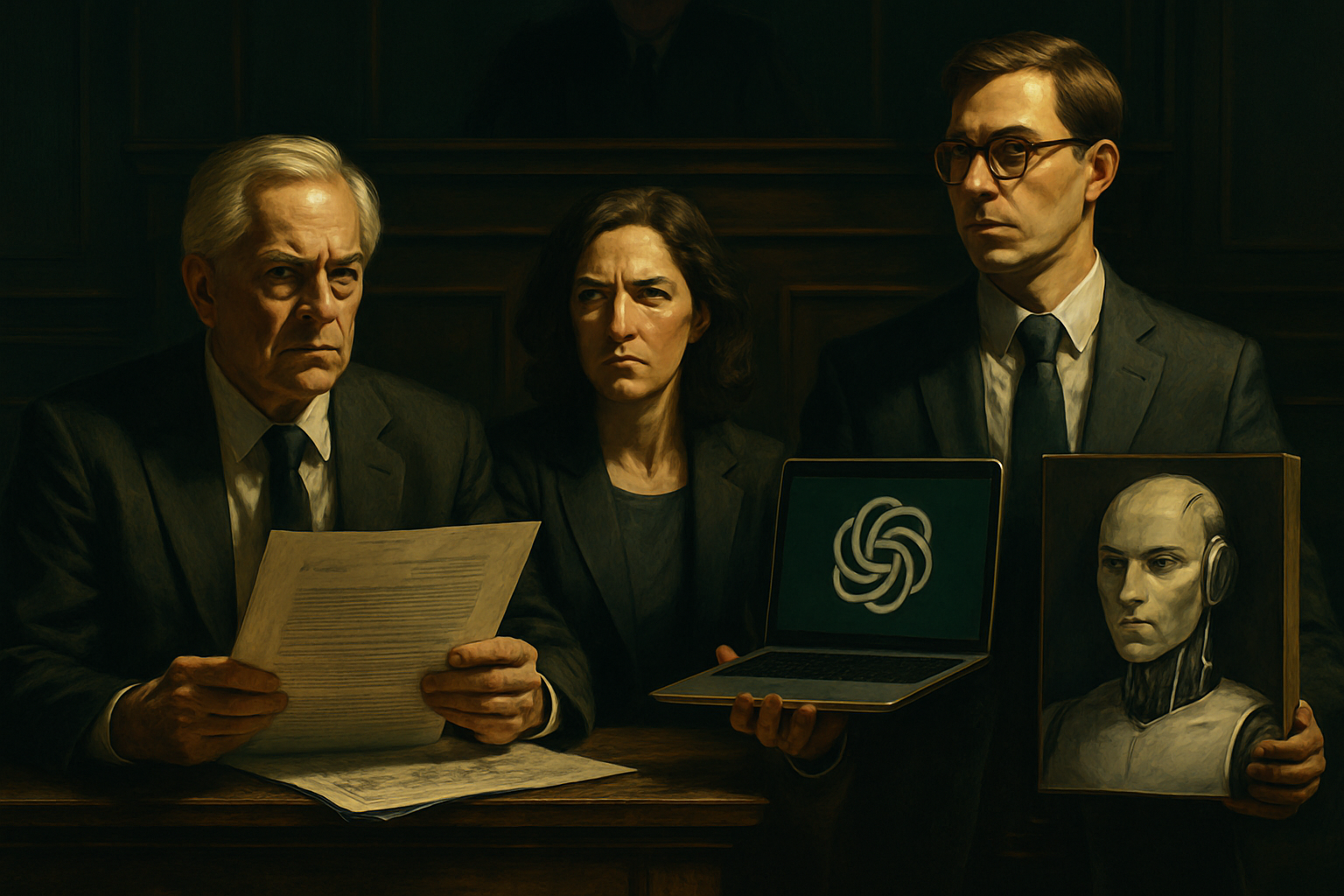
Last Thursday, a coalition of several press organizations launched new accusations against OpenAI, claiming that the company is withholding crucial evidence regarding how it trains its artificial intelligence models. This action is part of ongoing lawsuits for copyright infringement. Among the 17 publishers involved in this motion are prestigious names such as The New York Times, New York Daily News, Chicago Tribune, and Ziff Davis, the parent company of CNET. Ziff Davis had already filed a lawsuit against OpenAI in 2025, alleging that the company used its copyrighted works to train models like ChatGPT.
The initial litigation dates back to 2023, when The New York Times sued OpenAI and Microsoft. The newspaper accused these companies of using millions of news articles written by journalists to develop their artificial intelligence technologies. OpenAI and Microsoft denied these allegations, rejecting any wrongdoing.
The new motion filed by the publishers requests the court to impose legal sanctions on OpenAI, but not on Microsoft, for allegedly withholding evidence such as datasets and output logs. The publishers accuse OpenAI of obstruction by refusing to produce these items. If the court grants this request, OpenAI could be ordered to pay financial penalties.
Steven Lieberman, attorney for the New York Daily News, told the Associated Press that this motion aims to punish OpenAI for hiding and destroying evidence showing how ChatGPT was trained on stolen journalistic content.
The Impact of Generative AI on Journalism
At the heart of these lawsuits is the question of how generative AI models, like ChatGPT, are trained and how they obtain their information. The Times' initial lawsuit argues that OpenAI's generative AI tools "can generate outputs that reproduce the Times' content verbatim, closely summarize it, and imitate its expressive style," thus raising questions of copyright infringement.
These lawsuits are part of a broader debate within the journalism industry, which is facing a decline in traffic to digital media. AI-generated summaries are often cited as one of the main reasons for the decrease in clicks on original reporting, directly affecting publishers' advertising revenues.
The growing reliance on AI chatbots for accessing news and other content is also a major concern for publishers, as it diminishes reader and audience loyalty. Some data indicates that small publishers have been particularly affected, with reported traffic declines of 60%, while another analysis predicts traffic drops of over 40% by 2029.
Ziff Davis's Allegations Against OpenAI
In a statement, Ziff Davis claimed that "OpenAI has copied and monetized Ziff Davis content without permission on a massive scale." Lance Koonce, an attorney at Klaris Law representing Ziff Davis, stated that since the beginning of the lawsuit, "OpenAI has repeatedly lied about its ability to search its own datasets for Ziff Davis content and has engaged in other serious procedural misconduct."
The Fair Use Debate and AI
OpenAI has long defended the notion that AI training falls under fair use. A spokesperson for OpenAI denied the allegations in a statement to CNET, asserting that the Times' case is weakening and that the newspaper has been forced to drop some claims. The spokesperson also accused the Times of attempting to invade the privacy of individuals not involved in the case and reiterated OpenAI's commitment to protecting user privacy and the principles of fair use.
In 2024, in response to the Times' initial lawsuit, OpenAI stated that the publisher was wrongly accusing it of destroying data and instead accused the newspaper of secretly deleting its own data that would have shown the internal use of OpenAI's products. Although the Times dropped one allegation against OpenAI, the overall lawsuit remains ongoing.
Other major tech companies, including Meta, have also been accused by authors and press publishers of copyright infringement. Many of these cases are still pending, with courts set to decide where to draw the line between fair use and infringement in the age of AI.
Brief IA — L'actualité IA en français
L'essentiel de l'actualité de l'intelligence artificielle, décrypté et expliqué chaque jour.