2027 Presidential Election: AI, a New Key Player in the Political Campaign
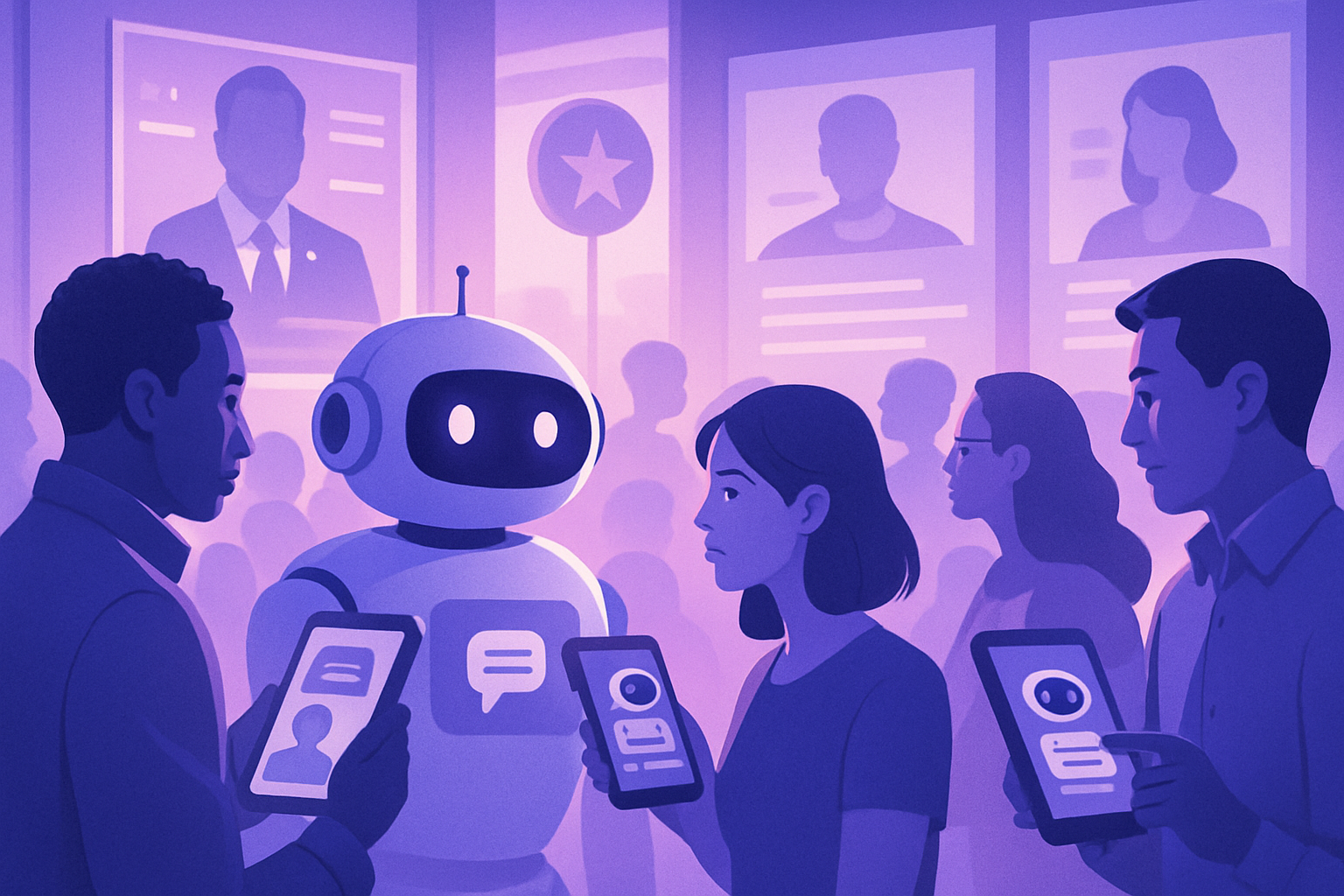
AI, a New Player in the 2027 Presidential Campaign
As the 2027 presidential election approaches, the use of artificial intelligences by citizens to analyze political programs and compare candidates is becoming an unavoidable reality. Political parties must now adapt to this new landscape, where visibility is determined in the digital ecosystem powered by large language models. The use of Generative Engine Optimization (GEO) in politics is thus emerging as a major issue.
A Campaign Landscape in Transformation
Each presidential election marks the emergence of a new media battleground. Following television, continuous news channels, and social media, the 2027 election could very well be dominated by generative artificial intelligence. This technology could become an essential intermediary between voters and political information.
Data reveals this trend. A study conducted by Elabe for the Hauts-de-France Region indicates that 42% of French citizens are considering using artificial intelligence for purposes related to the 2027 presidential election. This figure rises to 68% among 18-34 year-olds, highlighting a significant transformation in information habits.
The Growing Impact of Conversational Assistants
Traditionally, voters formed their opinions from a variety of sources: traditional media, social networks, televised debates, personal discussions, and search engines. Today, an increasing portion of this quest for information may be entrusted to conversational assistants capable of instantly synthesizing hundreds of sources and providing answers to complex questions.
Tomorrow, inquiries such as "Which candidate has the most ambitious proposals for housing?" or "Who wants to reduce public spending?" will be directed to AIs like Claude, ChatGPT, Gemini, or Le Chat. Although these tools are not designed to directly influence political choices, they can play a crucial role in shaping opinions by providing synthesized and accessible information.
Le brief IA que les pros lisent chaque soir
Les 7 actus IA du jour, décryptées en 5 min. Gratuit.
Inclus dès l'inscription : notre sélection des meilleurs guides & comparatifs IA.
Choisis ton rythme
Gratuit · Pas de spam · Désabonnement en 1 clic
The Strategic Role of GEO in Politics
The influence of AIs is not limited to the final recommendation. It manifests in the selection of information deemed relevant, the way a program is summarized, the sources considered credible, and the elements highlighted when a citizen seeks to understand the stakes of a campaign.
This is where Generative Engine Optimization (GEO) comes into play, a new discipline aimed at understanding how an organization, brand, or personality is represented in the responses provided by artificial intelligences. Unlike traditional SEO, which focuses on popularity and clicks, GEO values the perceived quality of information, its clarity, coherence, and presence in reliable and recognized sources.
Challenges for Political Parties
For political parties, the implications are vast. For the past fifteen years, many parties have struggled to adapt to the changes imposed by social media. Some have underestimated the importance of short videos, content creators, and new forms of digital influence. Today, they risk repeating this mistake in the face of the rise of generative artificial intelligences.
In the future, a candidate's visibility will no longer depend solely on their ability to produce viral content. It will also rely on their presence in the informational ecosystem that feeds the LLMs. This evolution also raises crucial democratic questions.
Democratic Challenges in the Age of AI
The Prime Minister recently warned against the risks of information manipulation that could accompany the upcoming elections. France has solid assets with Viginum and a recognized framework for combating foreign interference. However, reducing the debate to just deepfakes or bot farms would be insufficient.
The real challenge lies in understanding how access to political information will be structured in the future. Democracies must ensure the diversity of sources mobilized and the ability of citizens to understand how the responses provided to them are produced.
The 2027 presidential election will likely not be defined by artificial intelligences. However, it will mark a turning point where a significant portion of voters will prepare to cast their ballots relying on these technologies.
Brief IA — L'actualité IA en français
L'essentiel de l'actualité de l'intelligence artificielle, décrypté et expliqué chaque jour.