Qualcomm: AI Agents Will Replace Mobile Apps
Le brief IA que les pros lisent chaque soir
Les 7 actus IA du jour, décryptées en 5 min. Gratuit.
Inclus dès l'inscription : notre sélection des meilleurs guides & comparatifs IA.
Choisis ton rythme
Gratuit · Pas de spam · Désabonnement en 1 clic
Qualcomm: AI Agents Will Replace Mobile Apps
You use one app to book your flight, another for your hotel, and yet another to order your dinner for delivery. In a few years, why not ask a single AI agent to handle all of that? This is the suggestion from the CEO of Qualcomm.
Qualcomm is currently working on over 40 designs of new devices that incorporate artificial intelligence. This was revealed by Cristiano Amon, the CEO of the chip manufacturer, during an interview broadcast on June 16, 2026 on CNBC. These devices cover a wide range of formats, from smart jewelry, headphones equipped with cameras, wearable pins, to smartwatches. The common thread among all these objects, according to Amon, is that they are designed to be worn continuously. They are therefore capable of sensing the user's environment and providing access to a conversational agent at any time.
Will Apps Be Replaced by AI Agents?
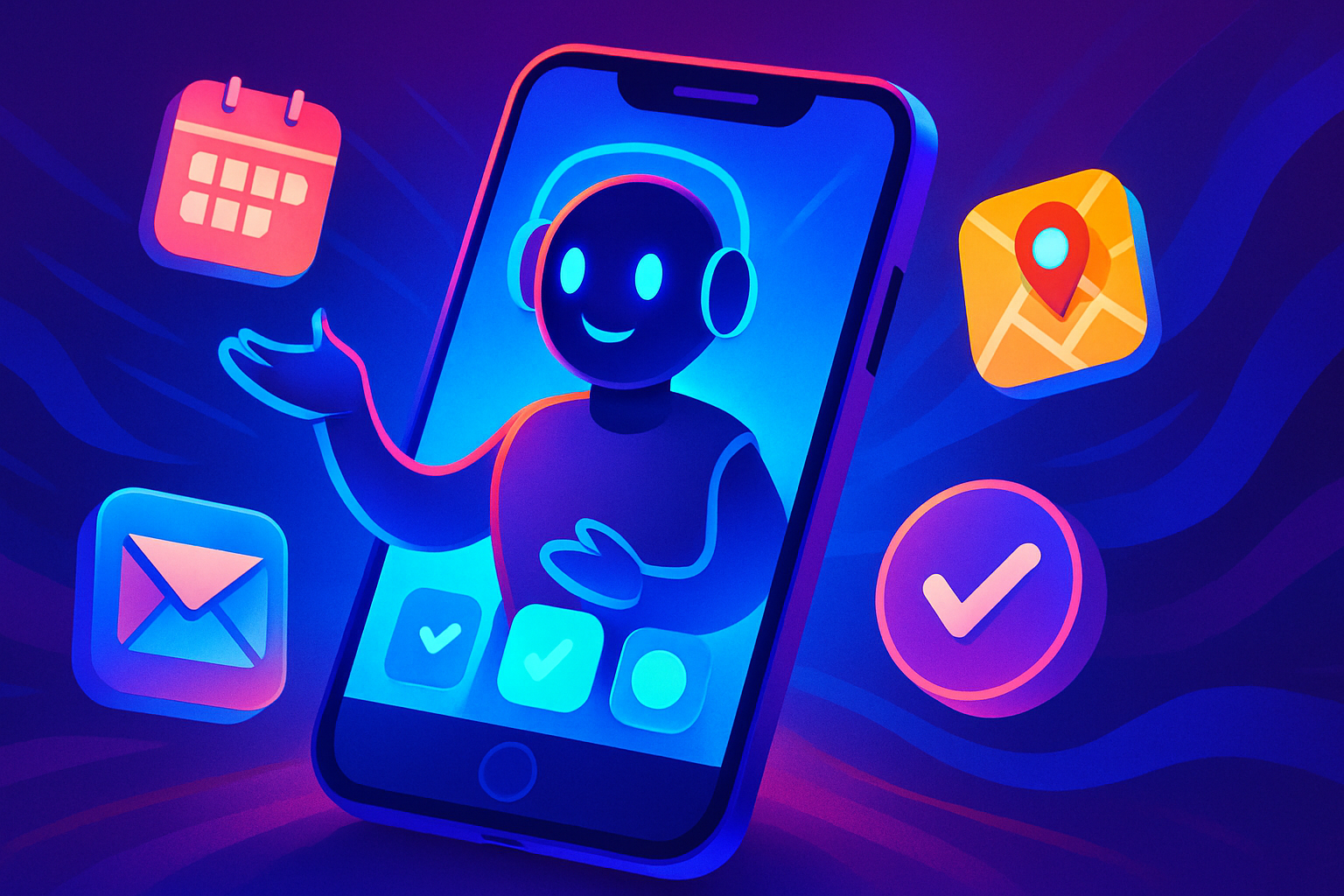
For Amon, applications as we know them today will not disappear, but their role is set to evolve profoundly. He believes that AI agents (digital assistants capable of performing complex tasks autonomously) will become what he calls "the new app."
This type of agent represents an evolution from current assistants like Siri from Apple or Gemini from Google. The idea is that they can act more autonomously, chaining actions across multiple services simultaneously, without manual intervention from the user.
Amon illustrated his point with a concrete example: an agent that instantly retrieves the details of a bank transaction, without the user needing to open their app, log in, and search for the information manually.
Changing the Role of Smartphones in Daily Life?
This evolution would also change the role of the smartphone in daily life. According to Amon, the phone will not disappear, but it will no longer be the central point around which digital usage is organized. That role would shift to the AI agent itself, which would become the main interface between the user and their services.
“The phone will be around the agent. New classes of devices will also be around the agent. And it is the agent that will understand human intentions and act accordingly.”
Smart Glasses: The Next Big Market
Among the product categories Qualcomm is betting on, smart glasses hold a special place. Amon indicated that shipments of connected glasses are already reaching "several tens of millions of units per year" and could reach "hundreds of millions" in a few years, a volume comparable to that of the smartphone market. For reference, 1.26 billion smartphones were shipped worldwide in 2025, according to data from Counterpoint Research.
Companies like Meta and Samsung are already developing glasses equipped with cameras. The category is generating increasing interest from both industry players and investors.
Brief IA — L'actualité IA en français
L'essentiel de l'actualité de l'intelligence artificielle, décrypté et expliqué chaque jour.