TikTok Overwhelmed by AI Slop: A Major Challenge
Le brief IA que les pros lisent chaque soir
Les 7 actus IA du jour, décryptées en 5 min. Gratuit.
Inclus dès l'inscription : notre sélection des meilleurs guides & comparatifs IA.
Choisis ton rythme
Gratuit · Pas de spam · Désabonnement en 1 clic
AI Slop: A Digital Invasion on TikTok
AI slop, a term referring to low-quality content generated en masse by artificial intelligence, has emerged as a concerning phenomenon on social media. A recent study conducted by the publisher Kapwing sheds light on the extent of this issue on TikTok. According to their research, 59% of the videos presented to a newly created account on the platform fall under the category of AI slop, a figure nearly three times higher than that observed on YouTube.
Nearly Six Videos Out of Ten Upon Joining the Platform
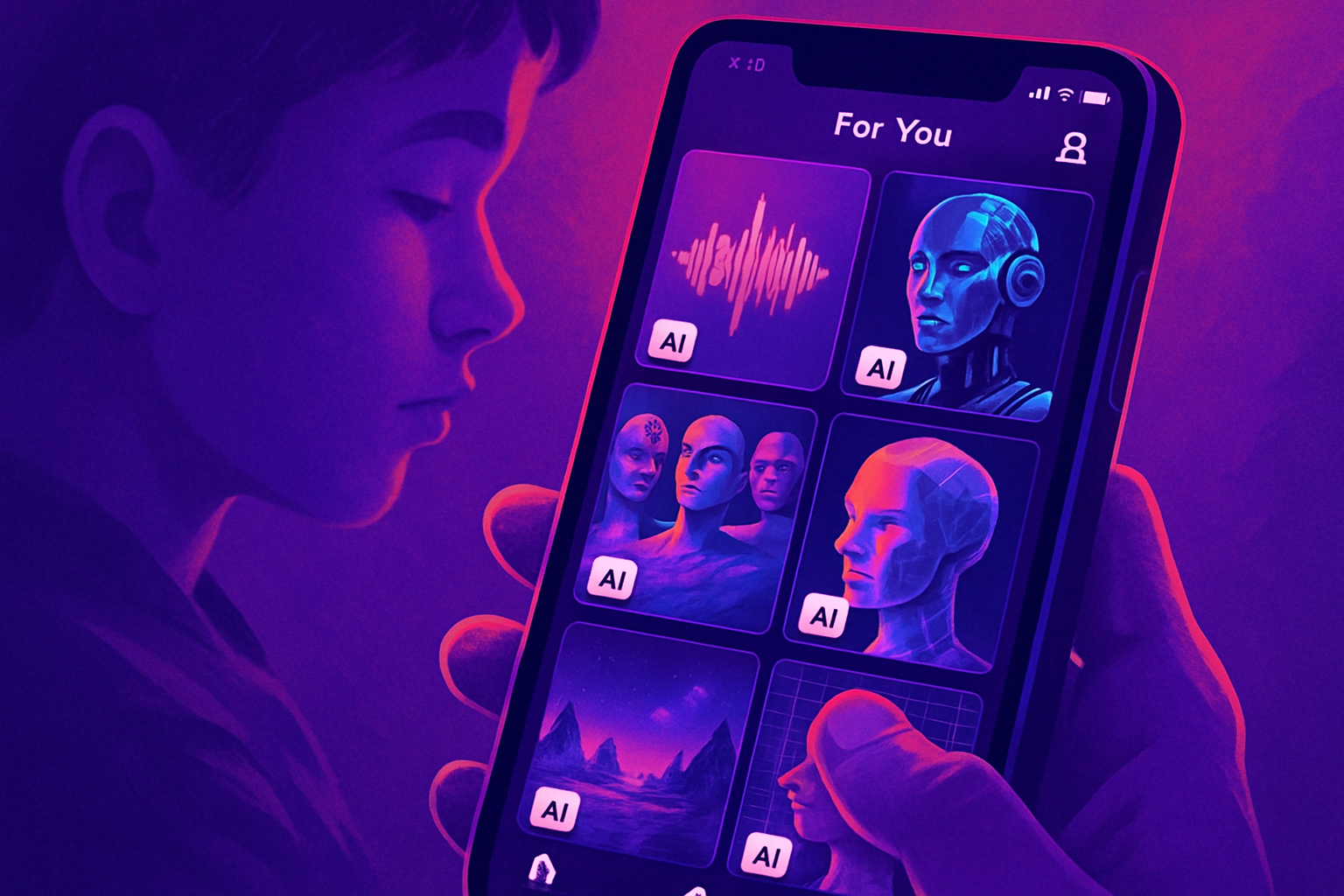
To assess the impact of AI slop on TikTok, researchers created a blank account and analyzed the first 500 videos presented in the "For You" tab. Of these videos, 294 were identified as AI slop, representing 59% of the total. In comparison, a similar analysis on YouTube revealed that only 21% of the videos in the Shorts feed were AI slop. Thus, from the moment they sign up, new TikTok users are predominantly exposed to AI-generated videos, even before the platform's algorithm can tailor content to their preferences.
How the Study Was Conducted
Kapwing conducted a thorough analysis of over 10,000 videos across 20 different categories, evaluating the proportion of content identified as AI slop for each category. A second part of the study involved creating a new account to examine the first 500 videos from the "For You" feed. Videos considered AI slop include those with visuals clearly generated by AI, as well as low-quality edits with scripts and voiceovers produced by AI. The data for this study was collected until May 2026.
Educational and Children's Content on the Front Lines
A Highly Variable Saturation Depending on Themes
The study reveals that the density of AI slop varies significantly across content categories. The most affected themes include children's content (57.4%), science and education (35%), health (33.8%), and history (33.5%). In the health domain, certain tags like #healthtips reach up to 74% slop. In contrast, fashion (1.3%), music (1.5%), and fitness (1.6%) videos remain predominantly human-produced.
The Concerning Case of Children's Content
The "Kids" category is particularly overwhelmed by AI slop. The tag #cartoonkids is almost entirely composed of slop (97%), followed by #babysong (83%) and #learningforkids (49%). These videos, often filled with errors and inconsistencies, include approximate nursery rhymes, false math lessons, and distorted characters. Dana Suskind, a professor of pediatrics at the University of Chicago, warns about the risks to the brain development of young children who are massively exposed to this low-quality content.
TikTok Overwhelmed by a Broader Phenomenon
TikTok is aware of the problem. In November 2025, the platform had already labeled 1.3 billion videos as AI-generated and launched a tool allowing users to reduce the presence of AI content in their feed. A $2 million fund has also been created to finance AI education programs. However, these measures struggle to keep pace with the proliferation of AI-generated content, especially since the labeling mechanisms lack reliability.
The phenomenon of AI slop is not limited to TikTok. Other platforms, such as LinkedIn, have begun taking measures by making AI-generated posts deemed to have no added value less visible. The question remains: how far can the web synthesize without compromising the trust and attention of its users?
Brief IA — L'actualité IA en français
L'essentiel de l'actualité de l'intelligence artificielle, décrypté et expliqué chaque jour.