TSUGA Raises 30 Million: AI Drives Up Monitoring Costs
Le brief IA que les pros lisent chaque soir
Les 7 actus IA du jour, décryptées en 5 min. Gratuit.
Inclus dès l'inscription : notre sélection des meilleurs guides & comparatifs IA.
Choisis ton rythme
Gratuit · Pas de spam · Désabonnement en 1 clic
TSUGA Raises $30 Million: AI Drives Up Monitoring Costs
Gabriel James Safar, CEO of TSUGA
Artificial intelligence is often portrayed as a cost-reducing technology. Automation of tasks, streamlining operations, productivity gains, with the dominant narrative being that of a company capable of producing more with fewer resources.
However, as AI agents leave the labs to enter operational processes, another reality emerges. One where every decision made by an agent, every interaction between models, every call to an external tool generates an increasing amount of data that needs to be monitored, stored, analyzed, and governed. AI not only creates new value streams but also a new operational debt.
It is in this context that Tsuga announces a $35 million funding round, nearly €30 million, led by General Catalyst and Singular, with participation from DST Global Partners and Quantumlight. Founded in Paris in 2024, the company advocates a simple thesis: the architecture underpinning modern observability is no longer suited for the era of autonomous agents.
An Industry Built for the Cloud Era
Observability is one of the most discreet yet critical layers of modern software. Its role is to enable technical teams to understand what is happening in their infrastructures through the collection of logs, traces, and metrics.
For the past fifteen years, the market has been structured around players like Datadog, Splunk, Dynatrace, New Relic, and Elastic. Their model is relatively straightforward: clients send their data to the provider's infrastructure, which stores, indexes, and analyzes it. As volumes increase, so does the bill.
This logic has perfectly accompanied the rise of cloud computing. As companies adopted distributed architectures, microservices, and multi-cloud environments, the need for visibility grew. The revenues of observability platforms increased at the same pace.
For a long time, the interests of providers and their clients seemed aligned. The growth of infrastructures mechanically created more data and thus more value. However, the arrival of artificial intelligence profoundly alters this equation.
When Every Agent Becomes a Telemetry Factory
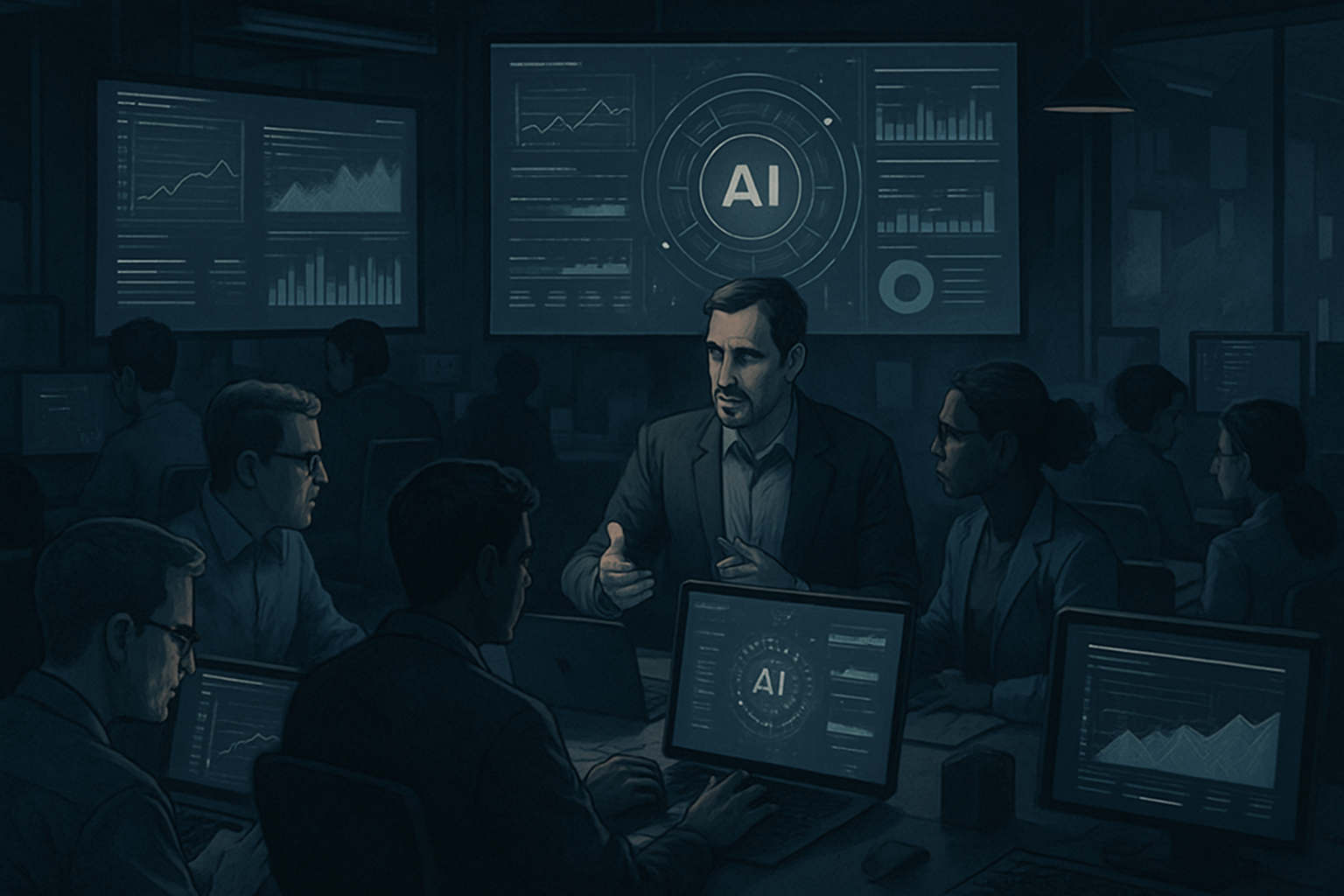
An AI agent does not behave like a traditional application. When a user queries a classic system, a few events are generally generated: a request, a response, a few service calls. When an agent intervenes, the chain becomes much more complex.
The system can solicit multiple models, call external tools, query different databases, generate chains of reasoning, trigger other specialized agents, and then produce a final response.
Each step produces its own telemetry. Prompts, tokens, API calls, execution graphs, confidence metrics, intermediate decisions: observability is no longer just a matter of infrastructure. It becomes a question of understanding decision-making mechanisms.
This transformation creates a paradox where artificial intelligence is supposed to reduce operational costs while simultaneously increasing the need for oversight. In some organizations, monitoring-related expenses are now rising almost as quickly as those related to the models themselves.
AI May Not Be the Real Culprit
Attributing this cost inflation solely to artificial intelligence would be reductive. Companies have been facing an explosion in their infrastructure expenses for several years. Storage is becoming more expensive, architectures are becoming more complex, data flows are multiplying, and distributed systems generate more signals to monitor.
AI acts more as an accelerator than a singular cause; observability could be the visible symptom of a broader phenomenon: the continuous growth of digital complexity.
This distinction is important as it determines the nature of the solutions to be provided. Is it an AI-specific problem or a structural issue within the cloud economy?
The Emergence of a New Market
One certainty remains: traditional metrics are no longer sufficient. Companies are no longer just looking to know if an application is functioning correctly. They want to understand why an agent made a decision, what tools it used, which models were involved, and what level of confidence can be placed in the result.
This evolution is giving rise to a new software category, with concepts like AI Observability, Agent Observability, AI Governance, and AI Traceability beginning to converge. Behind sometimes different terminologies, a common need emerges: to make AI systems auditable.
As companies deploy agents in financial, HR, legal, or industrial domains, the question of accountability becomes central. Understanding how a decision was made is no longer optional. It is an operational and soon-to-be regulatory requirement.
A Market Already Very Crowded
However, Tsuga is not entering a blank slate; major historical players have quickly identified the opportunity. Datadog is already developing advanced monitoring functions for models and agents. Dynatrace is pushing its Davis AI offering. New Relic, Splunk, and Elastic are gradually enriching their platforms with capabilities specific to AI workloads.
At the same time, a new generation of specialists has emerged. Arize AI, Langfuse, Helicone, and WhyLabs focus on model observability, prompt analysis, hallucination detection, or performance tracking of generative systems.
The issue is no longer the existence of a market, but differentiation.
The Real Bet: Architecture
This is precisely where Tsuga attempts to stand out; it does not present its innovation as an additional feature and directly challenges the dominant architecture in the industry.
Instead of centralizing data in its own infrastructure, the platform is deployed directly in the client's cloud environment. Data remains within AWS, Azure, Google Cloud, or a sovereign cloud. It does not transit to Tsuga's systems.
The argument is twofold: on one hand, this approach reduces costs associated with data duplication and transfer, and on the other, it addresses growing concerns about sovereignty and governance.
This strategy reveals a strong intuition: observability data itself becomes strategic assets. Traces now contain prompts, decisions made by agents, business information, and sometimes sensitive data. For some companies, outsourcing them becomes as problematic as entrusting their customer data.
The question is no longer just technical; it becomes regulatory and economic.
The Unexpected Return of Software Accompanied by Services
Another notable element: Tsuga does not only sell a platform; it also highlights teams of engineers tasked with assisting clients in the continuous optimization of their observability environment.
This approach recalls some recent market trends in AI. After two decades of standardized SaaS, several software categories are returning to hybrid models that blend product and expertise.
Tsuga's True Competitors
The most dangerous competition may not be found at Datadog or Splunk, but likely at Microsoft, AWS, and Google. The hyperscalers already control the infrastructures, the data, the observability tools, and increasingly, the artificial intelligence models.
They therefore have all the necessary elements to natively integrate these functions into their platforms. This poses the main strategic risk for any startup in this category.
If AI observability becomes a standard feature of cloud environments, differentiation will need to rely on more than just technical capabilities.
A Battle That Is Just Beginning
The tech industry has spent the last three years building models, copilots, and agents. It is now discovering that value lies not only in the ability to automate but also in the ability to control that automation.
The history of the cloud has produced its champions of monitoring; the history of artificial intelligence could produce its champions of governance.
By raising nearly €30 million, Tsuga bets that this new layer of infrastructure will become as essential tomorrow as observability has become yesterday. The success of this thesis will depend less on the company's ability to monitor agents than on its ability to answer a question that all organizations will soon have to ask: who monitors the systems that make decisions on our behalf?
Brief IA — L'actualité IA en français
L'essentiel de l'actualité de l'intelligence artificielle, décrypté et expliqué chaque jour.