VivaTech 2026: Specialized AI Transforms Smartphones
Le brief IA que les pros lisent chaque soir
Les 7 actus IA du jour, décryptées en 5 min. Gratuit.
Inclus dès l'inscription : notre sélection des meilleurs guides & comparatifs IA.
Choisis ton rythme
Gratuit · Pas de spam · Désabonnement en 1 clic
VivaTech 2026: The Rise of Hyperspecialized AI and Edge AI
At VivaTech 2026, a significant event took place: hyperspecialized artificial intelligence and Edge AI began to radically transform mobile applications, elevating them to the status of central "Hubs." Once mere interfaces, these applications are now becoming sophisticated orchestrators, integrating sensors and agents while ensuring data security.
The 2026 edition of VivaTech marked a decisive turning point in the tech world. The era of marveling at generalist artificial intelligence seems to be over. Now, pragmatism prevails with the emergence of ultra-specialized AI agents. This shift redefines the role of the smartphone, which is no longer just a communication tool but a key player in orchestrating a complex and invisible technological ecosystem.
A Technological Ecosystem in Full Transformation
The technological ecosystem has reached a new phase of maturity. At the tenth edition of VivaTech, a paradigm shift was evident: the market has turned away from versatile AIs to focus on hyperspecialized solutions. Companies, whether in LegalTech, FinTech, or logistics, are seeking AI models capable of delivering precise and reliable results. The priority now is to maximize return on investment while avoiding costly errors, such as AI "hallucinations."
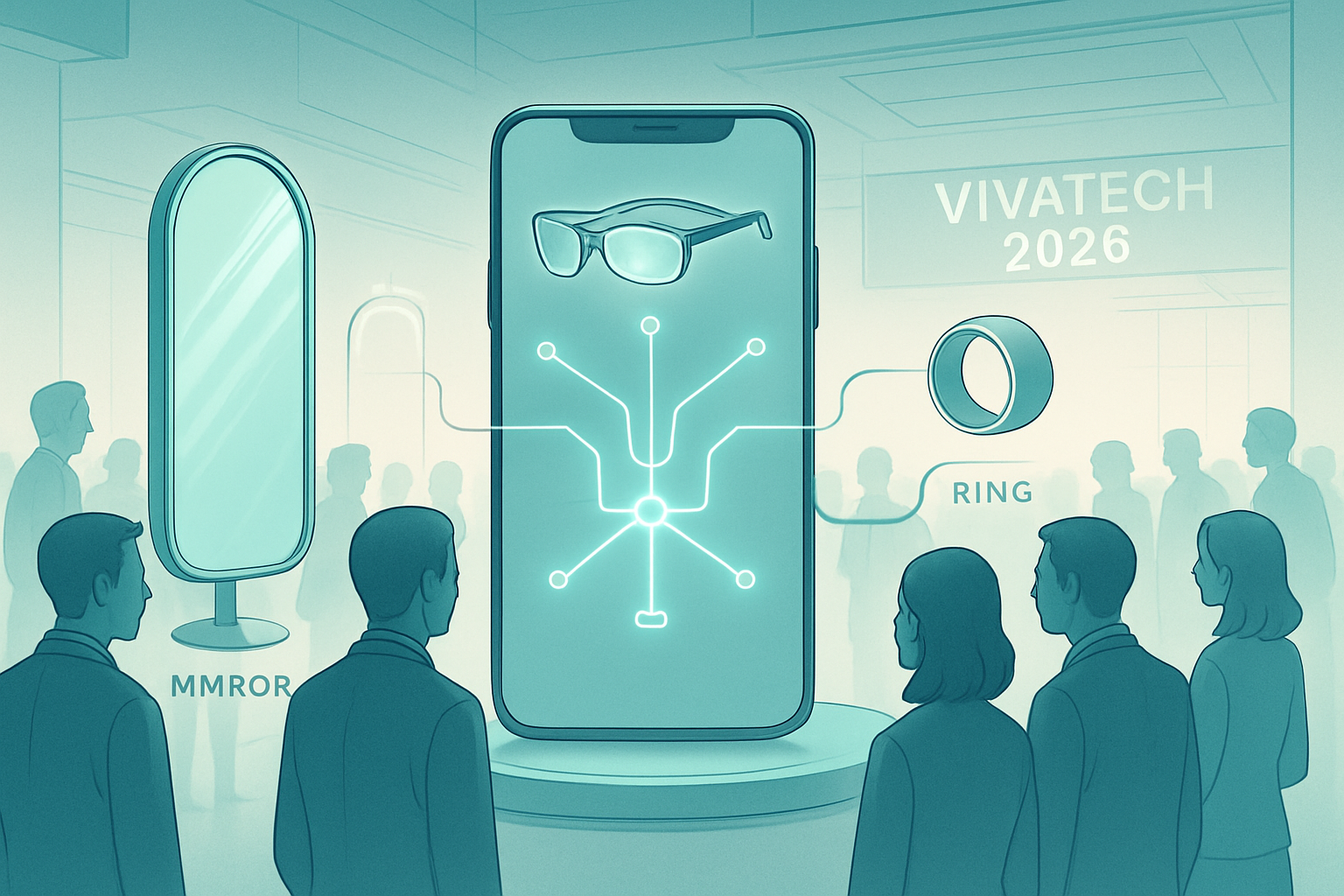
At the same time, technology hardware is undergoing a silent yet significant transformation. Connected mirrors, smart glasses, and biometric tracking rings are invading our daily lives. These innovations, stemming from HealthTech and the Internet of Things (IoT), aim to facilitate frictionless compliance. Artificial intelligence, once confined to the Cloud, is now directly integrated into these devices via Edge AI, allowing for real-time analysis of our environment.
The Smartphone: From Simple Application to Central Hub
The transformation of the smartphone into a central Hub is underway. With the proliferation of smart devices and specialized autonomous agents, the mobile application is evolving. It is no longer the final destination for the user but becomes the conductor of their digital interactions. The smartphone positions itself as the Hub through which data is transmitted, analyzed, and synchronized.
The technical center of gravity is shifting. Excellence is no longer measured solely by the fluidity of a user interface but by the ability to build invisible, robust, and high-performing architectures.
The Technical Challenges of Mobile Orchestration
This new role as an orchestrator raises three major technical challenges that teams must now address:
-
Hardware orchestration and energy concerns: Background communication with a multitude of sensors requires absolute mastery of Bluetooth Low Energy (BLE) and IoT protocols. The challenge is to maintain a constant connection and process data streams in the background without sacrificing the device's battery life. This is an exercise that demands algorithmic optimization.
-
Interoperability of intelligences: The mobile Hub must create seamless bridges between multiple third-party agent APIs. For example, it involves making data from a posture analysis agent communicate with that from a physical effort management agent, in order to provide the user with a holistic view of their health. This requires standardizing heterogeneous data flows within a single application.
-
Security and Privacy by Design: With the massive collection of sensitive data (particularly in health), the architecture of applications must be impeccable. As the smartphone acts as the first gateway before remote (or local) AI models, the integration of end-to-end encryption and granular consent management are no longer options but regulatory and ethical prerequisites.
An Integrated Approach to Address Systemic Challenges
The era of isolated applications is definitively over. We are entering the age of intelligent hyper-connectivity.
Addressing these new challenges requires a force that goes beyond the simple framework of "front" mobile development. The industrialization of these orchestrating Hubs necessitates combining specialized mobility skills with a solid Back-End infrastructure, secure hosting capabilities, and cloud architecture consulting.
Only under this condition—by uniting expertise from the sensor to the cloud—can companies transform the promise of specialized AI and IoT into a tangible, secure, and seamless reality for the end user.
Brief IA — L'actualité IA en français
L'essentiel de l'actualité de l'intelligence artificielle, décrypté et expliqué chaque jour.