Workslop: The Sloppy AI Threatening Workplace Productivity
Le brief IA que les pros lisent chaque soir
Les 7 actus IA du jour, décryptées en 5 min. Gratuit.
Inclus dès l'inscription : notre sélection des meilleurs guides & comparatifs IA.
Choisis ton rythme
Gratuit · Pas de spam · Désabonnement en 1 clic
Workslop: The Sloppy AI That Threatens Productivity in the Workplace
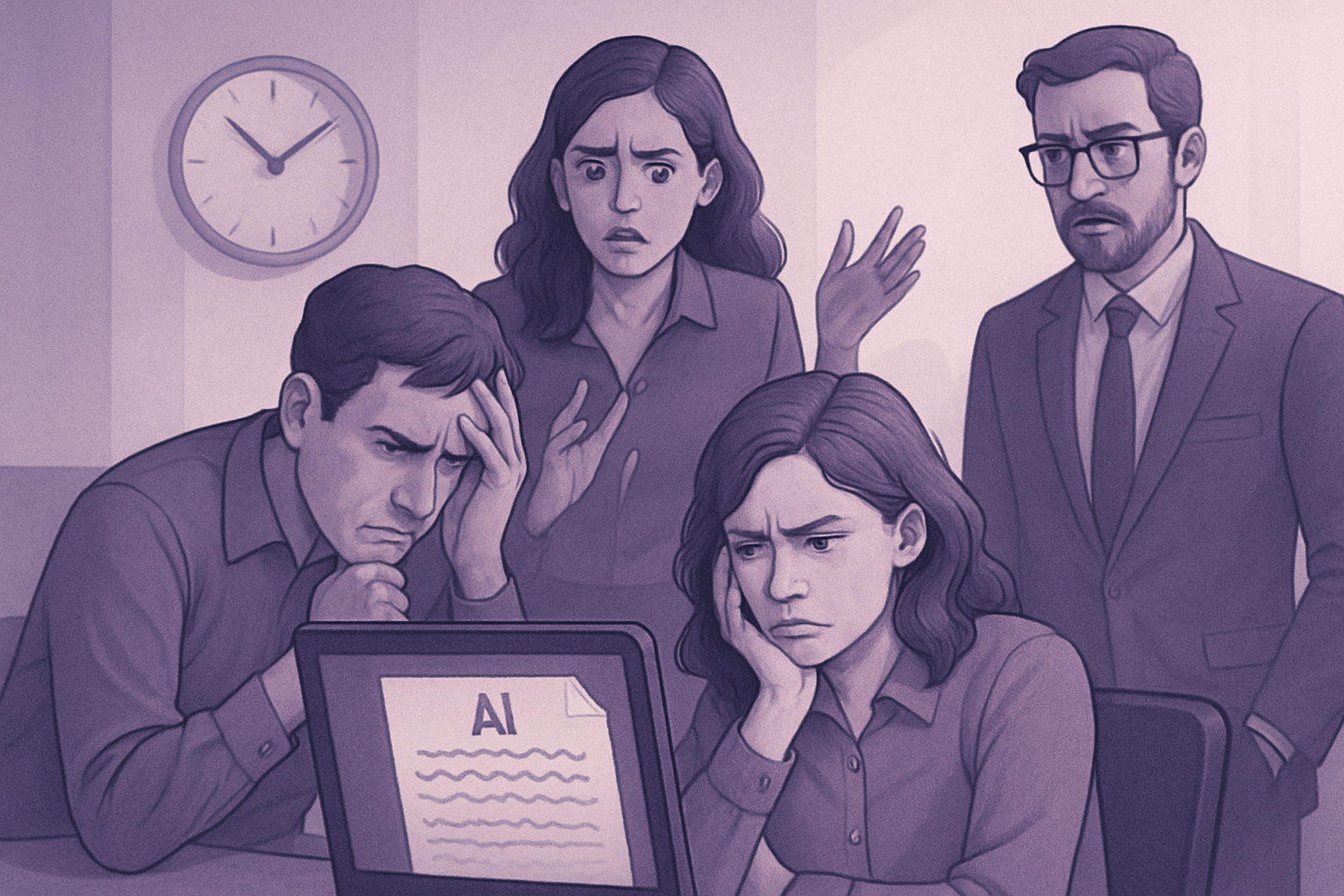
A document that looks polished but says nothing, generated in three seconds by an AI and sent as is. This phenomenon now has a name, a very real cost, and it is thriving in French companies. Formally or informally, AI has made its way into businesses.
You have probably received this kind of deliverable. A well-formatted note, with an impeccably professional tone, but that collapses upon reading because there is nothing beneath the surface. Researchers from Stanford and the firm BetterUp have named this content "workslop," and the Harvard Business Review has quantified the cost.
A Hidden Cost Measured in Hours
According to the survey conducted by Stanford and BetterUp among 1,150 American office workers, 40 to 41% of them received workslop in the past month. Each sloppy piece requires an average of nearly two hours to be deciphered, corrected, or completely redone. For a company of 10,000 employees, the bill rises to over nine million dollars per year, according to the Harvard Business Review. And the cost is not just financial, as half of the recipients subsequently view the sender as less reliable (a nice gift for team spirit).
France is not spared, and one figure is enough to convince you. According to a large Ipsos study published in March 2026 for Google, 42% of French employees are already using AI at work through their personal accounts, due to a lack of framework provided by their employer. This "shadow AI," cobbled together in the shadows and without any safeguards, is the perfect breeding ground for workslop. All of this unfolds against a delicious paradox: 70% of leaders whose companies are already using AI swear they see productivity gains. At the same time, INSEE reminds us that only 10% of French companies with at least 10 employees had adopted it by 2024, compared to 13% in the European Union.
A Forty-Year-Old Promise of Productivity
This gap between enthusiasm and results is not new. In 1987, economist Robert Solow summarized the arrival of computing with a famous phrase: computers were everywhere, except in productivity statistics. Forty years later, generative AI is playing the same tune, with a few variations. The technology is rapidly taking hold, user satisfaction is rising, but collective gains are still elusive in company accounts.
This is precisely the gamble of the "Osez l'IA" plan, launched in 2025 by the government with 200 million euros to encourage French companies to take the plunge. The catch is that mass training on tools is of little use if no one learns to separate the wheat from the chaff. Other studies already show that part of the time saved thanks to AI is immediately spent correcting what it has produced. The tool even ends up, on occasion, increasing the workload rather than lightening it. French artisans, however, would still gain two hours per week, which ultimately proves that everything hinges on how it is used.
Brief IA — L'actualité IA en français
L'essentiel de l'actualité de l'intelligence artificielle, décrypté et expliqué chaque jour.