Abliteration.ai Sells Less Restrictive Open Models, Risks Involved
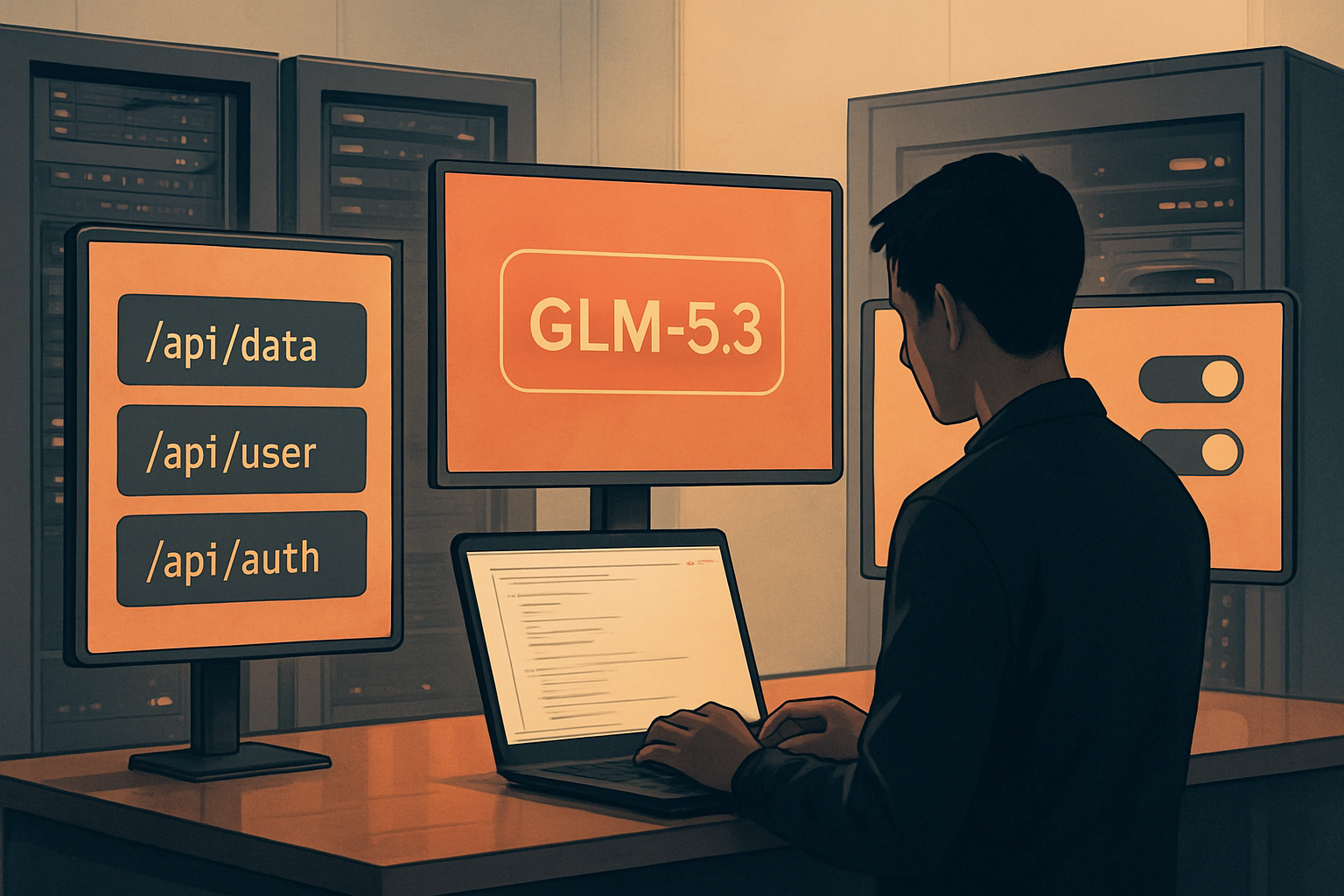
An American startup offers modified versions of GLM-5.3 via API with significantly fewer refusals. The service, billed per token, does not require client-side GPU execution, identity verification, and does not retain prompts. Evaluations, uses in cybersecurity, and optional safeguards coexist with documented risks of abuse.
No prompt logs or KYC, but metadata retained
Abliteration.ai states that it does not retain user prompts or responses but keeps operational metadata such as token counts, timestamps, model identifiers, and billing information. By not recording content, the provider avoids saving sensitive code or undisclosed vulnerabilities. However, in the event of abuse, the company claims it lacks prompt or response logs to review afterward. The service does not require conventional identity verification, which may complicate potential investigations, even though account, payment, and usage metadata are retained. An anonymous company representative further argues that verifying identity poorly distinguishes legitimate users from malicious ones and that stricter access controls would penalize small security firms compared to larger ones.
Accessible offensive capabilities and accountability issues
The fact that the model does not refuse certain requests can be highlighted commercially, but it also carries a risk. The abliterated code that allows the extraction of saved Chrome passwords, along with a detailed guide for cultivating a dangerous pathogen, was obtained with relative ease. Nevertheless, protective systems continued to function against self-harm requests. According to the FAQ, content involving sexual exploitation of children is blocked, and clients can optionally add additional control rules. The question remains regarding the responsibilities of a provider that offers powerful offensive capabilities through an easily accessible service.
Abliteration technique and commercial offering
The so-called abliteration technique involves identifying internal activation patterns that trigger refusals and then adjusting the weights to eliminate these patterns. This is a modification of the model rather than a prompt bypass. Abliteration.ai claims that coding, cybersecurity, and agent capabilities remain largely intact. At the end of August, the company launched "abliterated-model-large-v2," a modified version of Z.AI's GLM-5.3 designed to reduce the frequency of refusals on sensitive queries. The service removes refusal mechanisms from open models and markets access, particularly for cybersecurity testing, red teams, and malware analysis. Access to the abliterated GLM-5.3 is billed at five dollars per million input or output tokens, with an API that spares clients from downloading the model and operating GPU infrastructure. Standard access remains largely unrestricted, with additional controls needing to be explicitly activated. An optional policy gateway allows enterprise clients to define permitted, blocked, modified, or logged queries, and the company offers synthetic training and evaluation data. The offering combines GLM-5.3, simple API access, and an optional policy layer. This ease of access also lowers the barrier to misuse and fits into a security compromise that the company presents as a legitimate market.
Le brief IA que les pros lisent chaque soir
Les 7 actus IA du jour, décryptées en 5 min. Gratuit.
Inclus dès l'inscription : notre sélection des meilleurs guides & comparatifs IA.
Choisissez votre rythme
Gratuit · Pas de spam · Désabonnement en 1 clic
Reported performance and limitations of comparisons
For the abliterated version of GLM-5.3, the company reports achieving 84.5% on CyberGym, 41.8% on Terminal-Bench 4.0, and resolving 105 tasks on ExploitGym in two hours. In its tables, GPT-5.5 ranks first on CyberGym with 85.6%, while GPT-5.6 Sol and Fable 5 score significantly higher on ExploitGym. However, Abliteration.ai clarifies that comparisons rely on different harnesses and computational budgets, limiting their scope. Beyond the numbers, a preliminary study suggests that abliteration can significantly reduce refusals without comparably degrading code generation for certain models, while other experiments note behavioral changes, including on tasks that were not refused by the base model. Thus, abliteration does not remove a single trait in a strictly targeted manner but more broadly modifies the model's behavior.
Targeted uses, reported demand, and skepticism from practitioners
Abliteration.ai indicates that there is already demand aimed at offensive cybersecurity, AI red team teams, agent testing, and trust and security domains. Mentioned uses include reproducing known vulnerabilities, creating proof-of-concept exploits, analyzing malware, and conducting simulated phishing campaigns. One of the founders, speaking anonymously, specifies that the initial demand mainly comes from companies evaluating AI agents deployed by large organizations and banks, which are testing their resilience against jailbreaks and prompt injection attacks. The extent of abliteration actually needed for this work is not established. SaferAI indicates that unmodified GLM-5.2 has already refused no tasks during its offensive security evaluations. Several red team providers interviewed report not using abliterated models in their current practice, and the security company Fabraix prefers fine-tuning open models instead.
Permissive license, public procurement framework, and competitors
GLM combines results in coding, cybersecurity, and agent capabilities, with open weights and a commercially reusable license. Other options are offered by Qwen, DeepSeek, and Mistral. Z.AI's license allows modifications, derivatives, and Model as a Service offerings, enabling Abliteration.ai to modify GLM-5.3, host it, and sell access. While modified models have circulated on Hugging Face for years, Abliteration.ai does not publish its weights and operates direct hosting. The company states it is listed on SAM.gov for U.S. government purchases and offers, for these clients, versioned models, audit logs, and agency-specific policies, via pilots without controlled unclassified information. The legality of uses depends on actions and jurisdiction, and for security testing, the company requires written authorization from target systems and compliance with laws. Other players like Audn.AI with PenClaw and Silk Compute also host abliterated or lightly restricted models for security uses. Before this version, Abliteration.ai had already offered a model based on GLM-5.2, with the company believing that earlier versions of GLM were trained to be more difficult to use in practical security, while Z.AI indicated that the cyber capabilities of GLM-5.3 progressed faster than expected after training.
Brief IA — L'actualité IA en français
L'essentiel de l'actualité de l'intelligence artificielle, décrypté et expliqué chaque jour.