AI Agents: 2,175 Mentions and 25,000 Deployments, but What Value?
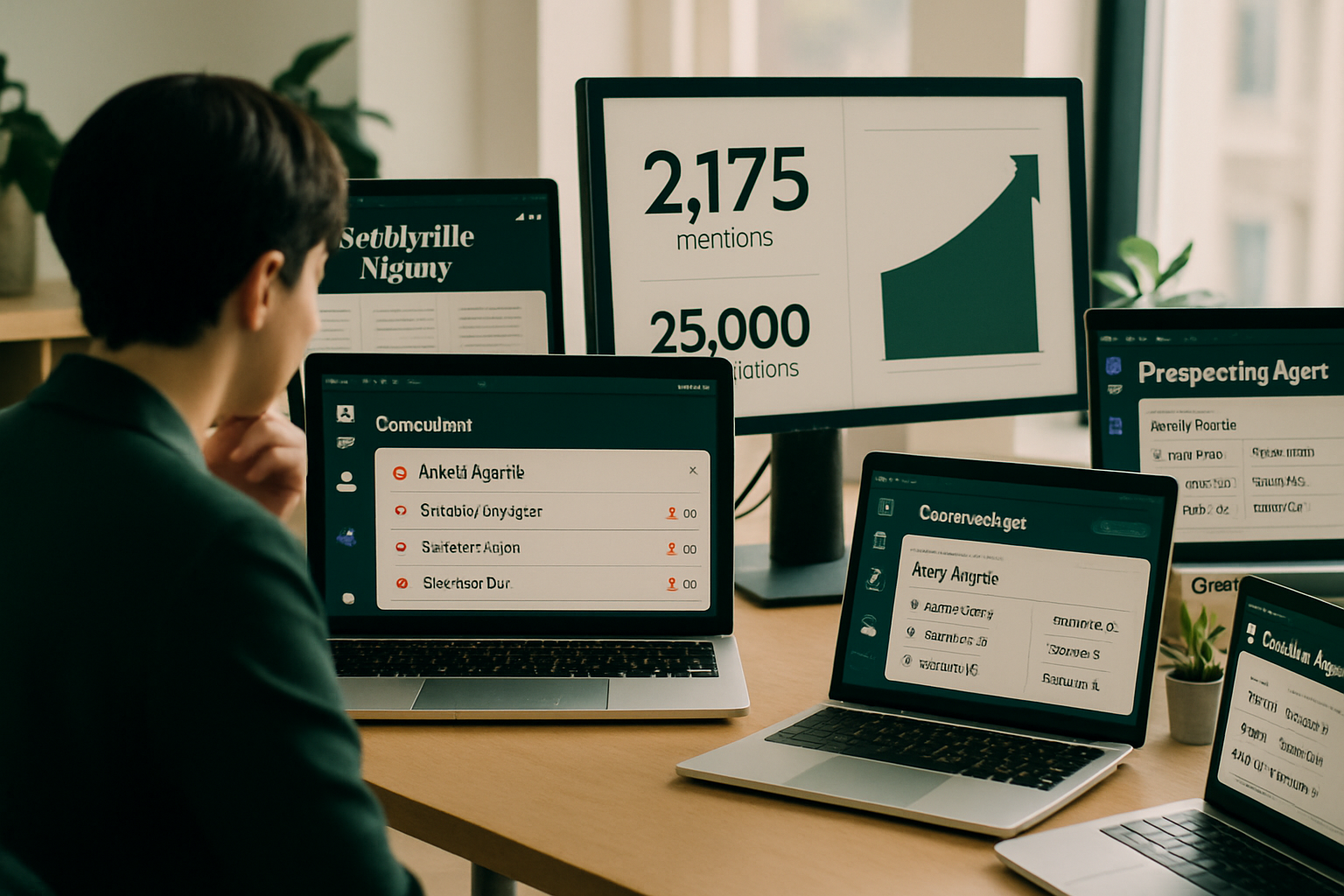
Displaying squads of AI agents has become a status symbol, from freelancers to tech giants. However, amidst daily outages, time spent "monitoring bots," and metrics refocused on usage, the gap widens between count and value. Testimonials, adoption figures, and success criteria paint a less triumphant reality.
Supervision time, outages, and metrics shift attention from numbers to usage
According to the Work AI Institute of Glean, office workers spend over six hours a week monitoring bots, providing context, checking results, and correcting errors. Robbie Allen notes that an item on his list of agents breaks almost every day, and he has dedicated another agent to oversee these failures. In large organizations, adoption indicators replace simple counting: PwC claims to focus on the number of people using agents rather than the total deployed, while EY and the Boston Consulting Group track productivity, cost, and time saved. Melissa Hilbert, an analyst at Gartner, warns that counting agents can confuse deployment with value. In the background, the Society for Human Resource Management estimates that AI and automation could technically replace up to 22 million jobs in the United States by 2030, but realistically assesses this figure to be around 8 million, urging caution in interpreting raw numbers.
In individual practices, dozens of agents rhyme with narrow tasks and maintenance
Robbie Allen, who leads Automated Consulting Group after founding three AI companies, says he uses about 25 agents for his daily work. One of them scans LinkedIn every two hours to spot signals and rank the best opportunities, but Allen personally selects and writes the messages. Other agents produce action items from meetings, log client interactions and billing reports, or synthesize his readings into a weekly briefing. However, he believes these numbers seem more impressive than they are: many agents are just scheduled tasks, sometimes without significant language models, and do not make decisions like 25 human employees. He explains that he created so many because it is quick and questions the operational value of claiming to manage hundreds or thousands of agents.
Use cases focused on bottlenecks, not the "counter"
Derrick Hicks claims to have built 16 specialized agents and a Conductor agent to coordinate them. He reports that an audit covering SEO, social media, advertising, messaging, and competition, along with results analysis, goes from three or four weeks to about an hour, and he has prioritized agents and code over hiring juniors. His criterion remains the resolution of concrete bottlenecks, with, for example, an agent that selects three prospects each day and presents him with a short list, as building a pipeline is central for a consultant. Maayan Sarig at Meta says she judges based on quality and time saved, disabling agents that do not outperform her manual process. She explains that she continuously trains them, checks their actual usage, and warns that multiplying agents can create more friction than removing them, with the challenge lying in maintaining a large number of truly effective agents.
Le brief IA que les pros lisent chaque soir
Les 7 actus IA du jour, décryptées en 5 min. Gratuit.
Inclus dès l'inscription : notre sélection des meilleurs guides & comparatifs IA.
Choisissez votre rythme
Gratuit · Pas de spam · Désabonnement en 1 clic
Corporate adoption: 2,175 mentions and 25,000 claimed deployments
Mark Zuckerberg is working on an AI agent to assist him in his work and an AI version of himself intended to interact with employees. At Meta, agents serve as a criterion for measuring internal progress. Public statements increasingly reference agents: in the last quarter, this term appeared in 2,175 transcripts of public companies, a figure twice that of the previous year, according to AlphaSense. According to Salesforce, over 25,000 companies have designed and launched agents on its Agentforce platform. Walmart reports having established an organization based on four "super agents" to meet the needs of customers, partners, and its more than 2 million employees.
Beneath the trend of numbers, a theater of status and vague definitions
Agentmaxxing, facilitated by no-code tools, elevates the display of a digital "workforce" as a status signal, with phrases like "I manage 20 agents." Mason Scurry says he published his number of bots on LinkedIn to demonstrate his capabilities but acknowledges that this count can be manipulated and means nothing without tangible results, pointing to posts without proof of business activity. Semantic ambiguity perpetuates confusion: OpenAI talks about systems performing tasks autonomously, Anthropic distinguishes between agents and predefined flows, and the term covers very disparate cases, from complete prospecting to simple calendar reminders. In practice, Aryeh Needle mentions about six agents, preferring the impact of one or two transformative agents over "100 assembled" of uncertain quality. The corporate staging accompanies the phenomenon: at Scurry's, dedicated Slack channels and a journal, The Scurryville Nightly, help personify these systems, which the individual describes as more fun and resembling real employees. This staging reinforces a supervisor posture among creators. Meanwhile, teams with a strong component of agents also exist, such as Scurry's with over 30 digitized "employees" or Maayan Sarig, who describes five agents for one human, including Moti and Yonit, and claims to design these agents herself.
Brief IA — L'actualité IA en français
L'essentiel de l'actualité de l'intelligence artificielle, décrypté et expliqué chaque jour.