AI Agents: Grok Bot Replaces OpenClaw, Stripe Details Its Method
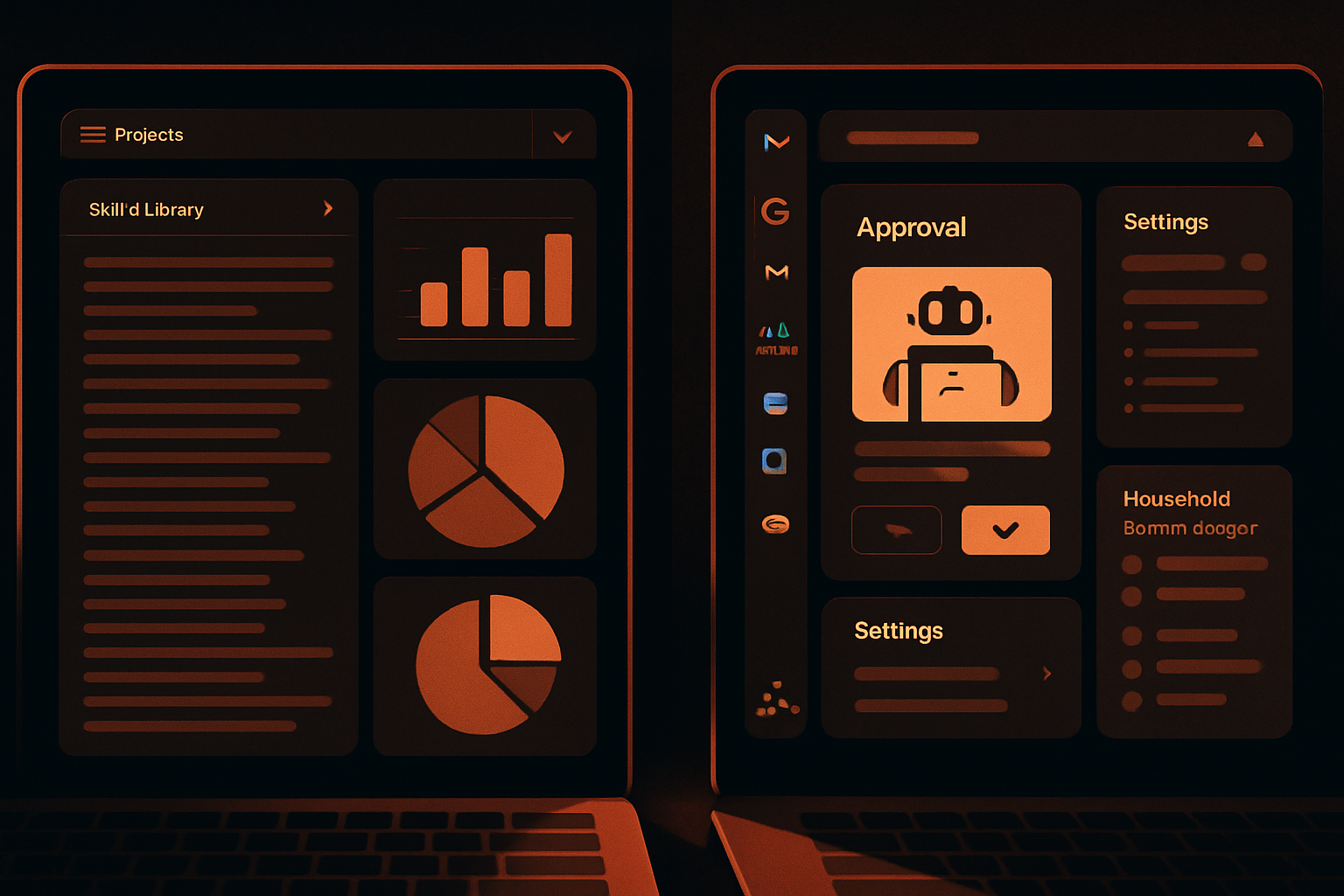
An advanced user has transitioned her entire stack of OpenClaw agents to Grok Bot, maintaining personality and routines. At Stripe, an internal agent serves over 10,000 employees and relies on projects, skills, and a governance-focused infrastructure. Two domains, one lesson: useful agents require explicit frameworks.
At Stripe, 2,000 skills and a tool-based governance frame Kai
Stripe operates Kai, an internal agent that relies on a library of over 2,000 skills, about 50 of which are used daily. Each week, Kai supports more than 10,000 employees and operates in an organized environment that combines projects, skills, tool policies, and human oversight. Projects within Kai act as configuration layers: a small group of employees selects the default model, validates accessible tools, and specifies actions requiring human approval, while these choices automatically apply to other users. For example, the HR project uses a separate backend infrastructure with strictly limited access, preventing the exposure of sensitive data in public documents. Any employee can transform a successful session into a reusable skill, including usage instructions, a specification for the system, and a testing editor. Kai then automatically selects the appropriate skill for the request. The accumulation of skills presents a quality challenge: as the corpus expands, the risk of irrelevant context increases. Therefore, Stripe has implemented telemetry that distinguishes widely used skills, valuable workflows from small teams, and inactive tools, in order to promote, merge, or remove elements while preserving niche usages.
Scale reveals weaknesses: priorities, load, and dedicated query layer
Sharadh Krishnamurthy reports that agents nearly overwhelmed production systems at Stripe. The company observed unpredictable behaviors, overloads of core systems, and failures during deployment. Improving prompts was not enough to resolve these issues. Stripe has thus introduced specific identities for agents, priority signals, load management mechanisms, and relies on a query layer capable of absorbing the additional demand generated by agents.
Technical foundations before models: Stripe's infrastructure bet
Before AI agents were introduced, Stripe had already dedicated resources to establishing a hierarchical analytical catalog, a robust Trino engine, and a trust metrics layer for its developers. This technical foundation now allows agents to access data at scale, securely and reliably. According to Sharadh Krishnamurthy, governance takes precedence over model selection, and he advises consolidating teams dedicated to developer experience and data before making significant investments in agents. Based on this infrastructure, a small team was able to develop the first operational version of Kai in just two weeks.
Le brief IA que les pros lisent chaque soir
Les 7 actus IA du jour, décryptées en 5 min. Gratuit.
Inclus dès l'inscription : notre sélection des meilleurs guides & comparatifs IA.
Choisissez votre rythme
Gratuit · Pas de spam · Désabonnement en 1 clic
Grok Bot in use: multi-accounts, active compliance, and approval-based support
Grok Bot provides Claire with the ability to link six Gmail accounts as well as multiple Slack and Linear spaces, allowing a single agent to access all these services centrally, a configuration mode that has only recently been offered by other platforms. To meet SOC 2 requirements, the Lockdown agent accesses the control dashboard, identifies vulnerabilities, creates a pull request with a suggested solution, and then informs Claire, who reviews and approves the change before the agent proceeds with the correction. For customer support, Holly Helpdesk manages refunds but cannot issue one without Claire's approval: a button opens the Stripe request, Claire confirms it, and the refund is processed. A week after launch, Holly received unsolicited five-star reviews. Claire believes that agents should act independently on low-risk tasks and seek human input when the stakes are high.
Giving agents a clear role and framing their written voice
Claire assigns each Grok agent a name, a job, and a specific scope, allowing the system to deduce the expected role, as with an agent named Prody McProd. Regarding written communication, she feels that Grok's default style is too compressed, while Claude tends to write too elaborately; Grok Bot sometimes shortens sentences excessively, making the text difficult to follow. Claire resolved this issue by having it study her own sent emails and creating a detailed voice profile, which enabled the agent to manage low-stakes outgoing communications.
Migrating from OpenClaw to Grok Bot without losing context or autonomy
Claire, an advanced user, uses Tailscale, connects to a Mac Mini via SSH, and has built a backup bot to manage her other agents. She found OpenClaw too difficult to maintain and chose Grok Bot for its similar capabilities and reliability. Before shutting down her OpenClaw agents, she used Lifeguard to export a secrets-free archive containing the identity, scheduled tasks, and configuration of each agent. These files were imported into Grok Bot, which Claire describes as a brain transplant: the agents regained their personalities and responsibilities, and the migration preserved the necessary elements to revert, reducing the perceived risk. Regarding proactivity, OpenClaw made agents naturally active through a heartbeat feature, while Grok Bot remains passive without explicit routines; each recurring action is visible and easy to audit, but the user must decide when each agent acts. This migration concerns various uses: managing six inboxes, family coordination, reviewing pull requests, SOC 2 compliance, support, subscription audits, and purchases. Claire also frames action permissions, describes Grok Bot's current limitations, and favors agents at home that reduce screen time, with a printed cookbook and a digest sent to Kindle. She finally sets a rule: autonomy on low-risk tasks, human intervention as stakes rise.
Brief IA — L'actualité IA en français
L'essentiel de l'actualité de l'intelligence artificielle, décrypté et expliqué chaque jour.