Anthropic Accuses Alibaba: Millions of AI Attacks Uncovered
Le brief IA que les pros lisent chaque soir
Les 7 actus IA du jour, décryptées en 5 min. Gratuit.
Inclus dès l'inscription : notre sélection des meilleurs guides & comparatifs IA.
Choisis ton rythme
Gratuit · Pas de spam · Désabonnement en 1 clic
Anthropic Accuses Alibaba of Massive Distillation
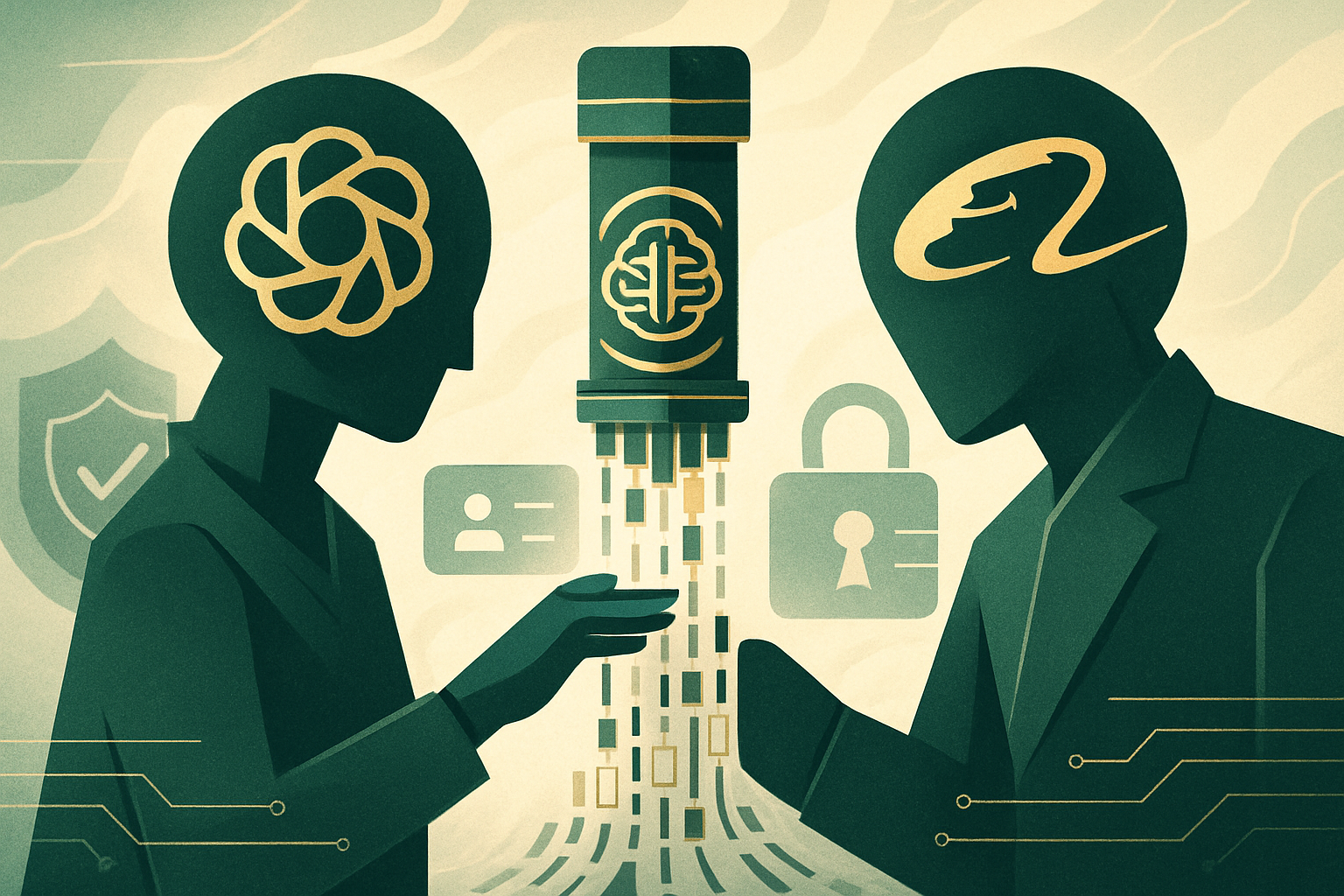
Anthropic, a company specializing in artificial intelligence, has recently accused Alibaba of conducting massive distillation attacks on its AI models. According to Anthropic, these attacks aim to illicitly extract the capabilities of their models, including Claude, using sophisticated methods.
The company revealed that Alibaba allegedly interacted with Claude millions of times using a network of 25,000 fraudulent accounts. This action has prompted Anthropic to call for stricter legislation to counter these distillation attacks, particularly those orchestrated by foreign actors.
A Letter to U.S. Senators
Sarah Heck, head of policy at Anthropic, sent a letter to Senators Tim Scott and Elizabeth Warren on June 10. In this letter, she claimed that Alibaba had orchestrated "the largest known distillation attack" to date. Heck emphasized that operators linked to Alibaba had attempted to appropriate Claude's capabilities to enhance their own AI models.
Between April 22 and June 5, these operators reportedly conducted "28.8 million exchanges with Claude" through nearly 25,000 fraudulent accounts. Distillation attacks involve using advanced models to train and improve less capable models, which is at the heart of Anthropic's concerns.
Implications for American AI
Sarah Heck clarified that these attacks are conducted illegally and systematically, on an industrial scale, with the aim of appropriating the advancements of American labs without bearing the development costs. She warned that such practices could enable Chinese models to rapidly achieve capabilities comparable to those of Claude Mythos Preview, one of Anthropic's most advanced models.
Mythos is recognized for its ability to detect software vulnerabilities and to surpass human skills in certain cybersecurity tasks. Heck therefore urged the senators to adopt legislative measures to limit China's access to the United States' advanced computing infrastructure and to sanction the Chinese entities responsible for these attacks.
Context of Technological Tensions
This letter comes shortly after the U.S. government imposed export restrictions on its Fable 5 model, prohibiting access to foreign individuals due to national security concerns. This decision is set against a backdrop of increasing tensions between the United States and China regarding technology and security.
Alibaba, already under pressure, was recently added to a blacklist by the Pentagon, which associates certain companies with the Chinese military. In response, Alibaba has filed a lawsuit against the U.S. government to contest this designation.
On Thursday, following these revelations, Alibaba's stock price fell by more than 4%. Despite these developments, Alibaba has yet to respond to requests for comments from Business Insider.
Brief IA — L'actualité IA en français
L'essentiel de l'actualité de l'intelligence artificielle, décrypté et expliqué chaque jour.