Anthropic and the White House: the Controversial Return of Fable 5
Le brief IA que les pros lisent chaque soir
Les 7 actus IA du jour, décryptées en 5 min. Gratuit.
Inclus dès l'inscription : notre sélection des meilleurs guides & comparatifs IA.
Choisis ton rythme
Gratuit · Pas de spam · Désabonnement en 1 clic
Return of Fable 5: A Cybersecurity Challenge for Anthropic
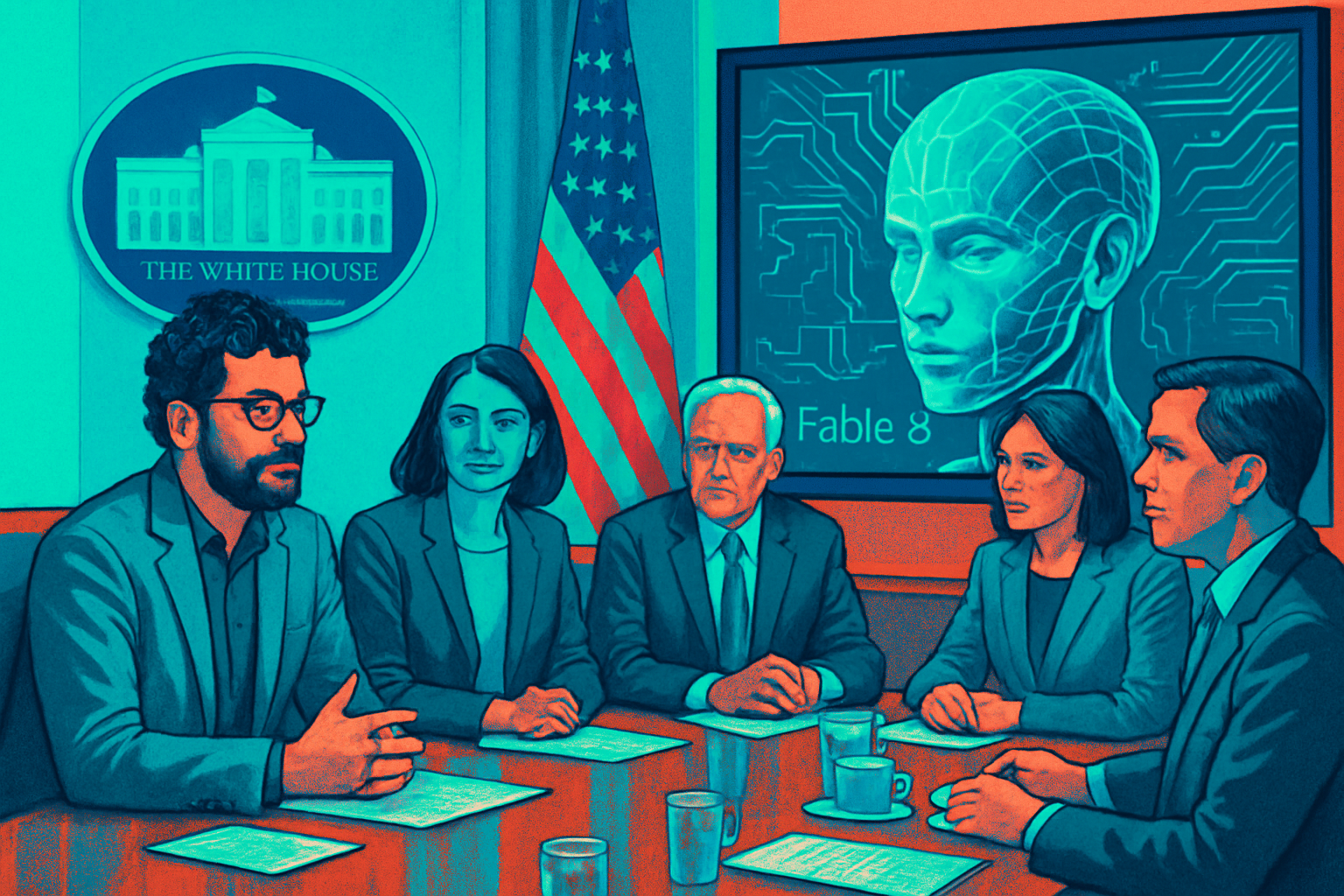
Dario Amodei, the CEO of Anthropic, has recently been at the center of intense discussions with the White House. These talks, which lasted several weeks, aimed to lift the restrictions on the Fable 5 artificial intelligence model. These restrictions had initially been imposed by the U.S. government due to cybersecurity concerns. The lifting of these controls marks the return of Fable 5 to the market, following a prolonged negotiation period aimed at alleviating the authorities' worries.
Anthropic announced on Tuesday that the Department of Commerce had finally decided to lift the export controls that had led to the suspension of Fable 5. Simultaneously, access to Mythos 5, an even more advanced model, has also been restored for certain verified organizations. This decision follows the approval obtained by Anthropic from the U.S. government, thus highlighting a gradual return to normalcy for these technologies.
Context of Restrictions and Negotiations
Tensions began in June when the White House imposed restrictions on several AI models, fearing they could be used for malicious purposes, particularly by foreign adversaries to conduct cyberattacks. Anthropic responded by explaining that a misunderstanding had occurred regarding a potential jailbreak of Fable 5. To resolve this dispute, senior executives from the company were sent to Washington to find a favorable outcome.
The return of the Fable 5 and Mythos 5 models, now equipped with additional security measures, represents a crucial moment in the debate over the regulation of advanced AI systems by governments. Technology experts have expressed various opinions on this development.
Alex Stamos' Opinion on the Situation
Alex Stamos, a lecturer at Stanford University and former security chief at Facebook, shared his views on this matter. He described the initial suspension as "a major blow to the United States." In a post on X, he criticized this decision, calling it a "huge mistake" that could push American cybersecurity companies to turn to Chinese models, thereby weakening national competitiveness.
Stamos emphasized that American security firms and startups might be forced to adopt Chinese models, which would represent a "big win for PRC labs." He also mentioned that Anthropic's blog highlighted the company's efforts to ensure security from the outset, and that AI experts within the U.S. government had validated these efforts.
Reactions from Dean W. Ball
Dean W. Ball, a senior researcher at the Foundation for American Innovation, also shared his perspective on the return of Fable 5. A former AI lead under the Trump administration and currently at OpenAI, Ball praised this decision in a post on X. However, he pointed out that significant questions remain regarding the security commitments made by Anthropic and the application of these standards to other AI models.
Ball expressed concerns about the opacity of the process, which could undermine stability and trust in the industry in the long term. Nonetheless, he acknowledged that the U.S. government is not required to resolve all issues immediately and that the two-week review period was reasonable. He concluded by stating that progress had been made and that this deserved to be applauded.
Perspectives from Aaron Levie
Aaron Levie, CEO of Box, also reacted to this resolution. In a post on X, he stated that this situation could set an important precedent for the future review of advanced AI models, particularly those with cybersecurity and biosafety capabilities. However, Levie warned that subjectivity in assessing risks and their exploitability could complicate the process.
The CEO of Box praised Anthropic's efforts to promote a shared framework within the industry and strengthen collaboration with the U.S. government. However, he emphasized that future reviews will still require significant judgment and exchanges between labs and authorities. Levie concluded by hoping that this process would be relatively efficient.
Brief IA — L'actualité IA en français
L'essentiel de l'actualité de l'intelligence artificielle, décrypté et expliqué chaque jour.