Anthropic and OpenAI: White House AI Standards
Le brief IA que les pros lisent chaque soir
Les 7 actus IA du jour, décryptées en 5 min. Gratuit.
Inclus dès l'inscription : notre sélection des meilleurs guides & comparatifs IA.
Choisis ton rythme
Gratuit · Pas de spam · Désabonnement en 1 clic
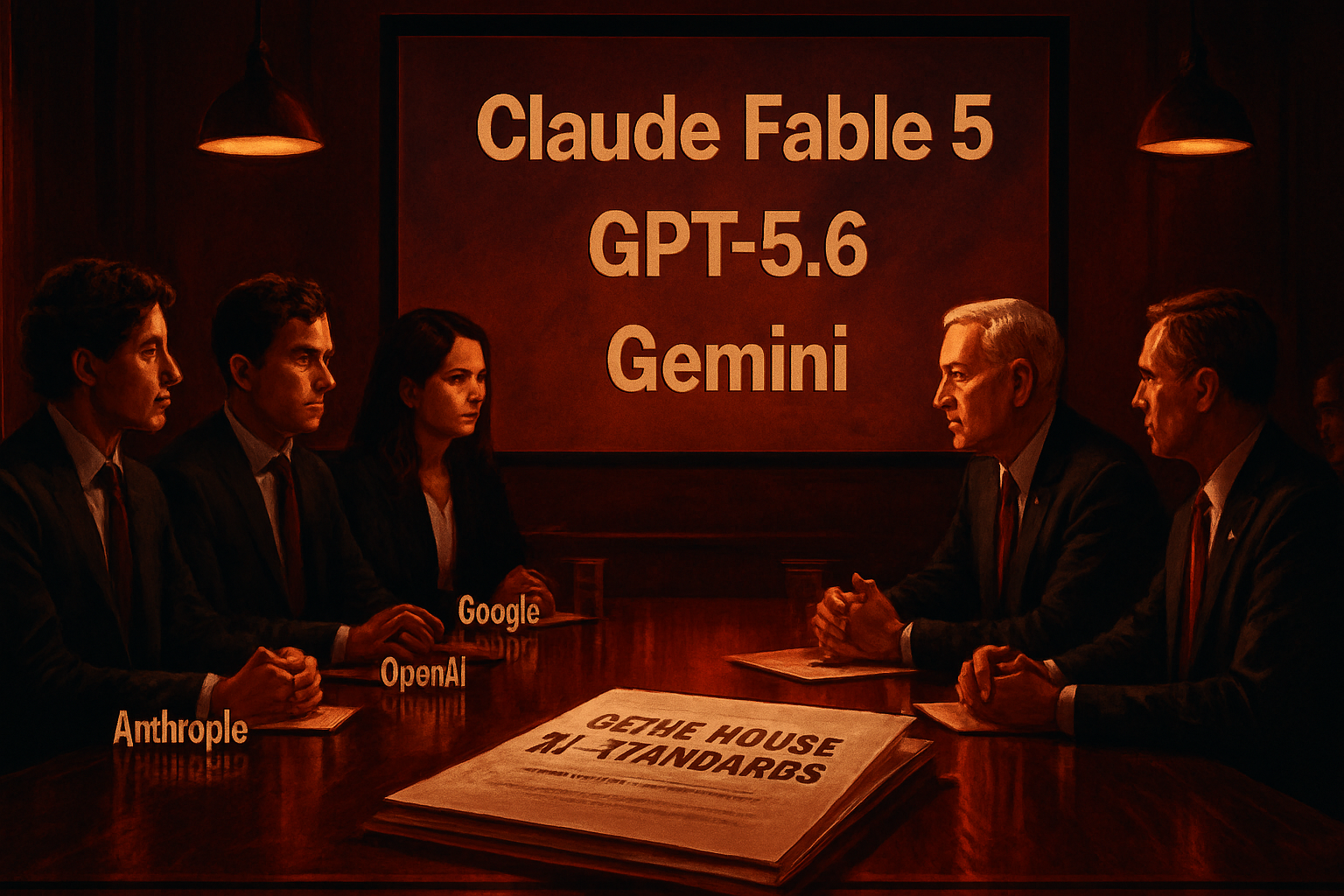
On June 12, a directive from the U.S. Department of Commerce had significant repercussions for Anthropic, an artificial intelligence company. This directive ordered the suspension of access to two of their models, Claude Fable 5 and Claude Mythos 5, for all foreign nationals, including Anthropic employees based outside the United States. This measure rendered the models inaccessible for a period of 18 days. Shortly thereafter, on June 26, Reuters reported that OpenAI had been forced to delay the full launch of its GPT-5.6 model at the request of the U.S. government. The Financial Times then revealed that the White House might announce new AI standards as early as the following week, standards that had been secretly discussed with companies like Anthropic, OpenAI, and Google.
The new White House standards impose a 30-day review process, called "Model Customs," for advanced AI models before they can be confidently deployed. This process is part of a broader framework of "voluntary" AI standards that are, in reality, already enforced through export controls and managed deployments. This framework stems from an executive order issued in June that introduces a voluntary designation of "covered frontier model." This allows the government to access models for up to 30 days before their public release, based on a classified cyber capability threshold developed by entities such as the Treasury, NSA, CISA, and NIST, and managed by the CAISI system.
The article emphasizes that the restrictions imposed on Anthropic and OpenAI, such as the 18-day cutoff for Anthropic and the delay of GPT-5.6's launch, illustrate the costs associated with voluntarily participating in this system. AI labs may be forced to wait to avoid prolonged or indefinite delays in deploying their technologies.
The rules currently under negotiation primarily involve a small number of large labs. However, once thresholds are reached, incentives and bureaucratic mechanisms could apply more broadly. The article questions the effectiveness of the "voluntary" label of these standards, highlighting that it does not guarantee public accountability, binding power over the government, or legislative-type judicial resilience. The secrecy surrounding the threshold and the government's ability to adjust timelines are also major concerns.
Finally, the article proposes a checklist for what to monitor in the final document of the standards. This includes questions such as Meta's participation, the definition of thresholds and "frontier" timelines, benefits for international partners, and whether the 5% equity/supply/Alaska fund is related to these negotiations.
Brief IA — L'actualité IA en français
L'essentiel de l'actualité de l'intelligence artificielle, décrypté et expliqué chaque jour.