Anthropic and Samsung: Towards a Revolution in In-House AI Chips
Le brief IA que les pros lisent chaque soir
Les 7 actus IA du jour, décryptées en 5 min. Gratuit.
Inclus dès l'inscription : notre sélection des meilleurs guides & comparatifs IA.
Choisis ton rythme
Gratuit · Pas de spam · Désabonnement en 1 clic
Anthropic Turns to Samsung for Its AI Chips
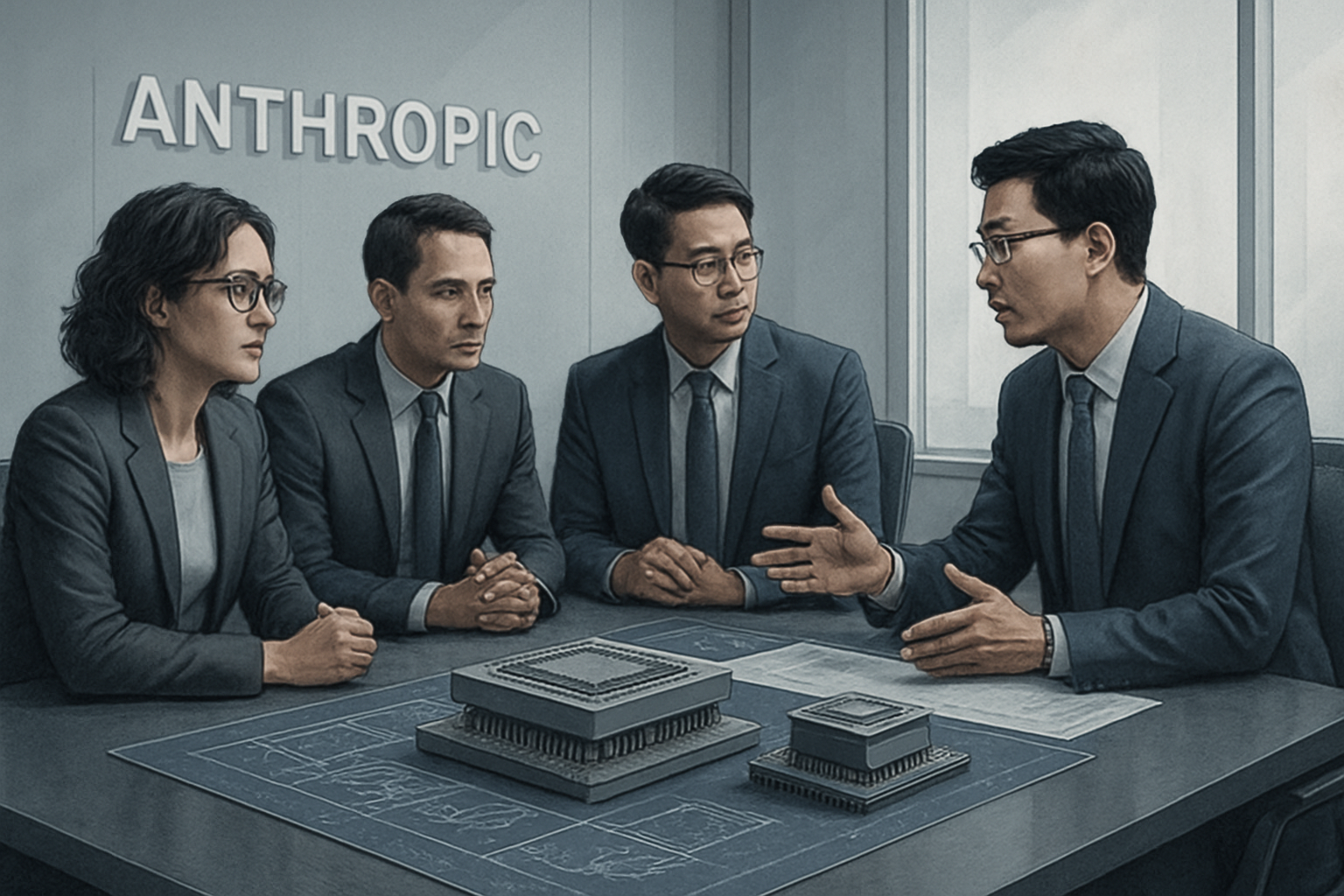
The startup Anthropic, specializing in artificial intelligence, is ramping up its efforts to develop its own electronic chips. This initiative marks a crucial step in its quest for technological independence. Indeed, Anthropic is currently in discussions with South Korean giant Samsung, a major player in semiconductor manufacturing, for a potential partnership. This move comes as OpenAI, a direct competitor, recently announced the launch of its own processor.
Last April, Anthropic had already expressed its intention to design artificial intelligence chips in-house, a decision motivated by the global shortage of electronic components affecting the entire tech industry. At that time, the project was still in its infancy, lacking a dedicated team or concrete plan. The company did not rule out continuing to source existing chips. However, recent discussions with Samsung, reported by the well-informed media outlet The Information, indicate that the project has gained momentum.
Towards Strategic Independence
For Anthropic, developing its own chips would be a way to reduce its dependence on third-party suppliers. This independence is all the more crucial as the company has experienced rapid growth, leading to difficulties in meeting demand for computing power. These constraints have caused outages for its millions of users, highlighting the urgency of finding a solution. Choosing Samsung, already a partner of NVIDIA for the manufacturing of chips intended for artificial intelligence, could provide Anthropic with the expertise needed to overcome these challenges.
The choice of Samsung is not trivial. The South Korean group has already demonstrated its ability to collaborate with tech giants like Google for the manufacturing of custom chips. These strategic partnerships reflect its ambition to play a central role in the global tech ecosystem.
A Project Still in Development
Despite these advances, discussions between Anthropic and Samsung remain at a preliminary stage. Many details still need to be defined, including the precise use of the future chip, its power, and its integration into Anthropic's existing infrastructure. The company emphasized, in a statement to TechCrunch, that it continues to rely on a diversified hardware strategy. This strategy is based on a combination of chips supplied by Google, Amazon, and NVIDIA, which remain essential for its operations.
Fierce Competition in the AI Chip Sector
The timing of this initiative is significant. Recently, OpenAI unveiled its own processor, named "Jalapeño," developed in partnership with Broadcom. This processor promises superior energy efficiency compared to competing chips. Furthermore, Amazon and Google have already developed their own hardware solutions, respectively with the Trainium and TPU chips. In this context, Anthropic finds itself in a position to catch up technologically.
At the same time, Anthropic continues to benefit from growing popularity thanks to its flagship product, Claude. The company recently raised $65 billion, bringing its valuation to $965 billion. These financial resources provide a solid foundation for considering an IPO and for investing in the development of its own hardware technology.
Brief IA — L'actualité IA en français
L'essentiel de l'actualité de l'intelligence artificielle, décrypté et expliqué chaque jour.