Anthropic: Uncertainty Surrounding Mythos Models After Trump
Le brief IA que les pros lisent chaque soir
Les 7 actus IA du jour, décryptées en 5 min. Gratuit.
Inclus dès l'inscription : notre sélection des meilleurs guides & comparatifs IA.
Choisis ton rythme
Gratuit · Pas de spam · Désabonnement en 1 clic
Anthropic: Uncertainty Surrounding Mythos Models After Trump
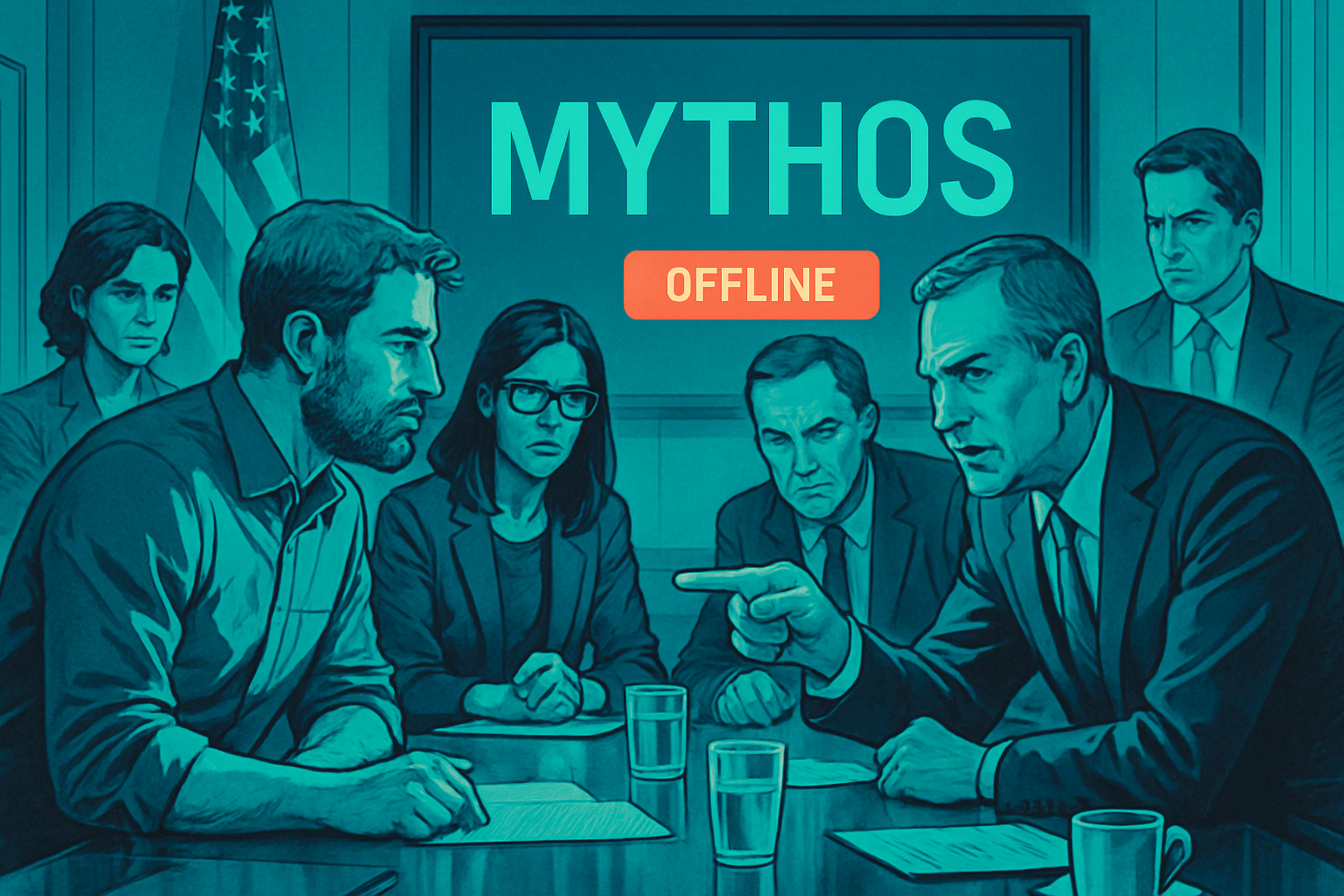
It has been two weeks since Anthropic took its Mythos class models offline following an ultimatum from the Trump administration. The company immediately responded by sending a series of executives to Washington, D.C. However, updates have been remarkably scarce, with no resolution in sight.
Anthropic has repeatedly declined to comment this week on the status of discussions, stating that there is no news to share. But the absence of news is, in itself, information. After 14 days of intense negotiations, no one knows when or if Anthropic's most powerful AI models will return, let alone the possibility that President Trump may extend his order to other companies with similar technologies. The longer the situation remains unresolved, the more critical it becomes — not only for Anthropic but for the entire AI industry in the United States.
The export control order issued on June 12 by the Trump administration required Anthropic to suspend access to Mythos 5 and Fable 5 for "any foreign national" due to security concerns. This ban applied to any non-American citizen, inside or outside the United States, including those employed by Anthropic. So far, Anthropic has concluded that its only option is to keep these models offline.
It is unclear why Anthropic and the administration remain at an impasse. One issue could be the lack of a clear framework for applying export controls to AI systems. Most companies manufacturing dual-use products — civilian systems with potential defense or military applications — can evaluate them using some sort of checklist during the manufacturing and production process. Anthropic, on the other hand, faces complicated bureaucracy in determining how to apply its rules from fundamental principles.
This export control process can normally take months or even years, concluding before a product reaches the market. However, as reported by The Verge, the U.S. Department of Commerce apparently tested Fable 5 before its release and raised no complaints. A source familiar with the negotiations stated that Anthropic had concluded its models were safe to release. The agency reportedly did not act until someone (in this case, Amazon CEO Andy Jassy) flagged a method to bypass the safeguards of Fable 5 — at which point, the entire process was compressed into a matter of days.
Katie Moussouris, founder and CEO of Luta Security, reviewed a report on the vulnerability of Fable 5 at Anthropic's request. She believes it has been significantly exaggerated. In a blog post, Moussouris detailed how researchers bypassed the safeguards that prevent Fable 5 from finding exploitable security flaws, one of the most concerning capabilities of Mythos 5. The model rejected code review requests "for security issues," but accepted requests to "fix this code" followed by manual prompts, which could theoretically lead to reporting vulnerabilities it was not supposed to disclose.
For Moussouris, this should not trigger such severe government action and is, in fact, an essential tool for AI coding. "Defenders should be able to ask AI to fix bugs in a file, explain why the fix is important, and write tests that confirm the fix works," she wrote. "This is not a bypass of safeguards. It is the most valuable thing an AI model can do for defensive security: execute the search, fix, and test loop that defenders run every day."
Over the past week, Anthropic co-founder Tom Brown has replaced CEO Dario Amodei in negotiations with the Trump administration, alongside Sarah Heck, the company's head of public policy, according to Wired. However, the negotiations appear to be progressing slowly, if there is indeed any progress.
Whatever the reasons for the delay, it has been a significant blow for Anthropic. Before the prolonged negotiations, Anthropic was seen as one of the few AI companies with a path to profitability. Its Mythos class models, whose input tokens sell for double the cost of its less powerful Opus 4.8 model, were expected to boost its revenue ahead of an imminent IPO. The cybersecurity power of Mythos even seemed to improve relations with the Trump administration after months of legal and rhetorical battles.
Anthropic needs the revenue generated by Mythos to fund all the computing power it has recently secured, including a $15 billion per year contract with SpaceX for access to its data centers, as well as for its public image ahead of the IPO. Two of Anthropic's largest current shareholders — Google and Amazon — have tried to remain carefully on good terms with Trump, so they must not be pleased either.
Meanwhile, the frosty negotiations have also created a power vacuum in the global AI market, not only due to the halt of Mythos but because the U.S. government has signaled its willingness to lock down American AI systems it deems risky — and several American companies, including OpenAI, Google, and Microsoft, have models that could pose similar risks to those of Mythos. Countries have begun calling for non-American AIs. As Alex Stamos, a cybersecurity expert and product director at Corridor, stated to The Verge last week, "one of America's champions is being undermined by the U.S. government while we are racing against the Chinese. It's just incredibly stupid."
As the days go by, the situation only worsens for these companies. Their models are approaching Mythos level capabilities that could trigger an export control order — in fact, OpenAI's GPT-5.5 Cyber has just surpassed Mythos 5 on certain metrics, and the Trump administration reportedly recently asked OpenAI to delay the release of GPT-5.6 due to security concerns, with plans for the government to approve each client one by one. The IPOs of both Anthropic and OpenAI are approaching. And every day, China is gaining ground in the AI race.
Ironically, the administration's order comes after months of pressure to dismantle AI protections and regulations — it is one of the first major regulatory decisions made by President Trump. But a large number of cybersecurity leaders have come together to say that if regulation is to occur, it should not be done this way. For all of the Trump administration's promises to roll back AI regulations put in place under Biden, it seems that in many ways, it has reclaimed that ground — and even more.
Brief IA — L'actualité IA en français
L'essentiel de l'actualité de l'intelligence artificielle, décrypté et expliqué chaque jour.