"Workshops 'Avoiding AI': Librarians Confront Technology"
Workshops to Regain Control Over AI
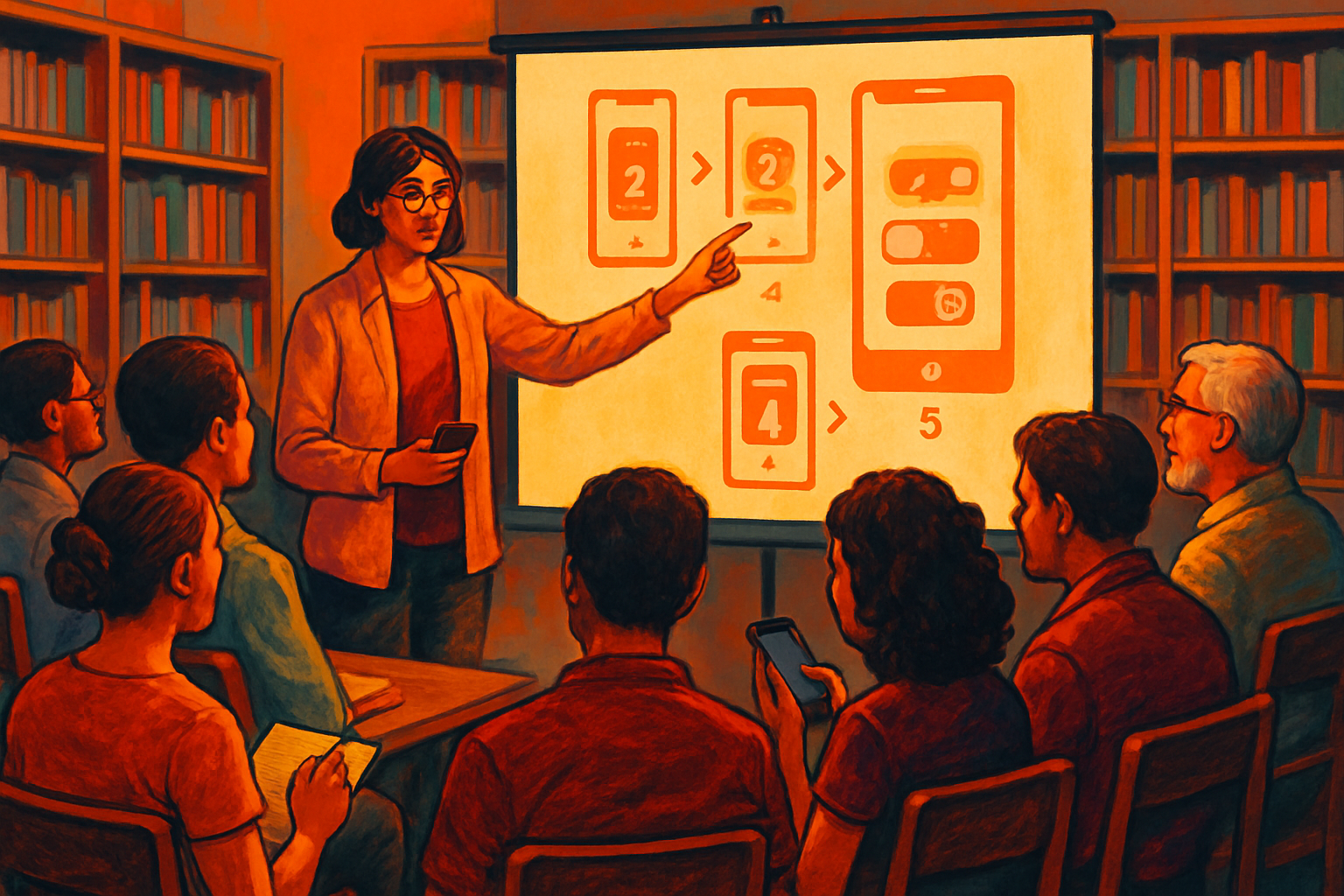
Charlie Bailey, a librarian from South Philadelphia, recently hosted an unusual workshop titled 'Avoiding AI'. During this event, he asked participants to take out their phones to guide them in disabling artificial intelligence features like Apple Intelligence and Gemini. The workshop took place in a library room usually dedicated to children, but on that day, it was filled with 20 adults eager to learn how to free themselves from certain ubiquitous technologies.
Bailey explained that his initiative was driven by a general frustration with the encroachment of AI tools into daily life, often without explicit user consent. His goal was to provide keys to understanding and potentially disabling these technologies.
Understanding and Disabling AI
The one-hour workshop begins with an introduction to how AI chatbots and other similar tools work. Bailey explains why these technologies are offered to consumers, but also why some choose to forgo them. He then reviews the major tech platforms, projecting detailed instructions to help participants disable certain features.
For Bailey, this workshop is an extension of his role as a librarian, aimed at improving digital literacy. He wants to help people regain control over their use of technological tools, especially when their design seems to impose adoption.
An Idea That Is Gaining Traction
The idea for this workshop was inspired by Hannah Cyrus, a librarian from Maine. Cyrus had published an article about her own workshop, which sparked interest among many librarians worldwide, including Bailey. Cyrus was surprised by the scale of the reaction, having never received so many requests to share her educational resources.
Le brief IA que les pros lisent chaque soir
Les 7 actus IA du jour, décryptées en 5 min. Gratuit.
Inclus dès l'inscription : notre sélection des meilleurs guides & comparatifs IA.
Choisissez votre rythme
Gratuit · Pas de spam · Désabonnement en 1 clic
At the Bangor Public Library, Cyrus is often approached with technology-related questions. She has noticed an increase in inquiries about disabling AI features, prompting her to organize these workshops to explain the basics of these technologies and how to disable them.
An Unexpected Success
Cyrus's workshops, typically attended by a dozen people, quickly became fully booked. She had to limit registrations to 30 participants, open a waiting list, and stream the event on Zoom to meet the demand. In total, around 70 people attended each of the first two workshops.
In Philadelphia, Bailey's initiative also met with unexpected success. An Instagram post announcing the workshop generated over 2,000 likes and 220 shares, far exceeding the usual engagement for library posts. A second workshop was scheduled to accommodate the influx of registrations.
A Skeptical Yet Engaged Community
During the workshop, a sense of camaraderie developed among participants. Some shared tips for bypassing AI features, such as adding "&udm=14" to a Google search to hide AI results. Others expressed their concerns, like Johnny, who worries about the environmental impact of data centers.
Gabrielle, another participant, mentioned the obligation to use AI at work while acknowledging its potential benefits in the medical field. This ambivalence reflects the general sentiment of the participants: a distrust of AI, but not a total rejection of the technology.
A Call for More Control
Critics of AI, like Cyrus, recognize the usefulness of certain applications, such as optical character recognition for digitizing old documents. However, the anti-AI movement does not aim to reject technology outright but to demand more control and freedom in its use.
Cyrus believes that the forced adoption of AI could be the catalyst for a broader awareness of the influence of tech companies. Users want to use these products on their own terms, not those imposed by developers.
Brief IA — L'actualité IA en français
L'essentiel de l'actualité de l'intelligence artificielle, décrypté et expliqué chaque jour.